What this guide covers: Compare bedroom storage locations for a handbag collection and choose an everyday return spot. To inspect the support, handles and hardware of an individual bag, use the separate handbag protection checklist.
Handbags are surprisingly easy to clutter. A few everyday totes on a chair, smaller purses squeezed onto a closet shelf, and rarely used bags hidden behind clothes can quickly make a bedroom feel less organized.
The right bedroom handbag storage ideas can solve that problem without requiring a huge walk-in closet. Instead of simply finding somewhere to put each bag, the goal is to create a system that keeps handbags visible, supported, easy to reach, and appropriate for the space you actually have.
Whether you own a small everyday collection or several bags in different shapes and sizes, these practical ideas can help you use closet shelves, doors, drawers, wall space, and other overlooked areas more efficiently.
Table of Contents
- Before Organizing Your Handbags
- 12 Bedroom Handbag Storage Ideas
- How to Choose the Right Storage System
- How to Protect Handbags While Stored
- Common Handbag Storage Mistakes
- Frequently Asked Questions
- Final Thoughts
Before Organizing Your Handbags
Before buying organizers, take every handbag out and look at the collection as a whole. Separate bags you use regularly from occasional, seasonal, and special-event pieces.
Then group them loosely by size and shape. Structured handbags need different support than soft totes, while small clutches can often fit into narrower storage spaces.
This quick edit also helps reveal bags you no longer use. Keeping only pieces that still serve a purpose makes almost every storage method easier.
Once you know what you are storing, choose a location that is reasonably clean and dry and does not expose your collection to unnecessary direct sunlight or other potentially damaging conditions. General preservation guidance from the Smithsonian emphasizes appropriate storage, careful handling, and control of environmental factors such as light, temperature, and humidity.
12 Smart Bedroom Handbag Storage Ideas
1. Line Handbags Up on a Closet Shelf
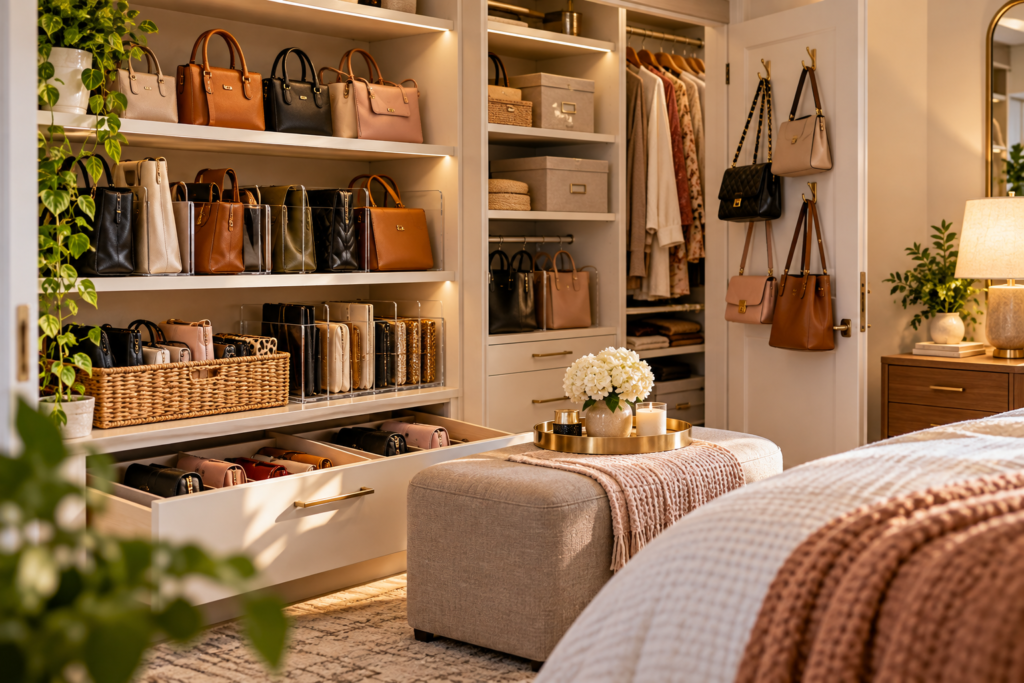
A closet shelf is one of the simplest handbag storage solutions because it keeps bags visible without adding another piece of furniture.
Arrange structured bags upright with enough space between them that they are not compressed against one another. Place frequently used bags toward the easiest-to-reach section and occasional pieces farther to the side or on a higher shelf.
Avoid creating a deep second row if possible. Bags hidden behind other bags tend to be forgotten and make the shelf harder to maintain.
2. Add Shelf Dividers Between Bags
If handbags keep leaning into one another, vertical shelf dividers can create individual sections.
This works particularly well for medium-size purses and structured bags that naturally stand upright. Each divider acts like a boundary, so removing one handbag does not cause the entire row to collapse.
Adjust the spacing to match your collection rather than forcing every compartment to be identical. Wider totes need more room than compact shoulder bags.
3. Use Clear Handbag Organizers
Clear organizers can be useful when you want some protection from dust without completely hiding the bag.
Choose compartments large enough that handles, straps, and decorative details are not forced into awkward positions. Visibility is the main advantage: you can identify the bag before pulling anything off the shelf.
If you use enclosed storage, consider the manufacturer’s care instructions for the handbag material and make sure the storage environment is appropriate.
4. Create a Dedicated Everyday-Bag Zone
The handbag you use most often does not necessarily need to live with your entire collection.
Create a small everyday zone near the closet, dresser, or bedroom entry where one or two frequently used bags can be placed when you come home.
A dedicated landing spot prevents the familiar habit of leaving a handbag on the bed, floor, chair, or desk. Keep the zone intentionally small so it does not turn into another pile.
5. Use Hooks for Suitable Lightweight Bags
Wall or closet hooks can make use of vertical space, particularly for lightweight totes or bags designed to tolerate hanging.
Do not automatically hang every handbag by its handles. Heavy bags or delicate handles may be better supported on a shelf. Consider the bag’s construction and the manufacturer’s care recommendations before choosing hanging storage.
Space hooks far enough apart that bags are not constantly rubbing against each other.
6. Turn a Closet Door Into Bag Storage
The inside of a closet door can provide useful storage when floor and shelf space are limited.
An over-the-door organizer with appropriately sized compartments can hold smaller purses, clutches, or lightweight bags while keeping them easy to see.
Before using this method, check that the organizer does not interfere with the door closing and that the combined weight is suitable for the door and hardware.
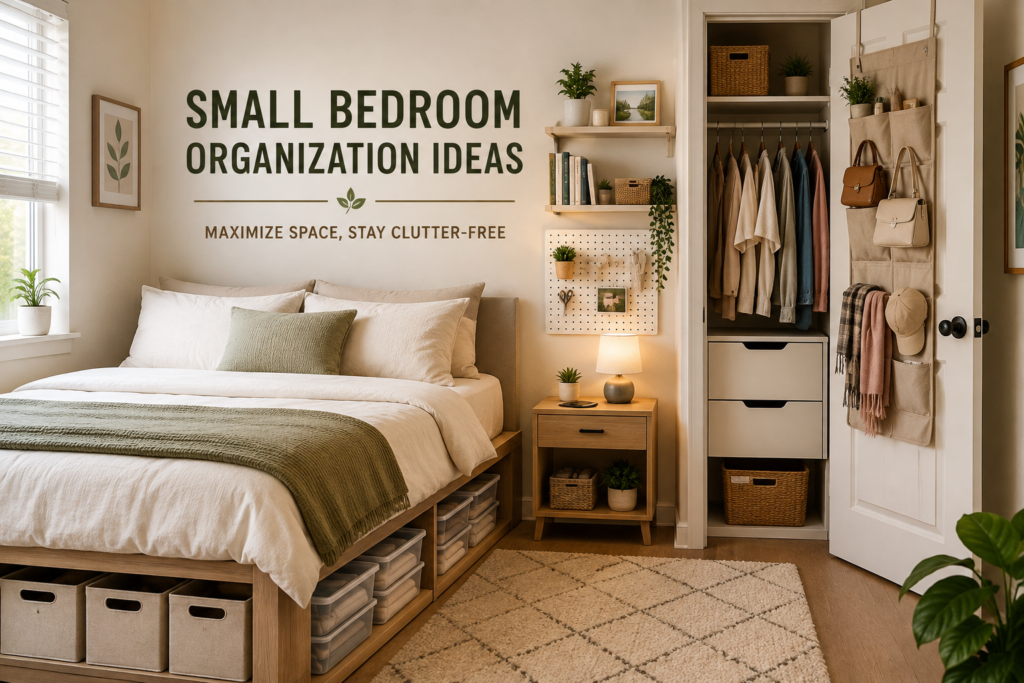
This is particularly useful in compact rooms where every vertical surface matters. For more ways to make limited space work harder, see our small bedroom organization ideas.
7. Store Small Purses in Open Baskets
A shallow basket can corral small crossbody bags and casual purses that otherwise spread across a shelf.
Choose a basket that lets you see at least part of each bag instead of using a deep container where everything disappears to the bottom.
Rather than throwing bags into the basket, arrange them vertically when their shape allows. This creates a simple file-like system and makes individual pieces easier to remove.
8. Give Clutches a Vertical File System
Clutches and flat evening bags are ideal candidates for vertical storage because they require relatively little depth.
A sturdy divider, rack, or appropriately sized organizer can keep them standing side by side. Arrange them by frequency of use, size, or occasion—whichever makes the collection easiest for you to navigate.
Leave enough room to remove one clutch without scraping or pulling against neighboring pieces.
9. Dedicate a Dresser Drawer to Smaller Bags
If your closet shelves are already full, a deep dresser drawer may work for compact handbags and soft pouches.
Use simple dividers to stop straps from becoming tangled. Avoid piling heavy items on top of delicate or structured pieces.
The advantage of drawer storage is visual calm: the collection disappears when the drawer closes. The disadvantage is reduced visibility, so this works best for a smaller number of bags rather than a large collection.
If your bedroom drawers tend to become crowded, the same zoning principle used in our bedroom nightstand drawer organization ideas can help keep categories separated.
10. Use the Top Closet Shelf for Occasional Bags
The highest closet shelf is often better suited to occasional handbags than everyday pieces.
Reserve this area for bags used for formal events, travel, or particular seasons. Place them in a logical order so you do not need to remove every item to reach one bag.
For a high shelf, lightweight labeled containers or visible storage sections can make identification easier. Keep everyday handbags lower where they can be reached without disrupting the rest of the collection.
11. Create a Handbag Display Shelf
If you own a few bags you genuinely enjoy seeing, storage can also become part of the bedroom decor.
A dedicated shelf or small section of open shelving can display a limited collection while keeping each bag in a defined location.
The key word is limited. Covering every open surface with bags can quickly create visual clutter. Select a few pieces and keep the rest in practical closed or closet storage.
Also consider light exposure and the care requirements of individual materials when choosing a display location.
12. Rotate Handbags Seasonally
You do not need every handbag in the most accessible position throughout the year.
Keep current everyday and seasonal bags within easy reach, then move less relevant pieces to secondary storage. When your needs change, rotate the collection.
This approach is especially effective in a small bedroom because prime storage space is reserved for items you are actually using now.
The same rotation principle can help with clothing. Our bedroom seasonal clothing storage ideas offer additional ways to manage changing wardrobes without overcrowding your everyday storage.
How to Choose the Right Handbag Storage System
The best solution depends less on how an organizer looks online and more on your collection and bedroom layout.
Consider How Many Bags You Own
A collection of five handbags may only need one shelf. A larger collection benefits from separate zones for everyday, occasional, and small bags.
Look at the Shape of Each Bag
Structured handbags generally benefit from supportive storage, while softer totes can be more flexible. Clutches require very little depth and can often use narrow spaces efficiently.
Prioritize Visibility
If you routinely forget what you own, choose shelves, clear organizers, shallow baskets, or other systems that keep bags visible.
Match Accessibility to Frequency of Use
The bag you carry several times a week should not require a step stool or three containers to access. Reserve inconvenient storage areas for occasional items.
Work With Your Existing Bedroom
You do not necessarily need a new cabinet. Start with unused shelf height, the back of a suitable closet door, a spare drawer, or a small section of existing shelving.
How to Protect Handbags While Stored
Organization should not come at the expense of the bags themselves. Different materials and constructions have different care needs, so manufacturer instructions should take priority for valuable or delicate pieces.
As general storage principles, consider the following:
- Keep bags clean before storage. Empty receipts, crumbs, cosmetics, and other loose contents rather than storing them inside indefinitely.
- Avoid unnecessary compression. Do not force structured bags into spaces that distort their shape.
- Support shape appropriately. Where suitable, gentle internal support can help a structured bag maintain its form. Avoid overstuffing.
- Control light exposure. Long-term exposure to strong light can affect many materials.
- Pay attention to humidity and temperature. Storage conditions matter for long-term preservation of physical objects and materials.
- Avoid overloading handles. Do not assume hanging is appropriate for every handbag.
- Check stored bags periodically. Occasional inspection helps you notice dust, deformation, moisture concerns, or other problems early.
The Smithsonian Institution Archives explains that preventive preservation involves reducing risks from factors including physical force, light, pollutants, incorrect temperature, and relative humidity. Its guidance is designed for collections rather than handbags specifically, but these general principles are useful reminders when choosing a storage environment. Read the Smithsonian preservation guidance.
Common Handbag Storage Mistakes to Avoid
Stacking Too Many Bags
Large stacks make the bottom bags difficult to access and may place unnecessary pressure on them. Create smaller sections or store bags upright when appropriate.
Hiding Everything in Deep Bins
A deep opaque container may technically remove clutter, but it can also make your collection invisible. If you cannot easily see or reach a bag, you are less likely to use it.
Overstuffing the Closet
An organizer cannot compensate for more items than the available space can reasonably hold. Leave enough breathing room to remove and return bags without reorganizing the whole shelf.
Using One Storage Method for Every Bag
A clutch, soft tote, and structured handbag do not necessarily need the same solution. Organize according to shape, material, weight, and frequency of use.
Leaving Handbags on the Floor
Floor storage makes a bedroom look cluttered and places bags where they can be kicked, crushed, exposed to dust, or forgotten. Even a simple designated shelf is usually easier to maintain.
Ignoring the Storage Environment
A beautiful display location is not necessarily the best long-term storage location. Consider direct light, moisture, heat, dust, and the manufacturer’s instructions for individual bags.
A Simple Handbag Organization Routine
Once your system is established, maintaining it should only require a few small habits:
- Empty unnecessary contents when changing handbags.
- Return the previous bag to its assigned location.
- Keep everyday bags in the most accessible zone.
- Check shelves and containers occasionally for dust.
- Rotate seasonal bags when your wardrobe changes.
- Reassess bags you consistently avoid using.
The easier the reset is, the more likely your handbag storage will stay organized without becoming another weekly chore.
Frequently Asked Questions
1. What is the best way to store handbags in a bedroom?
For many bedrooms, a dedicated closet shelf with dividers is one of the simplest options. However, the best method depends on the bag’s size, construction, material, and how often you use it.
2. How do I organize handbags in a small bedroom?
Prioritize existing vertical space. Closet shelves, suitable door organizers, shallow baskets, and a spare drawer can store bags without taking up additional floor space.
3. Should handbags be stored upright or flat?
It depends on the individual bag. Many structured handbags work well upright with appropriate support, while some soft or delicate pieces may require different storage. Follow the manufacturer’s care guidance where available.
4. Is it okay to hang handbags on hooks?
Hooks can work for suitable lightweight bags, but hanging may put stress on certain handles or straps. Heavy, delicate, or structured bags may be better supported on a shelf.
5. How can I stop handbags from falling over on a shelf?
Use adjustable shelf dividers or individual compartments. Give each bag enough space to stand without being tightly compressed against the next one.
6. How should I store handbags I rarely use?
Clean and empty them first, then place them in an appropriate protective storage setup according to their material and construction. Less frequently used bags can occupy higher or secondary storage areas.
7. How can I keep my handbag collection from looking cluttered?
Limit what remains on open display, create one defined everyday-bag zone, and keep the rest grouped in the closet or other designated storage. Consistent boundaries usually create more visual calm than adding many small organizers.
Final Thoughts
The most effective bedroom handbag storage ideas make your collection easier to use, not simply easier to hide. Start by grouping bags according to size and frequency of use, then match each group to the storage space you already have.
A shelf with dividers may be enough for structured handbags, while small purses can fit neatly into shallow baskets or drawers. Everyday bags deserve an easy landing spot, and occasional pieces can move to secondary storage.
Most importantly, avoid overcrowding. Giving each handbag a sensible home makes it easier to find, easier to return, and much less likely to end up on the bedroom floor or piled onto a chair.