Handbags can lose shape, collect dust, or disappear into a crowded wardrobe when they are stacked without a plan. Good storage should protect handles, finishes, and structure while keeping the bags you actually use easy to see and reach.
These bedroom handbag storage ideas combine measured shelves, breathable covers, gentle shape support, and a practical rotation. The system can work in a full wardrobe or a few small cubbies because it begins with editing the collection rather than buying excessive organizers.
Table of Contents
1. Edit the Collection First
Bring your handbags together and assess condition, frequency of use, size, and material. Keep everyday bags within easy reach, move special-occasion pieces higher, and donate items that no longer suit your routine if they remain usable.
Empty receipts, cosmetics, and loose food before storage. Check every pocket and remove heavy objects that could distort the base. A smaller, cleaner collection is easier to protect and prevents shelves from becoming overcrowded.
2. Store Structured Handbags Upright
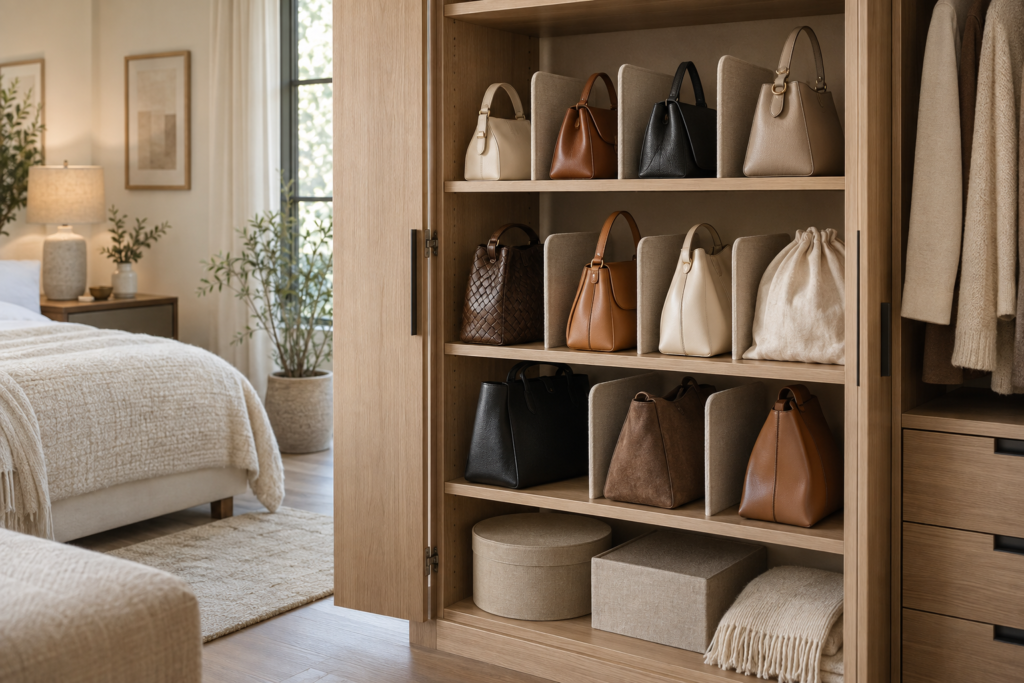
Place structured bags upright on a shelf so the base remains supported and the sides are not crushed. Leave a small gap between pieces, allowing handles and hardware to sit naturally without pressing into a neighboring bag.
Use a removable shelf liner if the surface is rough. Avoid leaning several bags against one another; when one is removed, the others may collapse. Simple dividers can preserve spacing without adding bulky containers.
3. Add Adjustable Shelf Dividers
Soft-edged dividers create individual bays for medium and large bags. Position them according to actual widths rather than making identical compartments that squeeze some bags and waste space around others.
Choose stable dividers that grip the shelf without sharp edges. Test each section after loading and keep heavy bags near the center. For a complete closet reset, see our wardrobe organization ideas.
4. Use Dust Bags for Delicate Materials
A breathable fabric dust bag protects seldom-used handbags from surface dust and light contact. Use the original cover when available or choose a clean, colorfast cotton alternative that is large enough to avoid compression.
Avoid airtight plastic for long-term storage, especially in a humid closet. Label the dust bag discreetly or attach a small photo so you can identify the contents without repeatedly opening every cover.
5. Support the Shape With Acid-Free Tissue
Loosely fill a structured handbag with clean, acid-free tissue so the body holds its natural form. Use enough support to prevent collapse without stretching seams, closures, or delicate panels.
Do not use newspaper, printed paper, or damp fabric because inks, acids, and moisture may transfer. Remove heavy accessories and wrap detachable chains or hardware separately so they do not leave pressure marks.
6. Keep Handles in a Natural Position
Allow short handles to stand or curve as designed rather than folding them sharply into the bag. Long straps can be loosely coiled inside if the material tolerates it, with hardware wrapped in soft tissue.
Never hang a heavy handbag by its handle for long periods. Continuous tension can stretch leather, weaken stitching, and distort the handle attachment. Shelf support distributes weight more evenly across the base.
7. Use Cubbies for Everyday Bags
Open cubbies provide a clear home for bags used throughout the week. Assign one bag per compartment when possible and keep frequently used pieces between waist and shoulder height.
Measure the cubby opening and bag depth before purchasing inserts. A handbag should slide out without scraping hardware against the frame. Keep the lowest cubbies for sturdy items rather than delicate bags exposed to floor dust.
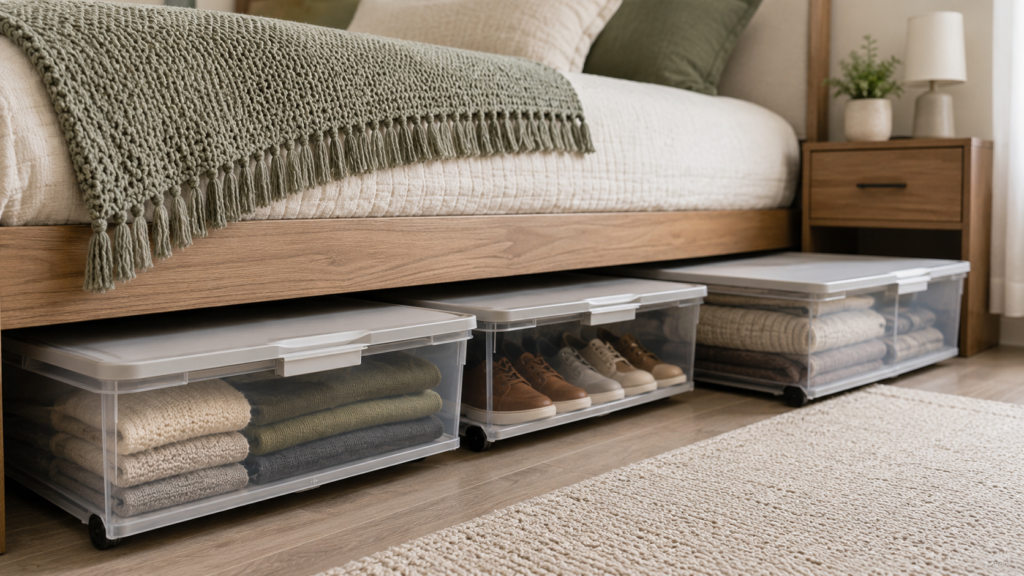
8. Reserve Clear Bins for Washable Fabric Bags
A clear open-top bin can group lightweight totes, pouches, or washable fabric bags that do not need individual shape support. Store them folded only along natural seams and avoid packing the container tightly.
Skip sealed bins for leather or pieces that require airflow. Clean the container before use and place it on a shelf rather than directly on the floor, especially where seasonal humidity or accidental spills may occur.
9. Create a Safe Zone for Clutches
Stand clutches vertically in a shallow divider or file-style organizer with smooth surfaces. Arrange them by height so small pieces remain visible and can be removed without pulling out the entire group.
Avoid thin metal dividers that press into soft finishes. Wrap embellished or beaded pieces individually, and keep magnetic closures away from cards or sensitive items that should not remain inside stored bags.
10. Protect Bags From Sunlight and Heat
Choose an interior wardrobe shelf away from direct window light, radiators, and heating vents. Strong light can fade dyes, while heat can dry some materials and weaken adhesives or coatings.
Close wardrobe doors when practical and maintain steady room conditions. The EPA’s mold and moisture guidance explains why ventilation and prompt moisture control matter in storage areas.
11. Avoid Overcrowding and Color Transfer
Leave breathing space between dark, light, patent, and suede finishes. Direct pressure over time may create dents, while unstable dyes or coatings can mark a neighboring surface.
Use neutral, colorfast barriers when two pieces must share a shelf. Inspect bags periodically for tackiness, fading, mildew, or hardware corrosion, and separate any item showing change until you can follow its manufacturer’s care advice.
12. Set a Seasonal Rotation and Inspection
Move current-season bags to the easiest shelf and place occasional pieces higher in labeled dust covers. During each rotation, empty interiors, wipe suitable surfaces according to care instructions, and check handles, corners, and closures.
Do not apply conditioners or cleaners automatically to every material. Use only products approved for the specific bag, and seek professional guidance for valuable pieces. A twice-yearly inspection catches problems before long storage makes them worse.
How Do You Store Handbags Without Losing Their Shape?
Empty the bag, fasten it gently, support the interior with loosely placed acid-free tissue, and rest the base upright on a stable shelf. Keep handles in their natural position and wrap chains or hard hardware so they cannot press into the surface.
Allow space around each handbag and protect delicate pieces with breathable dust bags. Avoid long-term hanging, tight stacking, direct sunlight, excessive heat, damp closets, and airtight plastic. Always follow the maker’s care instructions for the specific material.
Final Thoughts
Useful bedroom handbag storage ideas protect each bag while keeping the wardrobe simple to navigate. Upright shelves, soft dividers, breathable dust covers, and dedicated clutch or tote zones reduce crushing and make the collection visible.
Edit first, measure the available space, and avoid overfilling organizers. With gentle shape support and a seasonal inspection routine, handbags remain easier to choose, return, and care for without turning the bedroom into a storage room.