Cutting boards are broad, heavy, and awkward to stack, so they can quickly dominate a cabinet or countertop. When several sizes slide together, removing one board often means lifting the entire pile or knocking nearby trays out of place.
These kitchen cutting board storage ideas use vertical dividers, safe cabinet zones, airflow, and simple food-safety habits. The goal is to keep each board easy to reach, fully dry, and protected without sacrificing valuable preparation space.
Table of Contents
1. Sort Boards by Use
Gather every cutting board and decide which ones support your regular cooking routine. Separate boards used for produce, bread, meat preparation, and serving, then retire badly warped, deeply cracked, or difficult-to-clean pieces.
Keep only sizes that fit your counter and sink. A smaller collection dries faster, stores more safely, and makes it easier to choose the right board without pulling a heavy stack from the back of a cabinet.
2. Store Boards Vertically in a Divided Rack
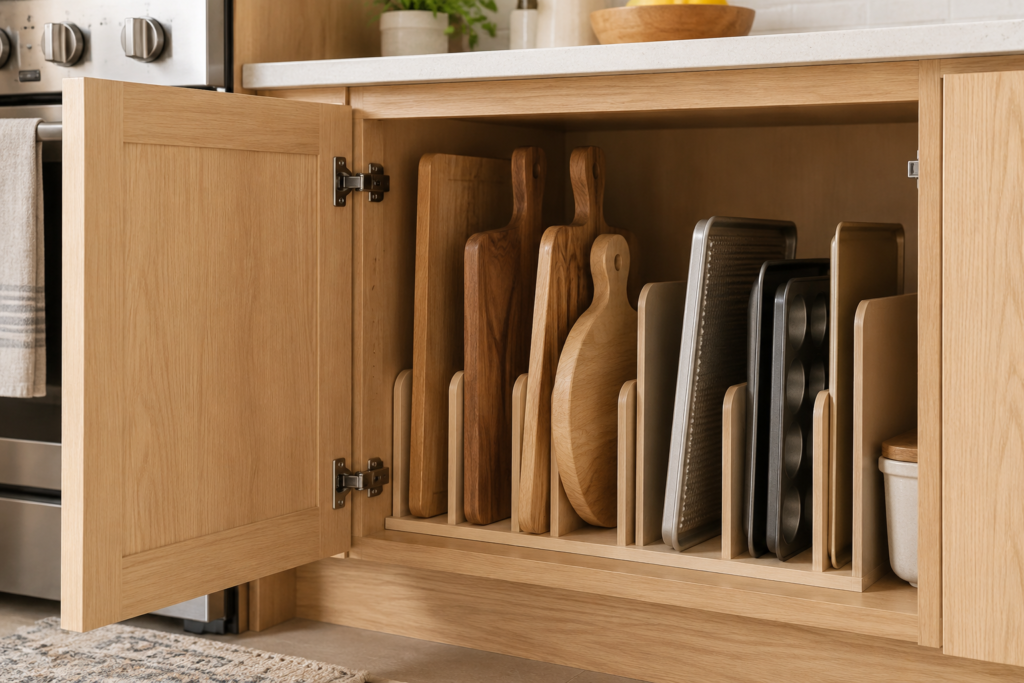
A sturdy rack holds boards on edge so each one can be removed without lifting the rest. Choose dividers wide enough for your thickest board and a base that will not tip when one side is loaded.
Place large boards in the strongest slots and lighter boards toward the outside. Make sure every board is fully dry before storage; a tight vertical space should organize clean equipment, not trap moisture after washing.
3. Use a Lower Cabinet Near the Prep Zone
A cabinet beside the main work surface keeps boards convenient while leaving the countertop open. Position the rack where the door opens fully and where you can lift each board without striking plumbing, hinges, or cookware.
If bending is uncomfortable, use a pull-out tray or choose an upper location for lightweight boards. Keep frequently used pieces toward the front, and avoid pushing boards behind appliances where they will be forgotten.
4. Add Adjustable Dividers to a Deep Drawer
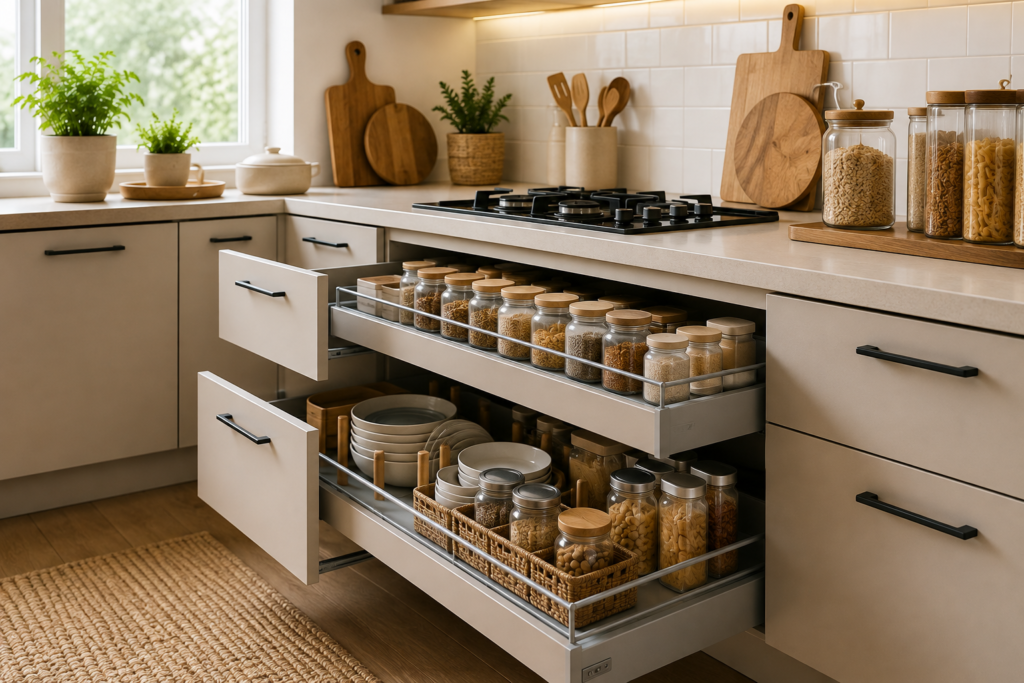
A deep drawer can hold boards vertically when its height and slide capacity are adequate. Adjustable dividers prevent boards from falling flat and create separate lanes for trays or cooling racks.
Measure the tallest board, drawer interior, and handle clearance before installation. Do not exceed the drawer manufacturer’s weight limit, and keep heavy boards centered so the drawer opens smoothly without twisting the slides.
5. Mount a Rack Inside a Cabinet Door
A purpose-made door rack can use shallow unused space for one or two lightweight boards. Confirm that the door, hinges, and fasteners can support the load and that the rack does not collide with shelves when closed.
Avoid storing thick wood or stone boards on a cabinet door. Keep screw points away from thin panels, follow the hardware instructions, and test the door slowly after installation before loading the rack fully.
6. Separate Boards From Baking Sheets
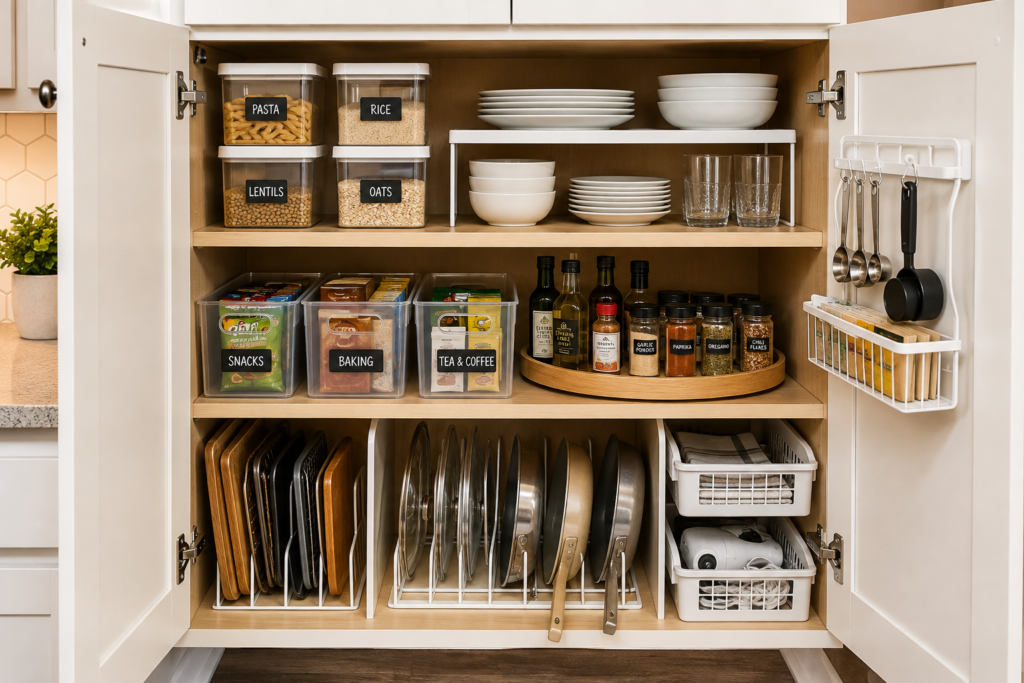
Cutting boards and baking sheets may share a vertical organizer, but each needs its own slot. Individual lanes stop narrow trays from sliding behind heavier boards and make the whole group easier to remove.
Use a divider with a nonslip base and enough height to support each item. For more ways to organize flat cookware, see our baking sheet storage ideas.
7. Use a Countertop Stand for Daily Boards
A compact stand can work when one or two boards are used every day and the counter has sufficient space. Choose a stable holder with an open base so crumbs and moisture are easy to see and clean.
Keep the stand away from sink splashes and cooktop heat. Wipe it regularly, store only fully dried boards, and preserve enough counter depth for safe chopping rather than letting storage crowd the prep area.
8. Allow Airflow Around Wood Boards
Wood boards benefit from upright storage with space around both faces. Do not press a damp board against a cabinet wall or seal it inside a plastic bin, because slow drying can encourage odor, staining, and distortion.
Dry the surface and edges thoroughly before putting the board away. Follow the maker’s care guidance for washing and conditioning, and never soak a wood board unless its manufacturer specifically permits it.
9. Create a Slim Slot Beside an Appliance
A narrow cabinet gap may hold a fitted vertical divider, provided the location stays clean, dry, and away from appliance heat or ventilation requirements. Measure the full depth before committing to the space.
Do not slide loose boards directly between an appliance and cabinet. Use a stable insert that protects edges and can be removed for cleaning, and maintain every clearance required by the appliance manufacturer.
10. Keep Food-Safety Categories Clear
Some households use separate boards for raw meat and ready-to-eat foods. Use distinct colors, edge labels, or clearly separated slots so the intended board is obvious during busy meal preparation.
The USDA advises separate boards for raw meat, poultry, and seafood and for foods that will not be cooked. Review its cutting board safety guidance for cleaning and replacement recommendations.
11. Protect Board Edges and Cabinet Surfaces
Add a washable nonslip liner beneath a rack to reduce movement and catch crumbs. Smooth dividers protect board edges better than bare wire that is bent, rusted, or too narrow for the material.
Remove the rack periodically and clean the cabinet base. Check for moisture, food residue, and loose hardware. Storage is most hygienic when every component can be reached, wiped, and dried without dismantling the cabinet.
12. Reset the Rack After Every Wash Cycle
Return boards only when they are clean and completely dry, placing each one in its assigned slot. A consistent order makes missing or damaged boards easy to notice and prevents hurried stacking.
Once a month, empty the rack, wipe the surrounding cabinet, and reassess unused pieces. If the collection begins leaning or the slots become tight, reduce the number of boards instead of forcing more into the organizer.
Is It Better to Store Cutting Boards Vertically or Flat?
Vertical storage is usually more convenient because it separates boards and allows both faces of a clean, dry board to receive some airflow. A stable divided rack also prevents the lifting and scraping associated with a heavy horizontal stack.
Flat storage can still work for one large board in a dry, easy-to-reach location. Avoid unstable piles, overloaded drawers, or any arrangement that stores boards while damp. The best orientation keeps the board supported, clean, dry, and easy to remove safely.
Final Thoughts
Practical kitchen cutting board storage ideas begin with a smaller, useful collection and a measured location near the prep zone. Vertical racks, deep-drawer dividers, or a compact countertop stand can each work when they remain stable and easy to clean.
Prioritize airflow, respect cabinet and drawer weight limits, and keep food-safety categories clear. When every fully dried board returns to a dedicated slot, the kitchen stays calmer and meal preparation becomes faster and more predictable.