What this guide covers: Build a pantry-wide food system around meal zones, shopping quantities, labels and a weekly inventory reset. If the main problem is reaching the back of deep shelves, use the dedicated deep pantry access guide.
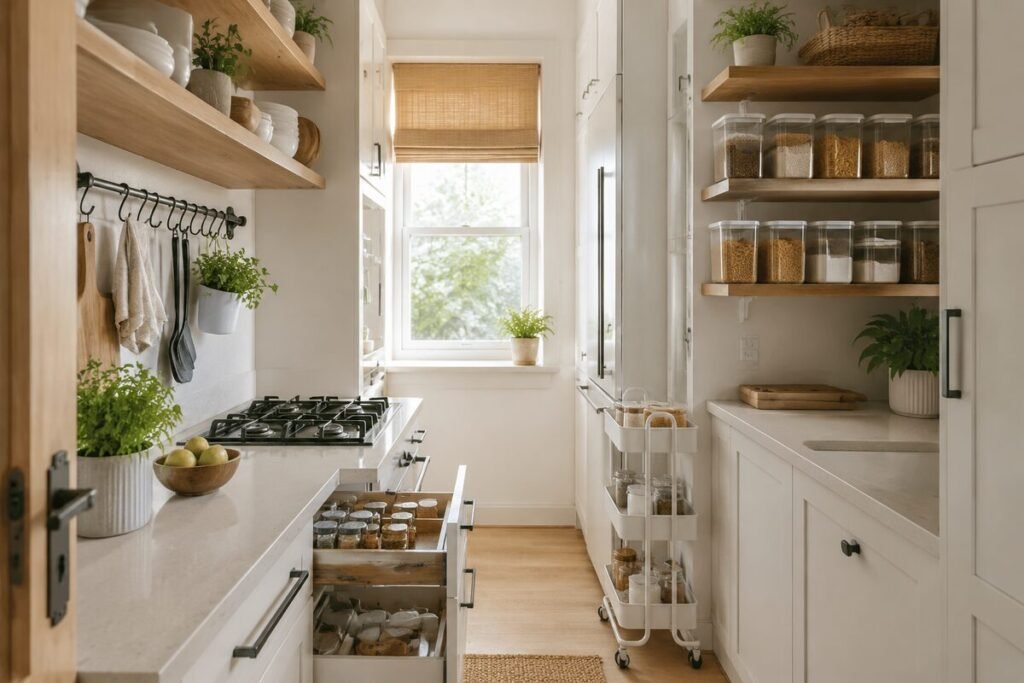
These pantry organization ideas can make everyday cooking easier, reduce food waste, and help you make the most of your available kitchen space. Whether you have a spacious walk-in pantry or a small cabinet, a few practical organization strategies can transform cluttered shelves into a functional and easy-to-maintain storage area.
Pantry Organization Ideas: Use Clear Storage Containers
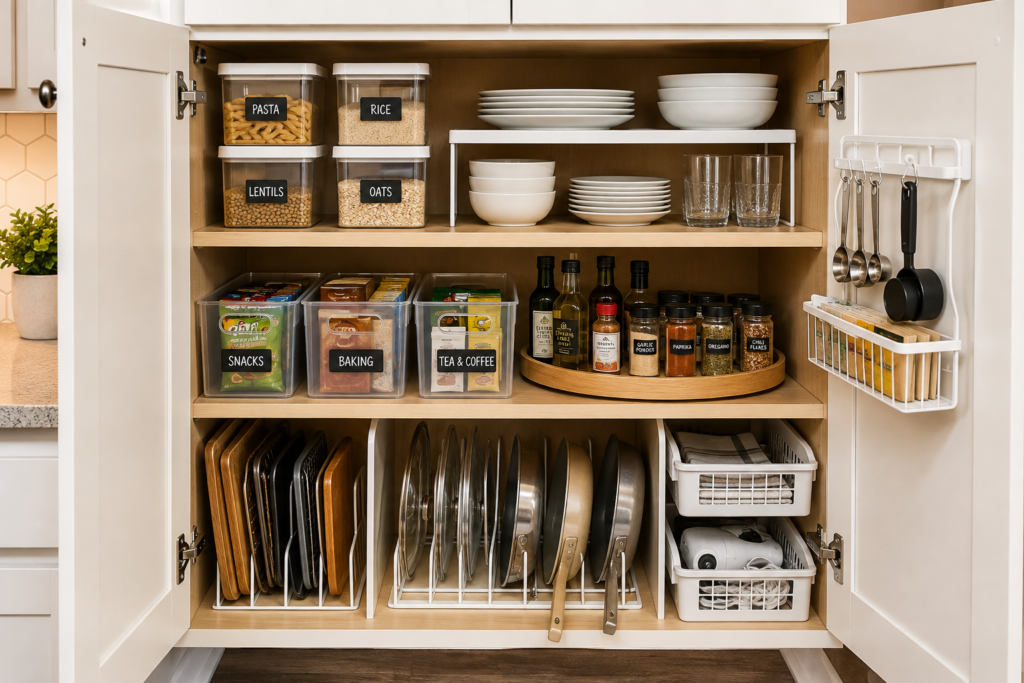
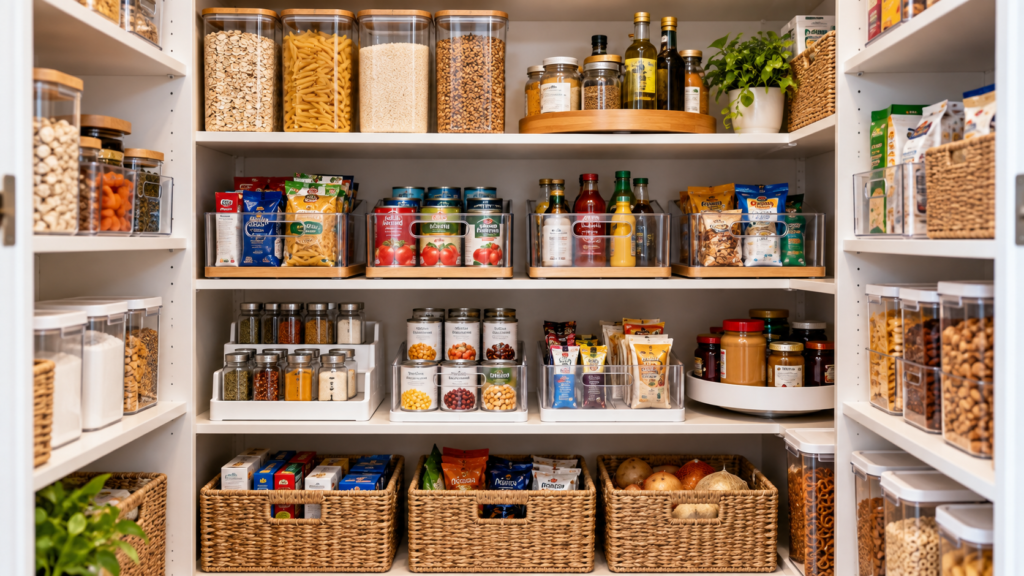
Clear storage containers make it easier to see what you have and quickly identify items that need restocking. Transfer dry goods such as flour, rice, pasta, cereal, and snacks into airtight containers to keep shelves looking tidy while helping food stay fresh. Choose stackable containers whenever possible to make better use of vertical shelf space.
Group Similar Items Together
Grouping similar items together makes your pantry easier to navigate and helps prevent duplicate purchases. Keep baking supplies in one area, breakfast foods in another, and group snacks, canned goods, sauces, and other everyday essentials by category. This simple system makes it easier to find what you need and keeps the pantry organized over time.
Add Shelf Risers for Extra Space
Shelf risers create an extra level of storage without requiring additional shelves. Use them for canned foods, jars, spices, or small containers so items at the back remain visible and easy to reach. They are especially useful in deep pantry cabinets where vertical space often goes unused.
Use Baskets and Bins for Loose Items
Baskets and bins are ideal for keeping loose or awkwardly shaped items contained. Use them for snack packets, baking supplies, small packaged foods, or other items that tend to create clutter. Label each basket by category so everyone in the household knows where items belong and can easily return them after use.
Use the Back of the Pantry Door
The back of a pantry door can provide valuable extra storage, especially in a small kitchen. Add an over-the-door organizer or slim rack for spices, packets, wraps, or other lightweight essentials. Keeping frequently used items here can free up shelf space while making them quick and easy to access.
Label Containers and Shelves
Labels make it easier to maintain an organized pantry because every item has a designated place. Add simple labels to containers, baskets, and shelves so ingredients can be found quickly and returned to the correct spot. Clear, consistent labeling is especially helpful in pantries shared by several family members.
Make Frequently Used Items Easy to Reach
Store everyday essentials at eye level or on the most accessible shelves so you can grab them quickly while cooking. Reserve higher or harder-to-reach shelves for backup supplies and items you use less often. Organizing your pantry according to how frequently you use each item can make daily meal preparation faster and more convenient.
Use Lazy Susans for Bottles and Jars
A lazy Susan can make bottles, jars, condiments, and other small pantry items much easier to access. Instead of moving several products to reach something at the back, simply rotate the turntable to find what you need. Use one in pantry corners or on deep shelves to make better use of otherwise awkward storage space.
Store Older Items in Front
Arrange pantry items so products with the earliest expiration dates stay at the front while newer purchases go behind them. This simple “first in, first out” approach encourages you to use older food first, helps reduce unnecessary waste, and makes it easier to notice which pantry staples need to be replaced.
Schedule a Quick Pantry Reset
Even a well-organized pantry can become cluttered over time. Set aside a few minutes every week or two to return misplaced items, wipe down shelves, check expiration dates, and update your shopping list. Regular maintenance prevents clutter from building up and makes your pantry organization system much easier to maintain.
A simple reset does not need to take long. Check your pantry once a week before grocery shopping, return misplaced items to their designated zones, and wipe up spills before they become harder to clean. Every few months, review containers and baskets to make sure the system still matches the foods your household actually uses. Small, consistent habits can keep an organized pantry functional without requiring a major cleanout.
Build Pantry Zones From Meals and Package Sizes
Measure shelf width, depth, height, and the largest packages you actually buy. Group foods by useful routines such as breakfast, baking, dinner ingredients, snacks, and backstock. Keep everyday foods between waist and eye height and heavy containers on lower shelves.
Scroll sideways to read the full table.
| Zone | Best contents | Control |
|---|---|---|
| Use first | Opened or near-date foods | Review weekly |
| Meal zone | Ingredients used together | Keep labels visible |
| Backstock | Unopened duplicates | Set a quantity limit |
| Heavy storage | Bulk jars and cans | Lower stable shelf |
Use First-In, First-Out Without Losing Labels
Move older products to the front and place new purchases behind. If food is decanted, retain the product name, date, allergen information, and storage instructions. Use food-safe containers and clean them before refilling.
Weekly Pantry Reset
- Return misplaced food to its zone.
- Move opened items to the use-first area.
- Check for spills, pests, or damaged packaging.
- Update the shopping list from visible gaps.
- Avoid buying duplicates already in backstock.
Pantry-Organization Questions
Are clear containers necessary?
No. Visibility helps, but labels, food safety, fit, and easy cleaning matter more.
How deep should pantry bins be?
Deep enough for the category but short enough to remove fully without hiding a second layer.
What should stay off high shelves?
Heavy jars, unstable stacks, and frequently used items that require unsafe reaching.
Pantry Mistakes That Waste Space
- Buying a matching container set before measuring packages.
- Hiding duplicates in a second row.
- Mixing opened and unopened products.
- Keeping heavy jars on high shelves.
- Refilling a container without cleaning it or updating dates.
Plan one flexible shelf for unusually tall or seasonal items so they do not disrupt every other zone.
Use the shopping list as part of the system. Check the use-first and backstock zones before adding an item, and write the quantity needed rather than a vague product name.
Set Household Stock Limits Before Buying Containers
Start with the foods used in a normal shopping cycle. Separate active packages from unopened duplicates, then decide how much backstock is practical for your household and available space. Buying larger containers does not solve repeated duplicate purchases.
- List a few useful meal zones, such as breakfast, baking, dinner ingredients and snacks. Avoid a separate bin for every ingredient.
- Give each staple an active-package location and a visible backstock location.
- Set a quantity limit based on use, package size and shopping frequency. A simple starting example is one open package and one unopened backup, adjusted for the household.
- Before shopping, check both locations and write the amount needed rather than just the product name.
- Keep a use-first area for suitable opened or near-date foods, following each product’s storage instructions.
For example, if a rice package is open and an unopened backup is visible, add rice to the shopping list only when your chosen stock limit calls for it. Keep original storage, ingredient and allergen information when decanting. Reassess limits when household routines change instead of allowing overflow to occupy unrelated pantry zones.
Final Thoughts
An organized pantry does not require a complete kitchen renovation or expensive storage solutions. By using containers, labels, baskets, shelf organizers, and a simple system for grouping food, you can make better use of the space you already have. Start with a few of these pantry organization ideas and adjust the system to fit your kitchen, shopping habits, and everyday routine.
These pantry organization ideas do not require a complete kitchen renovation or expensive storage solutions. When every item has a clear place, it becomes easier to see what you already have before buying more. These pantry organization ideas can also be adapted as your storage needs change, whether you are organizing a small cabinet or a larger walk-in pantry. Focus on simple systems that are easy to maintain rather than trying to create a perfect space all at once.
For more practical home organization inspiration, explore our home and kitchen guides.
For more guidance on safe food storage and pantry practices, visit the FDA’s food storage guidance.