What this guide covers: Compare physical storage options and bedroom layout constraints before choosing furniture or containers. If your existing storage is adequate but daily items keep collecting on chairs and surfaces, use the separate no-buy bedroom reset.
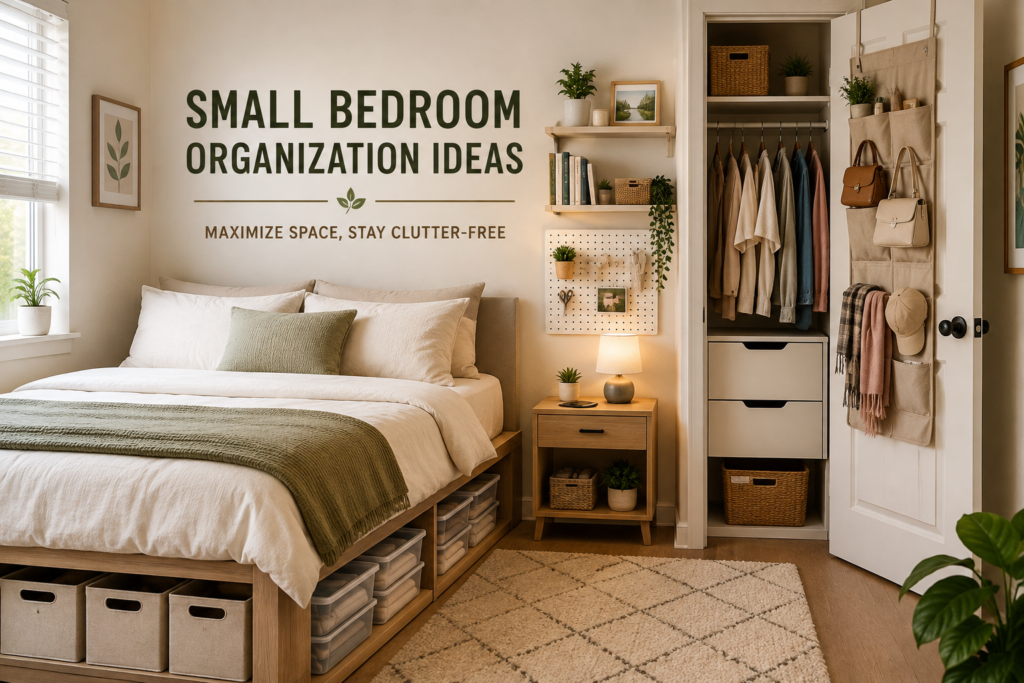
Small bedroom organization ideas can make even a limited space feel more comfortable, functional, and easier to maintain. With smart storage choices and a few simple changes, you can reduce clutter without sacrificing style. From using vertical space to making better use of areas under the bed, these practical ideas can help you get more from every corner of your bedroom.
Table of Contents
Small Bedroom Organization Ideas: Use Under-Bed Storage
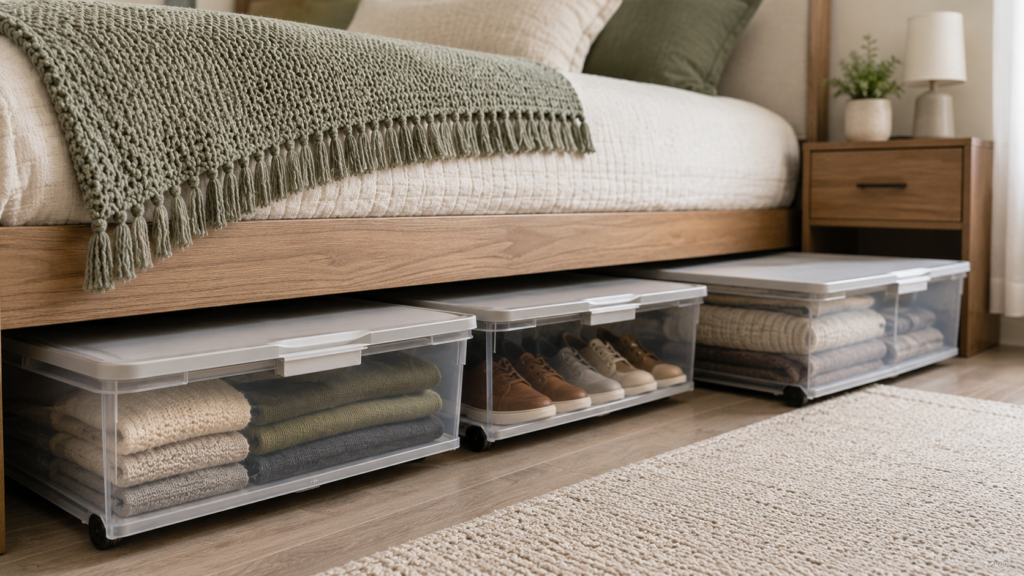
The space under your bed can provide valuable storage without taking up any additional floor space. Use low-profile storage bins, rolling drawers, or fabric containers to keep seasonal clothing, extra bedding, shoes, or rarely used items organized. Choose containers with lids whenever possible to protect belongings from dust, and label them so you can quickly find what you need.
Make the Most of Vertical Wall Space
When floor space is limited, your walls can provide useful storage without making the bedroom feel crowded. Install floating shelves for books, small baskets, décor, or everyday essentials. Wall-mounted hooks can also hold bags, hats, or accessories while keeping them off chairs and the floor. Keep the arrangement simple so the room remains open and visually uncluttered.
Choose Furniture with Built-In Storage
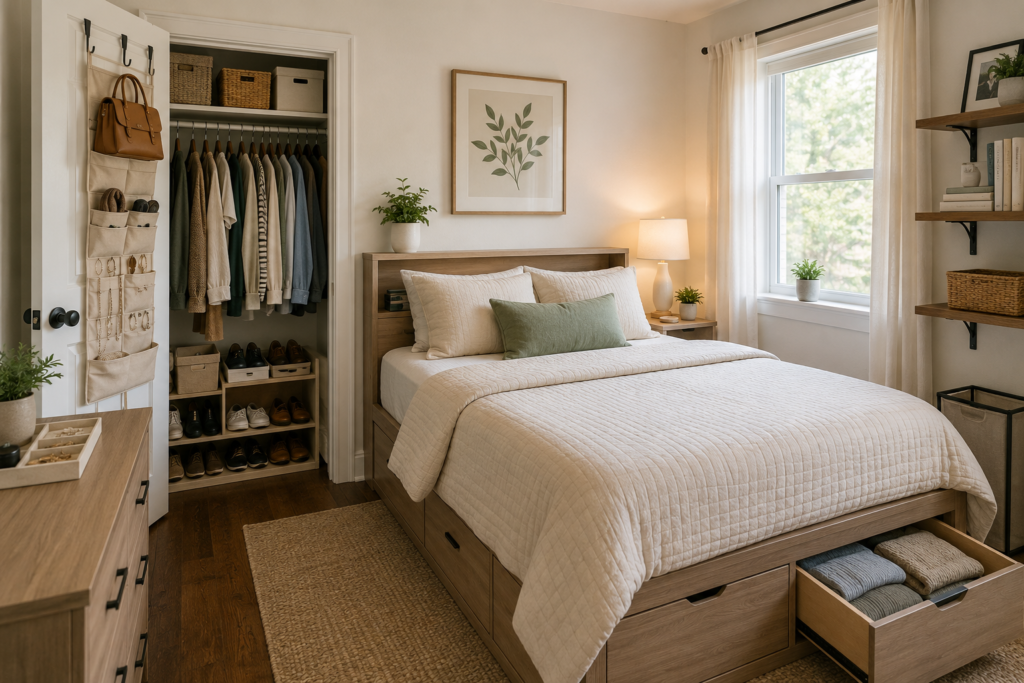
Furniture that serves more than one purpose can make a small bedroom much easier to organize. Consider a bed frame with built-in drawers, a storage bench at the foot of the bed, or a nightstand with shelves and drawers. These pieces provide convenient places for clothing, bedding, books, and everyday essentials without requiring additional storage furniture.
Use the Back of the Bedroom Door
The back of your bedroom door is an often-overlooked storage area that can help keep small items organized. Add an over-the-door organizer or a few sturdy hooks for bags, scarves, accessories, or frequently used clothing. This keeps everyday items within easy reach while freeing up valuable closet and floor space.
Add a Bedside Storage Solution
A compact bedside storage solution can keep everyday essentials organized without taking up too much space. Choose a narrow nightstand with drawers, a small wall-mounted shelf, or a bedside caddy for items such as books, chargers, glasses, and personal accessories. Keeping these frequently used items in one designated place also helps prevent clutter from collecting around the bed.
Organize Your Closet by Category
A well-organized closet can prevent clothing and accessories from spilling into the rest of a small bedroom. Group similar items together, such as shirts, trousers, jackets, and accessories, and use slim hangers to save hanging space. Shelf dividers, small bins, and labeled baskets can help keep folded clothing and smaller items contained and easy to find.
Use Drawer Organizers to Control Clutter
Bedroom drawers can quickly become messy when small items do not have designated places. Use drawer dividers or small organizers to separate socks, accessories, undergarments, and other everyday essentials. Keeping each category in its own section makes items easier to find and helps prevent drawers from becoming cluttered again.
Keep Surfaces as Clear as Possible
Clear surfaces can make a small bedroom feel more spacious and easier to maintain. Avoid using dressers, nightstands, or desks as permanent storage areas for miscellaneous items. Instead, give everyday belongings a designated drawer, basket, hook, or shelf so only a few useful or decorative items remain visible.
Create a Dedicated Spot for Daily Essentials
Small bedrooms stay more organized when frequently used items have a consistent place. Use a small tray, basket, wall hook, or drawer for essentials such as keys, watches, chargers, or accessories. Returning these items to the same spot each day reduces visual clutter and saves time when you need to find them.
Do a Quick Bedroom Reset Each Day
Spending just a few minutes each day putting things back in their designated places can prevent clutter from building up. Make the bed, return clothing to the closet or laundry basket, clear bedside surfaces, and put away any items left on the floor. A simple daily reset makes a small bedroom easier to maintain and helps the space feel calmer and more organized.
Start With Clearances, Not Storage Products
Measure the bed, door swing, window access, wardrobe doors, and the narrowest walking route. Preserve a clear path through the room and keep required access to windows, heating, cooling, and electrical points. A layout that fits on paper may still feel cramped when drawers and doors are open.
Scroll sideways to read the full table.
| Area | Best use | What to measure |
|---|---|---|
| Under the bed | Seasonal or low-frequency items | Clear height, frame supports, and pull-out space |
| Bedside zone | Nightly essentials | Reach from bed and walking clearance |
| Wardrobe interior | Daily clothes and accessories | Rod drop, shelf depth, and door opening |
| Upper wall | Light occasional items | Safe fixing, weight, and overhead placement |
Use Frequency to Assign Space
Daily clothing, chargers, glasses, and personal-care items should be easy to reach. Seasonal bedding and luggage can use less accessible zones. Give each category a capacity limit; when the container is full, edit the contents before adding another organizer.
Make the Bed Area Work Harder Without Crowding It
Choose a narrow bedside surface or wall-mounted ledge only after checking safe installation and reach. Use under-bed containers that close fully and can be removed without lifting the bed. Keep ventilation openings clear and avoid pushing stored items against heating equipment.
A One-Hour Small-Bedroom Reset
- Remove items that belong in other rooms.
- Sort clothes into daily, seasonal, repair, and exit categories.
- Assign one home to chargers, documents, and bedside essentials.
- Store heavy items low and keep the walking route clear.
- Stop before filling every open surface.
Layout Problems to Avoid
- Blocking a window, door, heater, or ventilation path.
- Using oversized furniture because it offers more internal storage.
- Adding tall unstable furniture without following anti-tip guidance.
- Creating deep stacks that must be dismantled to reach one item.
- Keeping decorative storage that is harder to use than a drawer.
A small bedroom feels larger when routines are short and the floor path is obvious. Prioritize safe movement and easy resetting over maximum theoretical capacity.
Small-Bedroom Organization Questions
Which area should be organized first?
Clear the walking route and the area around the bed first. Safe movement provides a better foundation than reorganizing a hidden drawer.
Is under-bed storage always useful?
It works when containers fit the frame, remain dry, and can be removed without lifting or blocking ventilation. Avoid treating it as indefinite overflow.
How can the room look less crowded?
Reduce visible categories, keep furniture scale appropriate, and leave parts of the floor and walls intentionally open.
Final Thoughts
Small bedroom organization ideas work best when they focus less on adding more storage and more on using the available space efficiently. Under-bed containers, vertical storage, multifunctional furniture, drawer organizers, and simple daily habits can all help create a room that feels less cluttered and more comfortable.
Start with the areas that create the most clutter and introduce solutions gradually. These small bedroom organization ideas can be adapted to your room size, storage needs, and daily routine, making it easier to maintain an organized bedroom over time.
For more practical home organization inspiration, explore our home and kitchen guides.
For helpful tips on keeping bedrooms clean and reducing indoor allergens, visit the EPA’s healthy indoor environment resources.