Use these small living room ideas to choose the first change your room needs. A blocked route, belongings without a home and a visually busy room call for different responses. Start with the difficulty you experience during an ordinary evening, then choose one intervention before buying furniture or decorations.
Choose the next task: if a recliner or table blocks movement, use the furniture arrangement guide. If blankets or games have no usable home, compare storage capacity and footprint. If access and storage already work but patterns or displays compete, use the visual decor guide. If items have homes but stay out, test the shared return routine.
Illustrative diagnosis: a room with a clear walkway but blankets left on the sofa does not automatically need smaller seating. Check whether the existing blanket compartment can be opened from the normal position and whether the active collection fits. An inconvenient lid points to storage access; an unused but easy-to-reach compartment points to the return routine. Test that distinction before changing the room’s colour or buying another unit.
Table of Contents
Small Living Room Ideas: Choose Furniture That Fits the Space
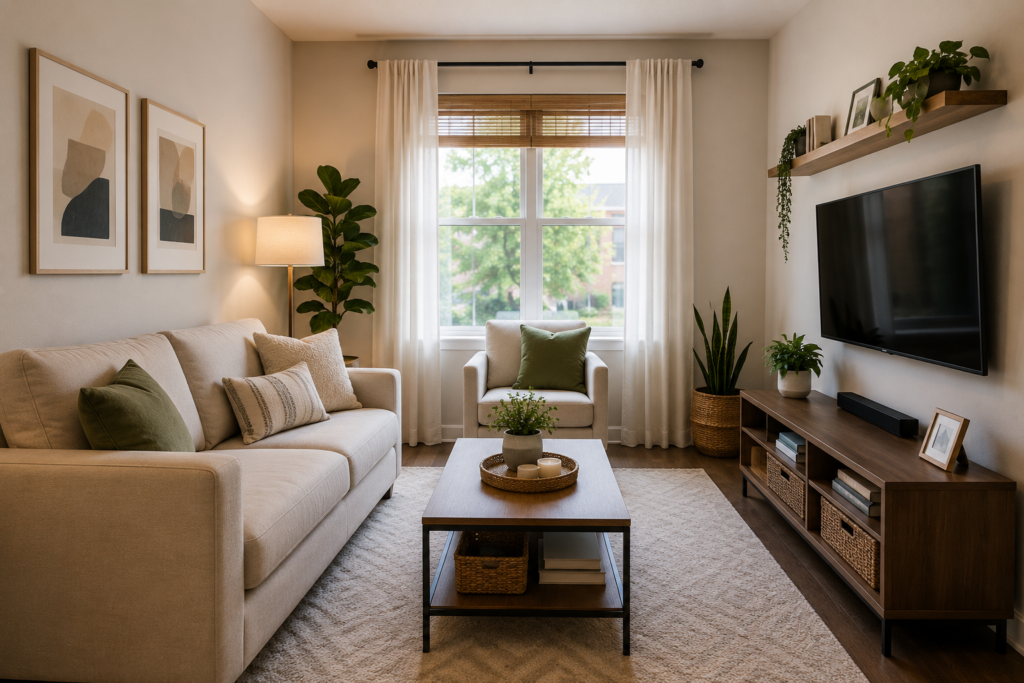
Choose furniture that matches the scale of your living room instead of filling the space with oversized pieces. A compact sofa, slim armchairs, and narrow side tables can provide comfortable seating while keeping walkways open. Look for furniture with exposed legs or lighter visual profiles, as these designs allow more of the floor to remain visible and can help a small room feel less crowded.
Use Light Colors to Create an Open Feel
Light colors can make a small living room feel brighter and more spacious by reflecting more natural and artificial light around the room. Consider soft whites, warm neutrals, beige, or light gray for larger surfaces such as walls and curtains. You can still introduce personality through cushions, artwork, rugs, and other smaller accents without making the overall space feel visually heavy.
Make the Most of Vertical Space
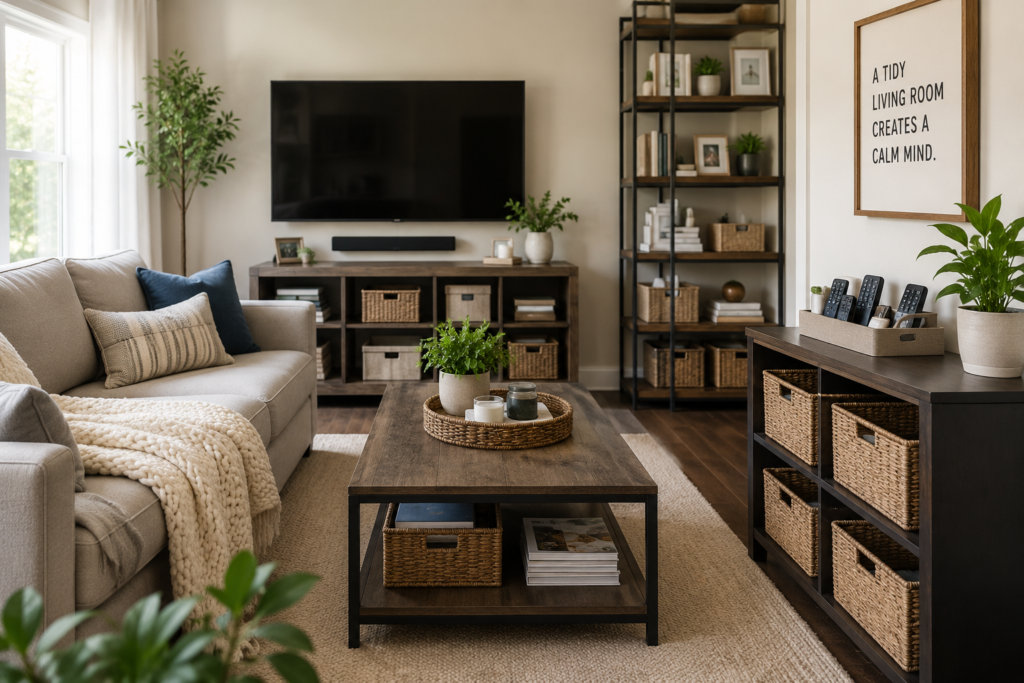
When floor space is limited, use your walls to create additional storage without making the living room feel crowded. Floating shelves, tall bookcases, and wall-mounted storage can hold books, décor, and everyday essentials while keeping valuable floor area clear. Arrange items neatly and leave some open space between them so the walls do not appear overloaded.
Choose Multifunctional Furniture
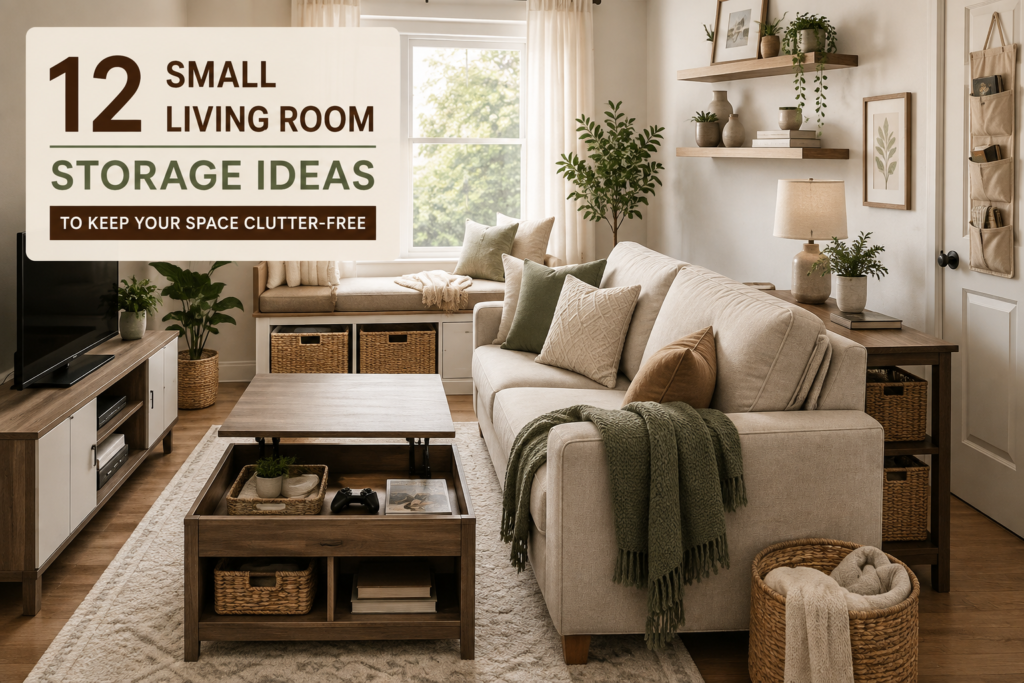
Furniture that serves more than one purpose can help you get more functionality from a small living room. Consider an ottoman with hidden storage, a coffee table with shelves or drawers, or nesting tables that can be separated when needed and tucked away afterward. These versatile pieces provide useful storage or surface space without requiring additional bulky furniture.
Use Mirrors to Reflect Light
A well-placed mirror can help a small living room feel brighter and visually larger by reflecting light throughout the space. Position a mirror near or opposite a window when possible to make better use of natural light. Choose a size that complements the wall without overwhelming it, and keep the surrounding décor simple for a clean, open look.
Keep Walkways Clear
An open walking path can make a small living room feel less cramped and easier to use. Arrange furniture so people can move naturally through the room without navigating around tables, chairs, or decorative items. Keeping major pathways clear also creates stronger visual lines across the space, which can help the room appear larger and more organized.
Choose a Rug That Fits the Room
The right rug can visually connect your furniture and make a compact living room feel more cohesive. Avoid rugs that are too small, as they can divide the room into disconnected sections. When possible, choose a rug large enough for at least the front legs of your main seating pieces to rest on it, creating a more unified and spacious appearance.
Reduce Visual Clutter
Too many visible items can quickly make a small living room feel crowded. Keep frequently used essentials organized in baskets, drawers, cabinets, or other designated storage areas, and limit decorative objects to a few pieces you genuinely enjoy. Clear surfaces and thoughtfully arranged décor can give the room a calmer and more open appearance.
Use Curtains to Add Visual Height
Hanging curtains higher than the top of the window can draw the eye upward and create the impression of taller walls. Mount the curtain rod closer to the ceiling when practical and allow the curtains to fall toward the floor. Light or neutral fabrics can also help maintain an airy feeling while still providing privacy and softness.
Create a Simple, Flexible Layout
A small living room works best when its layout can adapt to different everyday needs. Avoid overcrowding the room with furniture and keep smaller pieces easy to move when additional floor space or seating is required. A simple arrangement centered around the room’s main function can make the space feel more comfortable, practical, and visually balanced.
Measure the Small Living Room as a Route
Record wall lengths, door swings, window access, radiator or vent clearance, and the main walking route. Measure furniture at its widest point and include recliner, drawer, and cabinet movement. Clear circulation often makes a room feel larger than another storage unit.
Scroll sideways to read the full table.
| Goal | Useful move | Avoid |
|---|---|---|
| Better flow | Keep one obvious path through the room | Furniture corners entering the walkway |
| More seating | Use appropriately scaled flexible seating | Oversized pieces that cannot move |
| Less clutter | Closed storage for small mixed items | Many decorative baskets without categories |
| More light | Keep windows clear and layer lighting | Blocking natural light with tall furniture |
Choose One Visual Anchor
Use the largest window, a piece of art, media wall, or conversation group as the focal point. Keep surrounding surfaces quieter and repeat a limited color palette. Mirrors can reflect useful light when positioned thoughtfully, but should not create glare.
Thirty-Minute Layout Test
- Remove unrelated clutter.
- Mark the main walkway.
- Position the largest seating first.
- Add tables only where they support a seat.
- Photograph and evaluate the room from the entrance.
Small-Living-Room Questions
Should furniture touch the walls?
Not always. A small gap or conversational grouping can improve flow when measurements allow.
What furniture should be removed first?
Start with any piece that blocks movement but does not support a frequent activity.
Do light colors always make a room larger?
They can help, but consistent contrast, good lighting, and appropriate furniture scale matter more.
Scale and Flow Mistakes
- Choosing furniture from showroom impressions rather than measurements.
- Blocking a window or heating and cooling equipment.
- Adding several tiny storage pieces instead of one clear system.
- Using a rug too small to connect the seating area.
- Keeping furniture that supports no current activity.
Test the room for a week before buying replacements. Daily movement reveals problems that a single photograph will not show.
Keep storage close to the activity it supports: remotes near seating, reading material near the main chair, and toys near the play zone. Short return paths make a small room easier to reset.
Final Thoughts
Small living room ideas do not require expensive renovations or major design changes to make a noticeable difference. Choosing appropriately sized furniture, keeping walkways clear, using vertical storage, and reducing visual clutter can help a compact room feel more comfortable, organized, and spacious.
Start with the changes that best suit your current layout and everyday needs. Even a few thoughtful adjustments to furniture placement, lighting, storage, and décor can help you make better use of the space you already have while creating a living room that feels welcoming and functional.
With the right small living room ideas, even a limited floor plan can feel brighter, more organized, and more comfortable for everyday living.
For more practical home organization inspiration, explore our home and kitchen guides.
For additional guidance on improving lighting and energy efficiency at home, explore the U.S. Department of Energy’s Energy Saver resources.