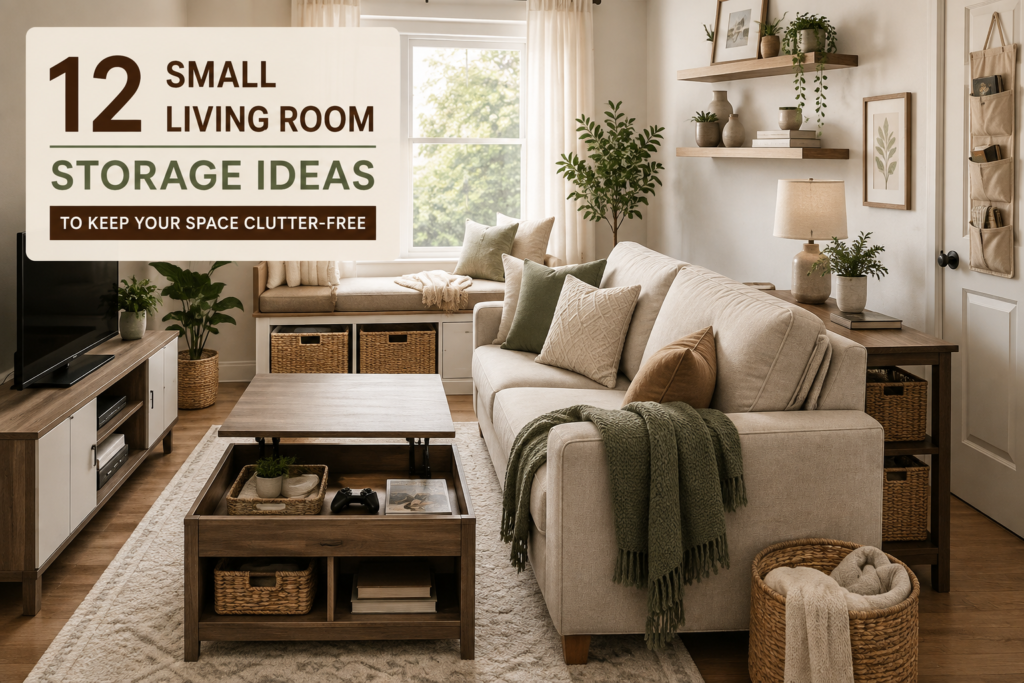
A busy living room can quickly become cluttered with blankets, electronics, books, toys, and other everyday items. The good news is that a few simple systems can make the space much easier to maintain. These living room organization ideas will help you create designated places for frequently used items, reduce visual clutter, and keep your room comfortable without sacrificing style.
Table of Contents
Living Room Organization Ideas: Start With a Quick Declutter
Before adding organizers or storage furniture, remove items that no longer belong in the room. Gather unused décor, old magazines, unnecessary accessories, and anything that should be stored elsewhere. Starting with fewer items makes it easier to see the available space and build an organization system that fits your daily routine.
Give Everyday Items a Designated Place
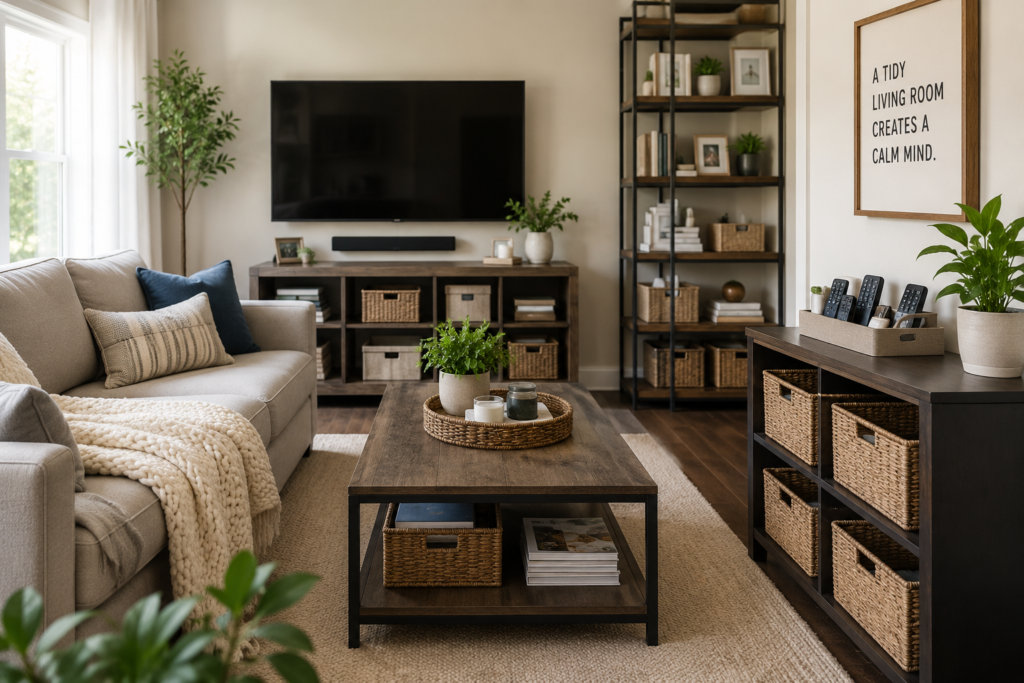
Frequently used items are easier to manage when everyone knows where they belong. Choose specific places for remote controls, chargers, books, blankets, and other essentials. A small tray, basket, drawer, or shelf can prevent these items from spreading across coffee tables and sofas throughout the day.
Use Decorative Baskets to Control Clutter
Decorative baskets provide convenient storage while blending naturally with living room décor. Use them for throw blankets, toys, magazines, or other lightweight items that tend to accumulate in open areas. Place baskets near the locations where their contents are normally used so putting things away remains quick and easy.
Keep the Coffee Table Clear
A crowded coffee table can make the entire living room feel untidy. Keep only a few useful or decorative items on the surface and give everything else a nearby storage location. Trays can help group smaller objects together while drawers, shelves, or baskets can hold items that do not need to remain visible.
Organize Entertainment and Media Items
Entertainment areas often collect remote controls, game accessories, cables, and other small electronics. Group related items together and store them in labeled containers, drawers, or closed cabinets whenever possible. Keep cables neatly managed and avoid blocking ventilation around electronic equipment.
Create a Dedicated Spot for Blankets
Throw blankets can easily end up covering sofas and chairs when they do not have a designated storage place. Keep them folded in a large basket, storage ottoman, or suitable cabinet near the seating area. Choosing one consistent location makes blankets easy to reach while helping the room look more organized when they are not being used.
Use Vertical Space for Extra Organization
When floor space is limited, walls can provide valuable room for organization. Floating shelves or suitable wall-mounted storage can hold books, décor, and lightweight everyday items without adding another piece of furniture. Keep arrangements simple and avoid overcrowding shelves so the living room still feels open and balanced.
Organize Books and Magazines
Books and magazines can quickly create visual clutter when they are scattered around the room. Keep current reading material together on a shelf, in a basket, or in a designated section of a bookcase. Periodically remove outdated magazines and books you no longer want so the collection stays manageable.
Create a Charging Station for Electronics
Phones, tablets, chargers, and cables are easier to manage when they have one designated location. Set up a small charging area near a suitable electrical outlet and use a tray or cable organizer to keep cords contained. Follow the device manufacturer’s charging guidance and avoid covering charging equipment with blankets or other materials.
Use Furniture With Hidden Storage
Furniture that includes built-in storage can help reduce clutter without taking up additional floor space. Storage ottomans, benches, side tables with drawers, and similar pieces can hold blankets, games, or other living room essentials. Choose furniture that fits the room comfortably and provides storage for items you actually use.
Set Up a Simple Drop Zone
Small everyday items such as keys, mail, and personal accessories can easily migrate into the living room and create clutter. If these items regularly enter the space, designate a small tray, basket, or nearby console area for them. Keep the drop zone limited to essentials and clear it regularly so it does not become another cluttered surface.
Reset the Living Room Each Day
A short daily reset can prevent small amounts of clutter from building up over time. Return remote controls to their designated place, fold blankets, remove cups or dishes, straighten cushions, and put away anything that belongs elsewhere. A consistent routine makes the room easier to maintain and reduces the need for frequent major cleanups. These living room organization ideas become much easier to maintain when everyone follows the same simple daily routine.
Final Thoughts on Living Room Organization Ideas
Living room organization ideas are most effective when they match the way you actually use the space. Simple solutions such as baskets, designated storage zones, clear surfaces, hidden storage furniture, and organized electronics can make everyday items easier to manage while keeping the room comfortable and welcoming.
Start with the areas that collect clutter most often and improve one zone at a time. Avoid adding storage products unless they solve a specific problem, and regularly remove items you no longer need. A practical system that is easy to maintain will usually work better than an overly complicated setup. Over time, these living room organization ideas can help prevent clutter from building up and make regular tidying faster.
For more practical organization and storage inspiration, explore our home and kitchen guides.
For helpful information about reducing household waste and making more sustainable choices at home, explore the EPA’s reducing and reusing basics.