
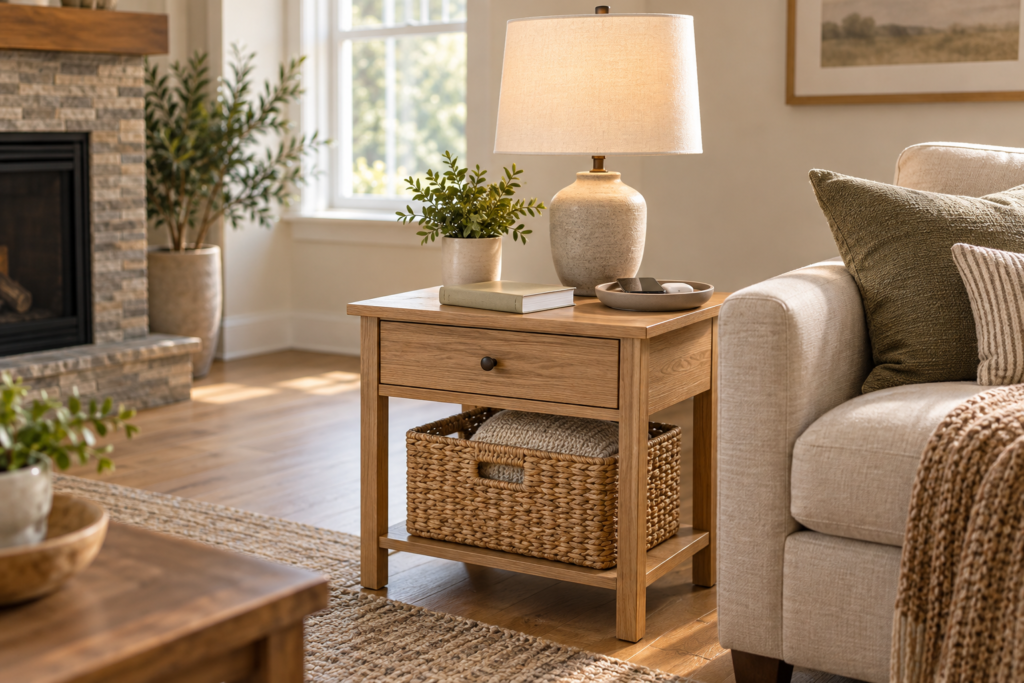
A living room side table works hardest when it holds everyday essentials without looking crowded. Because the surface and drawer are small, even a few loose remotes, cords, books, and cups can make the entire seating area feel untidy.
These living room side table storage ideas focus on access, safe cable control, realistic capacity, and a calm warm-modern look. Start with what you use from the sofa, then give each item a defined place that is simple to reset.
Table of Contents
1. Living Room Side Table Storage Ideas: Begin With What You Reach For
List the items you actually use while seated, such as a remote, reading glasses, charger, notebook, or coaster. Give the table responsibility for only these essentials instead of treating it as overflow storage for the entire room.
Remove duplicates and relocate anything used less than weekly. A short, deliberate inventory makes every later decision easier and prevents a small drawer or shelf from filling with objects that belong elsewhere.
2. Choose a Table With One Useful Drawer
One of the simplest living room side table storage ideas is a shallow drawer because it is ideal for visually busy essentials because it keeps the top calm while preserving quick access. Measure remotes, glasses cases, and charging accessories before buying organizers so the drawer can close without pressure.
Avoid filling the drawer to its full height. Leave enough clearance to lift items comfortably, and use a nonslip liner if objects slide whenever the drawer opens. One open layer is easier to maintain than a deep pile.
3. Use a Small Divided Tray Inside the Drawer
A compact insert creates separate zones for a remote, pen, lip balm, and charging cable. Select a tray that leaves a little open space rather than forcing every inch into tiny compartments.
Group by function and keep the most frequently used item nearest the front. If a compartment stays empty, that is useful breathing room. For a broader surface reset, see our coffee table organization ideas.
4. Add a Basket to an Open Lower Shelf
Another of the practical living room side table storage ideas is a woven or fabric basket that can hold a folded throw, current magazines, or a small craft project while softening the look of an open shelf. Choose straight sides and a handle that can be reached without moving the table.
Keep the basket light enough to pull out safely from a seated position. Its dimensions should leave finger space on both sides and above; a basket wedged tightly into the shelf will be inconvenient and may scratch the finish.
5. Create a Dedicated Charging Tray
Place a small tray near the back of the tabletop for a phone, earbuds, and one short charging lead. The tray defines the charging zone and keeps small electronics from spreading across the surface.
Route the cable behind the table and use removable clips approved for the furniture finish. Keep plugs ventilated, replace damaged cords, and review the U.S. Consumer Product Safety Commission’s home electrical safety guidance.
6. Use the Back of the Table for Cable Control
For safer living room side table storage ideas, adhesive cable clips or a discreet cable sleeve can guide a lamp and charger down the rear leg. This keeps cords away from feet, vacuum paths, and the visible edge of the table.
Leave a gentle bend in every cord and enough slack to move the table for cleaning. Do not staple, pinch, or tightly coil power cables, and never run them under a rug where damage and heat can go unnoticed.
7. Store Reading Materials Vertically
A narrow magazine holder on a lower shelf keeps a current book, journal, or two magazines upright. Vertical storage prevents unstable stacks and makes titles visible without lifting several items.
Limit the holder to what you are actively reading. Archive finished magazines and return completed books to the main shelf weekly. A small side table should support the present routine rather than become a permanent paper collection.
8. Use a Lidded Box for Occasional Essentials
A low lidded box can contain spare batteries, a sleep mask, or a small mending kit that is useful but not needed every day. Select one box that fits fully within the shelf or drawer.
Label the underside or inside of the lid if necessary, keeping the visible exterior simple. Review the contents every few months, check batteries for leakage, and move medicines or hazardous items to secure storage away from children.
9. Keep the Tabletop to Three Functional Zones
Divide the surface mentally into lighting, landing, and open-space zones. A lamp may occupy the rear corner, a coaster or tray can form the landing zone, and the remaining area stays open for temporary use.
This limit prevents decorative objects from competing with daily needs. Scale each item to the tabletop and preserve room to set down a drink safely without balancing it beside electronics or placing it close to the edge.
10. Match Storage to the Sofa Height
A useful side table should let you reach essentials without twisting or leaning far forward. Compare the tabletop with the sofa arm and seat height, then check that the drawer and shelf remain accessible from the usual sitting position.
If the table is unusually low, reserve its lower shelf for lightweight items. If it is tall, keep heavier objects below to improve stability. Never use a small side table as a step or seat unless the manufacturer designed it for that purpose.
11. Protect the Storage From Spills
Use a washable coaster, wipeable tray, or small liner beneath drinks and plant pots. Keep paper, chargers, and fabric baskets away from areas where condensation or watering could reach them.
Clean spills promptly and follow the table manufacturer’s care instructions. Avoid placing liquids directly above an open drawer filled with electronics, and choose a stable cup location that is not in the path of an elbow or pet.
12. Reset the Side Table Once a Week
To maintain these living room side table storage ideas, choose a consistent weekly moment to return remotes, recycle paper, wipe the surface, and empty anything that migrated from another room. A two-minute reset protects the system better than adding more containers.
Notice which objects repeatedly return. If they are genuinely used at the seat, assign them a specific zone; if not, move them to their proper home. Storage should adapt to real behavior while keeping the table easy to use.
What Should You Store in a Living Room Side Table?
Store only items that support activities at that seat: a remote, reading glasses, a current book, a coaster, and a safely routed charger are common examples. A lower basket may hold one folded throw or a small active project.
Avoid using the table for important documents, medication, loose food, leaking batteries, or unrelated household overflow. If an item is rarely used in the living room, it will be easier to maintain in a more appropriate storage zone.
Final Thoughts
The most effective living room side table storage ideas combine a clear tabletop with one or two contained zones below. A shallow drawer, divided tray, lower basket, and careful cable route can support daily comfort without adding visual noise.
Choose organizers only after measuring the table and editing the contents. When each item has an easy home and the surface receives a quick weekly reset, the whole seating area feels more comfortable, functional, and intentionally arranged.