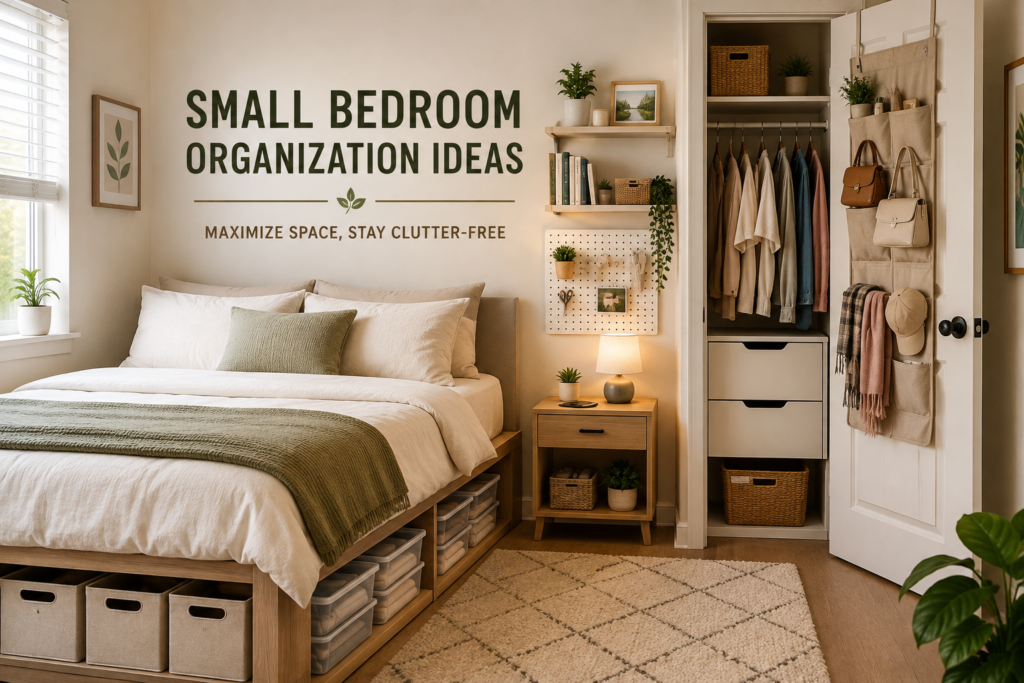
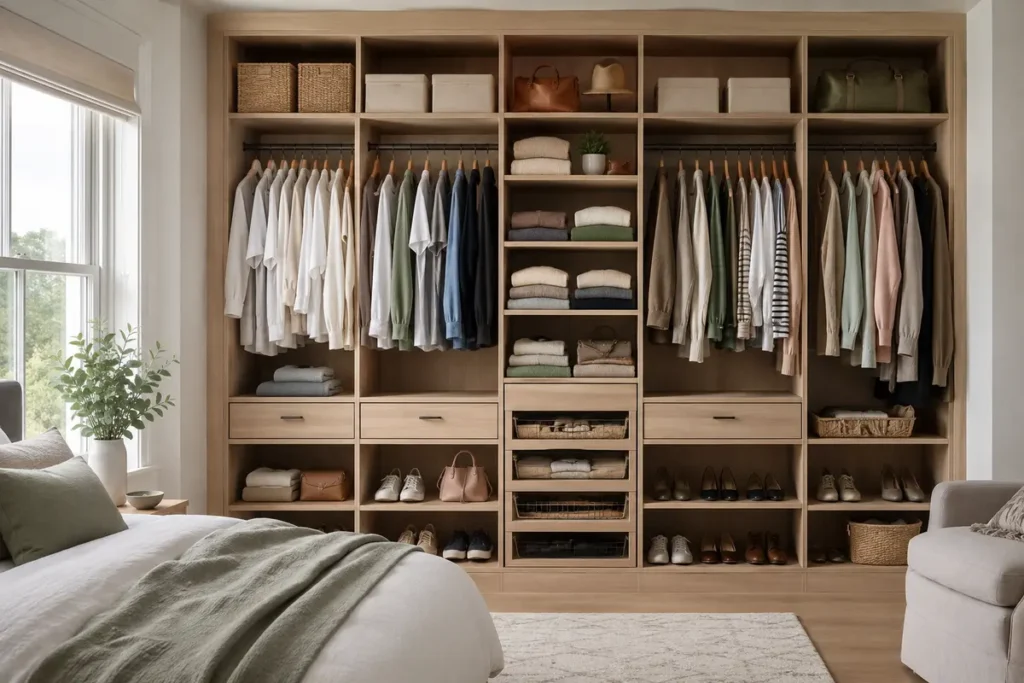
Smart wardrobe organization ideas make getting dressed easier and help clothes, shoes, bags, and accessories stay in good condition. A useful system does not require a huge closet—it simply gives every category a clear, accessible home.
Table of Contents
1. Edit Your Wardrobe
Begin by removing everything and sorting it into keep, repair, donate, and recycle groups. Keep clothing that fits, feels comfortable, and supports your current routine. Reducing excess makes the remaining wardrobe easier to organize and maintain.
2. Create Clothing Zones
Group clothes by category, such as workwear, casual tops, trousers, dresses, and outerwear. Within each category, arrange by color or sleeve length. Clear zones reveal what you own and shorten the time spent searching.
3. Use Matching Slim Hangers
Matching hangers create a cleaner visual line and reduce wasted rail space. Slim non-slip hangers work well for shirts and dresses, while structured wooden hangers are better for jackets. Avoid overcrowding so garments can hang without wrinkling.
4. Add a Double Hanging Rail
If most garments are short, add a second rail beneath the first for twice the hanging capacity. Keep shirts and jackets above with skirts or trousers below. Reserve one taller section for dresses and long coats.
5. Divide Open Shelves
Shelf dividers prevent folded sweaters, jeans, and T-shirts from collapsing into one another. Keep stacks short and assign each compartment a category. Baskets are useful for soft items that do not fold neatly.
6. Organize Drawers Vertically
File-fold T-shirts, sleepwear, and activewear so every item remains visible when the drawer opens. Use adjustable dividers for underwear, socks, and smaller pieces. Leave a little breathing room so items are easy to return.
7. Build a Practical Shoe Zone
Store everyday shoes on low open shelves and special-occasion pairs in labeled boxes above. Keep frequently worn footwear near the wardrobe entrance. Clean shoes before storing them to protect clothing and shelves from dust.
8. Use the Inside of Wardrobe Doors
Over-door organizers, shallow racks, or sturdy hooks can hold belts, scarves, small bags, and jewelry. Make sure added storage does not prevent the doors from closing or press accessories against delicate clothing.
9. Rotate Seasonal Clothes
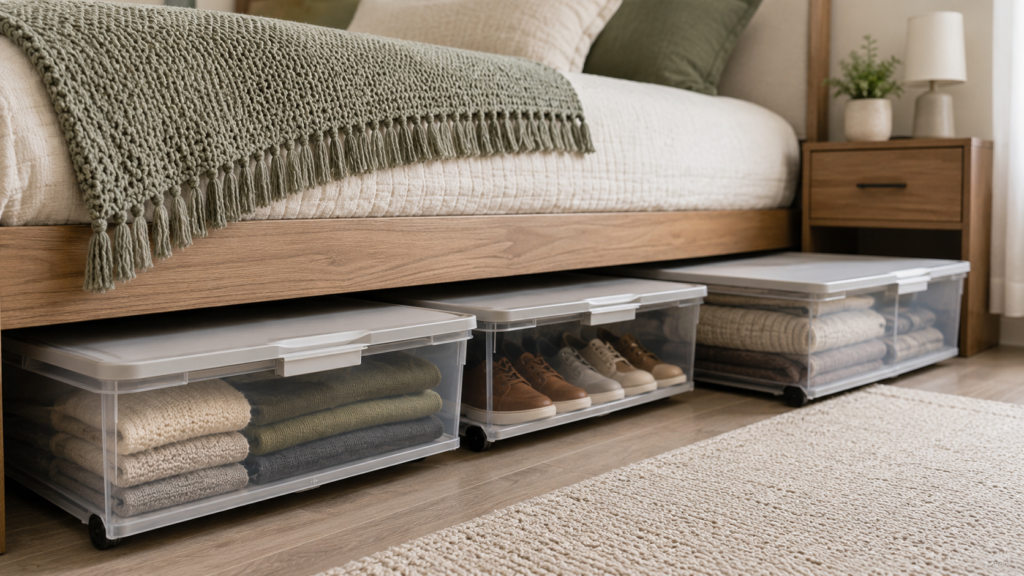
Move off-season items to high shelves or breathable under-bed containers. Wash and dry garments before long-term storage, then add clear labels. Seasonal rotation keeps prime wardrobe space focused on what you wear now.
10. Contain Accessories
Use small trays, drawer inserts, hooks, and divided boxes for watches, jewelry, sunglasses, and belts. Store delicate pieces separately to prevent tangling. These bedroom jewelry storage ideas offer additional solutions for accessories.
11. Label Hidden Storage
Label opaque boxes and high baskets with broad categories such as “winter knitwear” or “occasion bags.” Clear labels prevent forgotten items and make it easier to return everything to the correct place.
12. Reset the Wardrobe Weekly
Once a week, return clean clothes, remove empty hangers, refold unstable stacks, and place shoes back in their zone. A short reset protects the system from gradual clutter. If the wardrobe is freestanding, follow the manufacturer’s anchoring instructions; the U.S. CPSC provides furniture tip-over safety guidance.
Final Thoughts
The most successful wardrobe organization ideas match your clothing and daily habits. Start by editing what you own, create simple zones, and use vertical space without overcrowding. For more bedroom storage inspiration, see these bedroom closet organization ideas and small bedroom storage ideas without a closet.
Wardrobe Organization Ideas: Capacity Checklist
Sort clothes by fit, condition, season, and frequency before buying organizers. Measure hanging drops, shelf depth, and drawer clearance.
Keep heavy items low and allow airflow around clean, fully dry clothing.
Wardrobe Organization Mistakes to Avoid
Do not overfill rails, hide damp garments, or use unstable stacks above head height.
See our closet organization ideas and EPA moisture guidance.
Frequently Asked Questions
How much clothing should stay in a wardrobe?
Keep items that fit, are usable, and suit current needs, leaving room to remove them easily.
Should seasonal clothes stay inside?
Only if space allows; otherwise use clean labelled storage in a dry location.