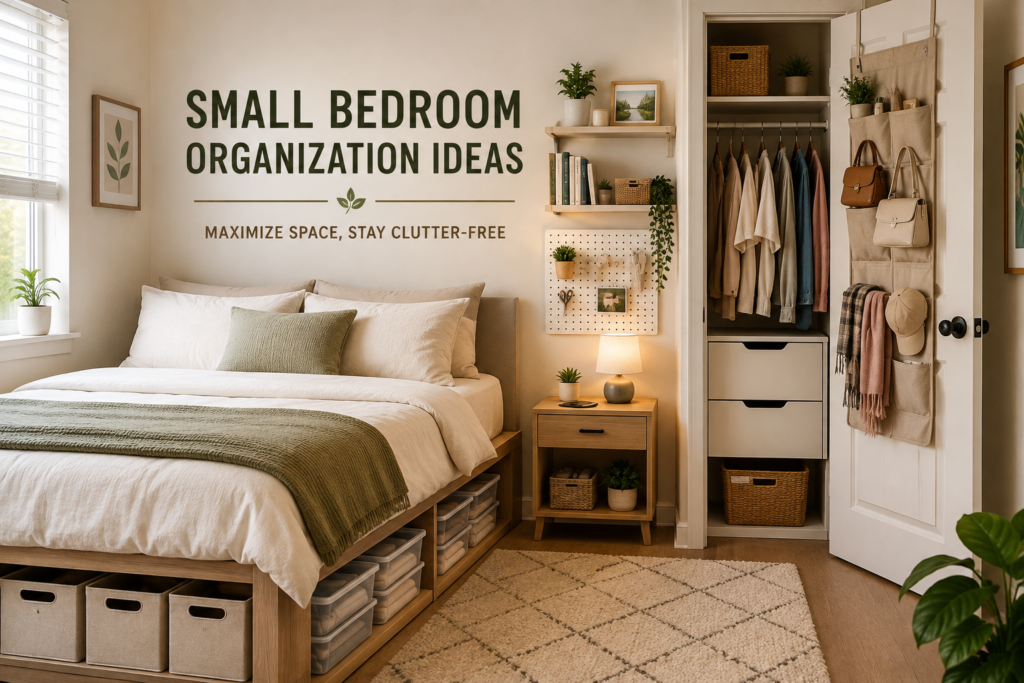
A bedroom without a built-in closet can still feel calm, organized, and easy to use. The key is to create clear zones for hanging clothes, folded items, shoes, accessories, and seasonal belongings without filling every wall. These small bedroom storage ideas without a closet use practical furniture and overlooked vertical space to keep everyday essentials accessible while protecting valuable floor area.
Table of Contents
- Choose a Slim Freestanding Wardrobe
- Use an Open Clothing Rack
- Add Drawers Beneath the Bed
- Place a Tall Bookcase Along One Wall
- Install Floating Shelves Above Furniture
- Use Wall Hooks for Daily Essentials
- Choose a Storage Bench
- Use a Dresser as a Closet Alternative
- Add an Over-the-Door Organizer
- Store Accessories in Matching Baskets
- Create a Compact Dressing Zone
- Declutter and Rotate Clothing Seasonally
Choose a Slim Freestanding Wardrobe
A compact wardrobe gives hanging clothes a concealed home and makes the room look less visually busy. Measure the available wall carefully and choose a shallow design with a rail, shelves, and one lower drawer. Keep frequently worn pieces at eye level, use matching slim hangers, and reserve the highest shelf for labeled seasonal boxes.
Use an Open Clothing Rack
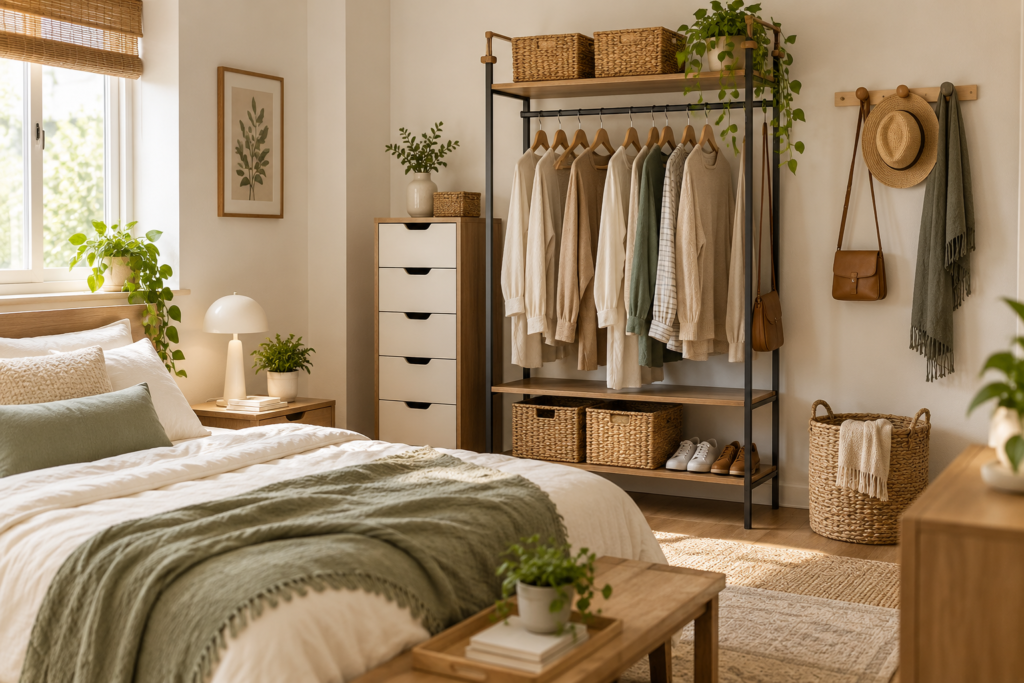
A simple clothing rack is useful when you want an affordable solution that can move with you. Limit the rail to current-season outfits so it stays tidy, then place shoes or two matching baskets on the lower shelf. Arrange clothing by type or color to make the open display feel intentional rather than crowded.
Add Drawers Beneath the Bed
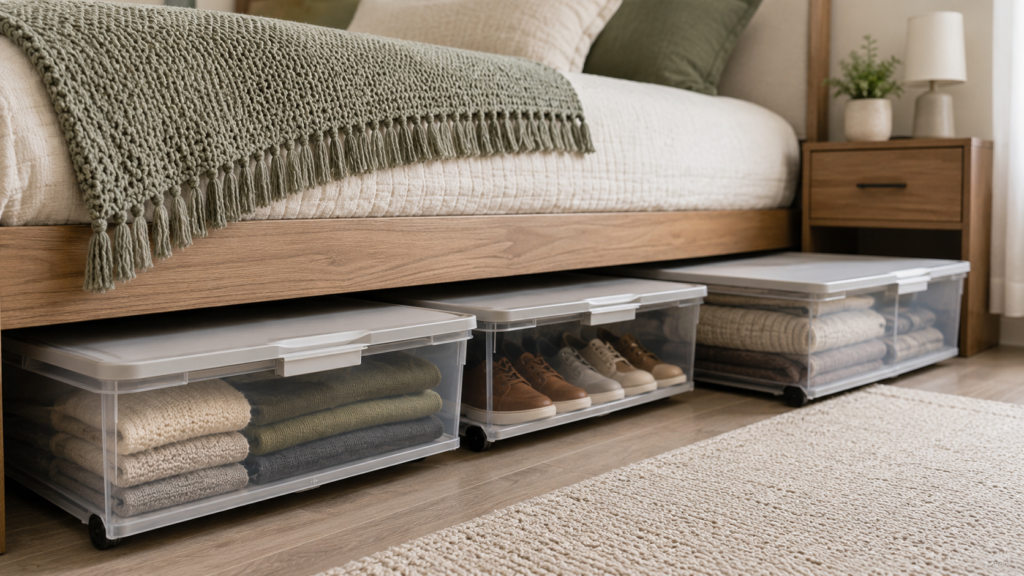
Under-bed drawers turn unused space into valuable storage for folded clothing, spare bedding, shoes, or workout gear. Choose low containers with wheels or handles so they slide out easily. Label each drawer and avoid overfilling it; a simple category system makes stored items much easier to return after laundry day.
Place a Tall Bookcase Along One Wall
A narrow bookcase provides several storage levels while using very little floor space. Fold jeans and sweaters in baskets, place everyday accessories in small boxes, and keep lighter seasonal items on top. Anchoring tall furniture securely and leaving a little empty space on each shelf helps the room feel open.
Install Floating Shelves Above Furniture
The wall above a dresser, desk, or headboard can hold storage without blocking movement. Use floating shelves for attractive boxes, handbags, hats, and a few decorative pieces. Keep heavy items lower, maintain enough clearance above the bed, and repeat similar colors so the shelves support the room instead of creating visual clutter.
Use Wall Hooks for Daily Essentials
A short row of sturdy hooks creates a convenient landing place for robes, tomorrow’s outfit, bags, and hats. Install them behind the door or on an unused strip of wall. Keep only regularly used items visible and return everything else to baskets or drawers so the hooks do not become an overflow zone.
Choose a Storage Bench
A storage bench at the foot of the bed can provide seating and hidden space in one footprint. Use the interior for extra blankets, pillows, or bulky seasonal clothing. Select a bench narrow enough to preserve a comfortable walkway, and use small fabric bins inside to stop different categories from mixing together.
Use a Dresser as a Closet Alternative
A well-organized dresser can replace much of a traditional closet when drawers are divided thoughtfully. Fold clothing vertically, assign one drawer to each category, and add small dividers for socks and accessories. Keep the top mostly clear, using only a tray for daily items and one lamp or decorative object.
Add an Over-the-Door Organizer
The back of the bedroom door is ideal for shoes, scarves, belts, small bags, or beauty supplies. Choose a slim organizer that does not prevent the door from closing properly. Clear pockets make items easy to find, while fabric pockets create a softer look that blends with the rest of the room.
Store Accessories in Matching Baskets
Matching baskets make open shelving feel calmer and give loose accessories a defined home. Use separate baskets for scarves, bags, sleepwear, and seasonal pieces. Add small labels to prevent forgotten contents, and choose sizes that fit the shelf correctly instead of leaving awkward gaps or overhanging edges.
Create a Compact Dressing Zone
Group a mirror, small dresser, clothing rack, and accessory tray in one section of the bedroom. Keeping related activities together reduces unnecessary movement and prevents clothes from spreading across chairs or the bed. A focused dressing zone also makes it easier to reset the room in a few minutes each evening.
Declutter and Rotate Clothing Seasonally
Storage works best when it holds only clothing you actually use. At the start of each season, remove damaged pieces, donate items that no longer fit your routine, and move off-season clothing into labeled under-bed boxes. This regular rotation keeps rails and drawers manageable and creates breathing room in a small bedroom.
Final Thoughts
Start with one primary system for hanging clothes and one for folded items, then add vertical or hidden storage only where it solves a specific problem. With clear categories and a short weekly reset, a bedroom without a closet can remain comfortable, functional, and visually peaceful.
For more practical bedroom inspiration, explore our dresser organization ideas and under-bed storage ideas.
Anchor freestanding wardrobes, bookcases, and other tall storage furniture securely; the CPSC Anchor It safety guide explains how wall anchoring helps prevent tip-over injuries.