A dresser can provide valuable bedroom storage, but deep drawers and wide surfaces often become cluttered when every item is placed wherever it fits. The right system makes clothing easier to see, protects delicate pieces, and saves time during busy mornings. These dresser organization ideas will help you use each drawer more efficiently, keep the top of the dresser tidy, and create a bedroom that feels calmer and easier to maintain.
Table of Contents
Dresser Organization Ideas: Start With a Complete Declutter
Empty every drawer before deciding where anything should go. Seeing all your clothing and accessories together makes duplicates, damaged pieces, and items you rarely wear much easier to identify. Wipe the drawers clean, then sort everything into keep, relocate, donate, and recycle groups. Beginning with less allows the final organization system to fit comfortably instead of forcing too many belongings into limited space.
Assign One Category to Each Drawer
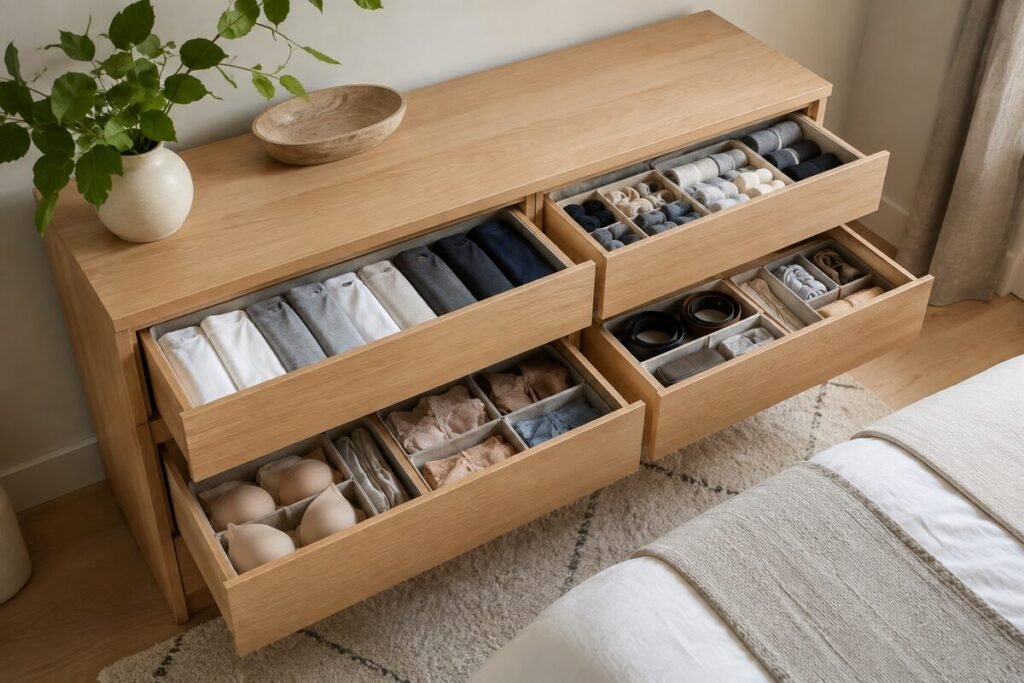
Give every drawer a clear purpose, such as T-shirts, sleepwear, undergarments, socks, workout clothing, or accessories. Category-based drawers make it easier to find what you need and return clean laundry to the correct place. If one category is too small for a full drawer, divide the space between two related groups rather than mixing several unrelated items together.
Use Adjustable Drawer Dividers
Adjustable dividers prevent folded stacks and small accessories from shifting whenever a drawer opens. Use them to separate socks from undergarments, short-sleeve shirts from long-sleeve shirts, or everyday clothing from special-occasion pieces. Measure the drawer before buying organizers and leave a little open space so items can be removed without disturbing the sections beside them.
Try Vertical File Folding
Folding clothing vertically instead of stacking it allows you to see every item at once. Arrange T-shirts, leggings, pajamas, and lightweight sweaters in neat rows with the folded edge facing upward. This method reduces the need to dig through piles and helps prevent forgotten clothing from remaining at the bottom. Similar bedroom closet organization ideas can improve visibility throughout the rest of the room.
Keep Daily Essentials in the Top Drawers
Reserve the easiest-to-reach drawers for items you use most frequently. Underwear, socks, sleepwear, and everyday shirts usually belong near the top, while seasonal or occasional clothing can sit lower down. Organizing by frequency supports your normal routine and prevents you from opening several drawers to assemble a simple outfit.
Move Bulky Clothing Somewhere Else
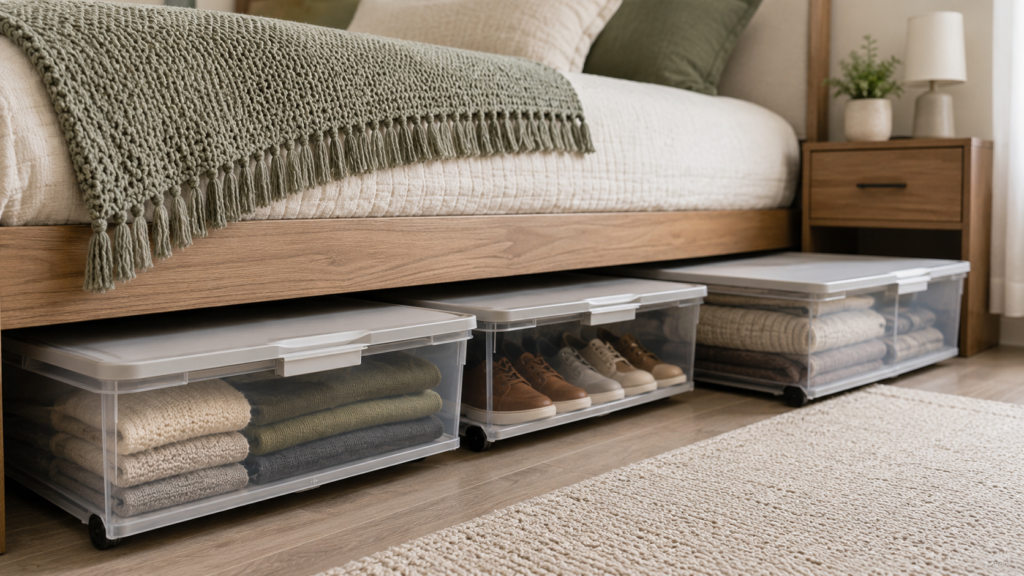
Thick sweaters, heavy jeans, and sweatshirts can consume an entire drawer very quickly. Store bulky pieces on sturdy closet shelves, in fabric bins, or in another suitable storage area so the dresser remains useful for smaller folded items. When closet space is limited, these under-bed storage ideas can provide a practical home for seasonal clothing.
Create Compartments for Small Accessories
Small items are more likely to disappear inside a wide drawer unless they have defined compartments. Use shallow trays, fabric boxes, or repurposed containers for belts, scarves, watches, jewelry, and hair accessories. Keep similar items together and avoid filling each compartment completely. A little breathing room makes the collection easier to see and maintain.
Organize Clothing by Color or Outfit Type
Once clothing is grouped by category, add a second level of order that matches how you get dressed. Arrange shirts from light to dark, separate work clothing from casual clothing, or keep coordinated workout sets together. A simple visual pattern helps you notice what you own and makes outfit selection faster without creating an overly complicated system.
Add Simple Labels Inside the Drawers
Small labels placed on the inside edge of a drawer can make the system easier for everyone in the household to follow. Use straightforward names such as socks, sleepwear, activewear, or accessories. Labels are especially helpful after reorganizing because they remove guesswork while new habits form. Keep them subtle so the dresser still looks clean when the drawers are closed.
Control Clutter on the Dresser Top
The surface of a dresser often becomes a drop zone for loose change, receipts, cosmetics, and accessories. Limit the top to a few intentional items and use one tray or shallow bowl to contain small daily essentials. Move products that do not support your morning or evening routine into drawers, a vanity, or another designated area. A clearer surface instantly makes the bedroom feel more organized.
Keep a Donation Bag Nearby
Place a small donation bag in the closet so unwanted clothing has somewhere to go immediately. When you notice an item that no longer fits or suits your lifestyle, add it to the bag instead of returning it to the dresser. Once the bag is full, donate suitable items and follow local guidance for recycling materials that cannot be reused.
Reset the Dresser Once a Week
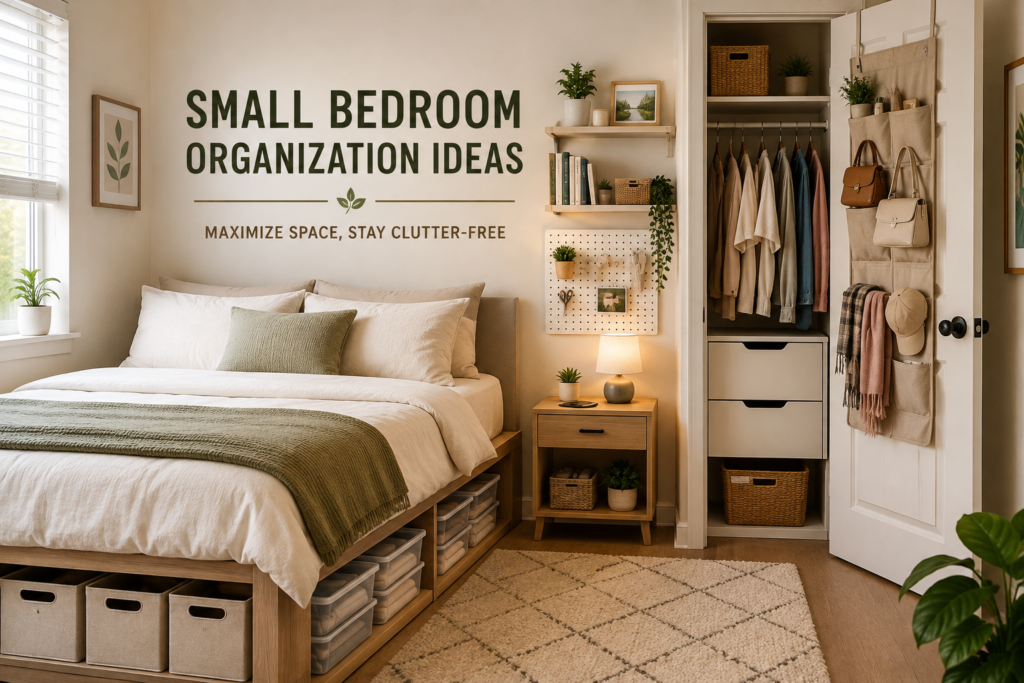
A quick weekly reset prevents a tidy dresser from slowly returning to disorder. Refold pieces that have shifted, return accessories to their compartments, and remove anything that belongs elsewhere. This routine can take only a few minutes when each category already has a defined place. Pair it with the habits in these small bedroom organization ideas for a more complete bedroom reset.
How to Keep a Dresser Organized
Choose a system that matches your real habits rather than creating too many detailed rules. Leave enough space in each drawer for clean laundry to return easily, and use a one-in, one-out approach when buying new clothing. If one section repeatedly becomes messy, adjust its size or location instead of assuming the entire system has failed.
Seasonal changes are also a useful time to review the dresser. Move cold-weather and warm-weather pieces as needed, check for damaged items, and confirm that frequently used categories still occupy the most convenient drawers. Small adjustments keep the organization practical throughout the year.
Final Thoughts
A well-organized dresser makes clothing easier to find, keeps delicate items protected, and reduces visual clutter in the bedroom. Drawer dividers, vertical folding, clear categories, and a simple weekly reset can transform even a basic dresser into efficient everyday storage.
Start with the drawer that causes the most frustration, remove what you no longer use, and give every remaining item a permanent home. These dresser organization ideas will help your bedroom feel calmer while making daily routines smoother and easier to maintain.