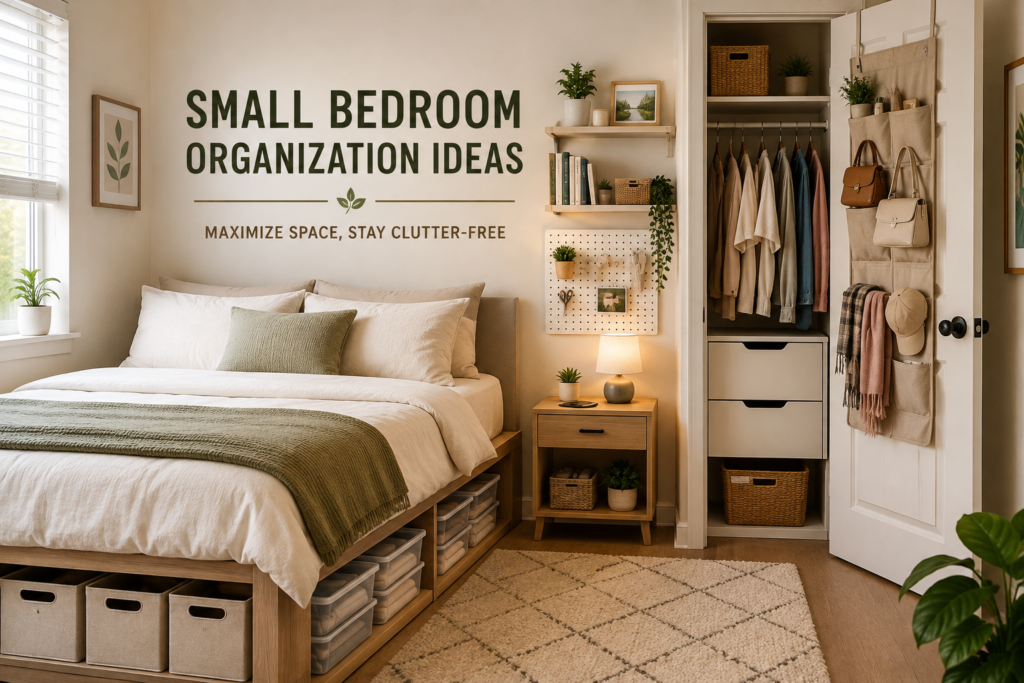
A cluttered closet can make an otherwise calm bedroom feel difficult to manage. Practical bedroom closet organization ideas help you see what you own, protect clothing, and make daily routines faster without requiring a custom built-in system.
The best approach begins with a complete edit, followed by simple zones for hanging clothes, folded pieces, shoes, accessories, and seasonal items. Use the ideas below individually or combine them to create a closet that fits your available space and everyday habits.
Table of Contents
Empty the Closet Before Organizing
Remove clothing, shoes, boxes, and accessories so you can clean the shelves and inspect the full space. Sort everything into keep, donate, repair, and relocate groups. Try on uncertain pieces rather than returning them automatically. A complete reset prevents you from designing storage around items you no longer use and shows which categories actually need the most room.
Group Clothing by Type
Hang similar garments together so shirts, trousers, dresses, jackets, and workwear each have a clear section. Within each group, arrange items by color or frequency of use if that makes selection easier. Consistent grouping reduces visual clutter and helps reveal duplicates. Leave a little open rail space so hangers move freely and clean clothes can be returned without forcing them into a packed row.
Use Matching Slim Hangers
Slim hangers create a more uniform line and can increase usable rail space, especially in a narrow closet. Select sturdy hangers with a non-slip surface for delicate tops and wider supports for structured jackets. Avoid overloading lightweight designs. Matching hangers are not essential for style alone; their consistent shape keeps garments at a similar height and makes the entire hanging section easier to scan.
Add a Second Hanging Rail
If most of your wardrobe contains shirts, skirts, or folded trousers, a second rail can use the empty space below the main one. Measure the longest garments first and reserve a full-height section for dresses and coats. Choose a secure adjustable system and follow its load rating. Double hanging works best when each rail remains accessible rather than packed tightly from end to end.
Install Shelf Dividers
Tall piles of sweaters, jeans, and linens often lean into one another and become difficult to maintain. Clip-on or freestanding shelf dividers create separate lanes without requiring permanent construction. Keep stacks low enough to remove an item without disturbing everything above it. Place heavier folded clothing on lower shelves and delicate knits where they will not be stretched by hangers.
Use Clear Bins for Small Categories
Clear bins keep scarves, belts, swimwear, handbags, or workout accessories together while allowing you to see the contents. Label each container even when it is transparent, because a clear category makes items easier to return. Select bins that fit the shelf depth without overhanging. Avoid mixing unrelated objects in one large container, which simply turns visible clutter into hidden clutter.
Create a Practical Shoe Zone
Assign one lower shelf, rack, or set of cubbies to everyday shoes and store special-occasion pairs higher up. Clean footwear before placing it near clothing and allow damp shoes to dry first. Position frequently worn pairs near the closet entrance. If floor space is tight, a vertical rack can work well, but it should remain stable and should not block doors or the main walkway.
Use the Closet Door Carefully
An over-the-door organizer can hold lightweight accessories, flat shoes, or small bags without taking shelf space. Confirm that the organizer does not prevent the door from closing or rub against nearby walls. Keep heavier objects on fixed shelves instead. Door storage is most effective when pockets are assigned to specific categories and regularly cleared rather than becoming a catch-all for miscellaneous items.
Store Seasonal Clothing Up High
Use upper shelves for off-season clothing, spare bedding, or travel items that are not needed weekly. Clean and fully dry textiles before storing them in breathable or sealed containers appropriate for the material. Add clear labels facing outward and avoid making boxes too heavy to lift safely. Rotate seasonal items at the start of warmer and cooler months so current clothing stays in the most accessible area.
Add Drawer Organizers for Accessories
Small drawer dividers keep socks, underwear, jewelry, watches, and hair accessories from mixing together. Measure the drawer before buying inserts and choose a layout that matches the categories you actually own. Fold items consistently and avoid filling compartments beyond their edges. A simple organizer makes it easier to notice when supplies are running low and prevents small pieces from disappearing beneath larger garments.
Keep a Donation Bag Nearby
Place a reusable bag or small basket on the closet floor for clothing you decide not to keep. When it is full, move the items to a suitable donation point rather than letting the bag become permanent storage. This ongoing system makes decluttering easier because decisions can be made during normal dressing routines. Only donate clean, usable items and follow the receiving organization’s current guidelines.
Maintain the Closet with a Weekly Reset
Spend a few minutes each week returning hangers, folding loose clothing, pairing shoes, and moving misplaced items to their correct zones. Deal with laundry before it creates a second pile on the floor. A short reset is easier than a major reorganization and helps you see whether any system is inconvenient. If one category repeatedly becomes messy, adjust its storage rather than blaming the routine.
Final Thoughts
Useful bedroom closet organization ideas are based on visibility, access, and realistic maintenance. Edit first, create distinct zones, use the full height of the closet, and keep daily items within comfortable reach. A few inexpensive dividers, bins, or an extra rail can produce a meaningful improvement.
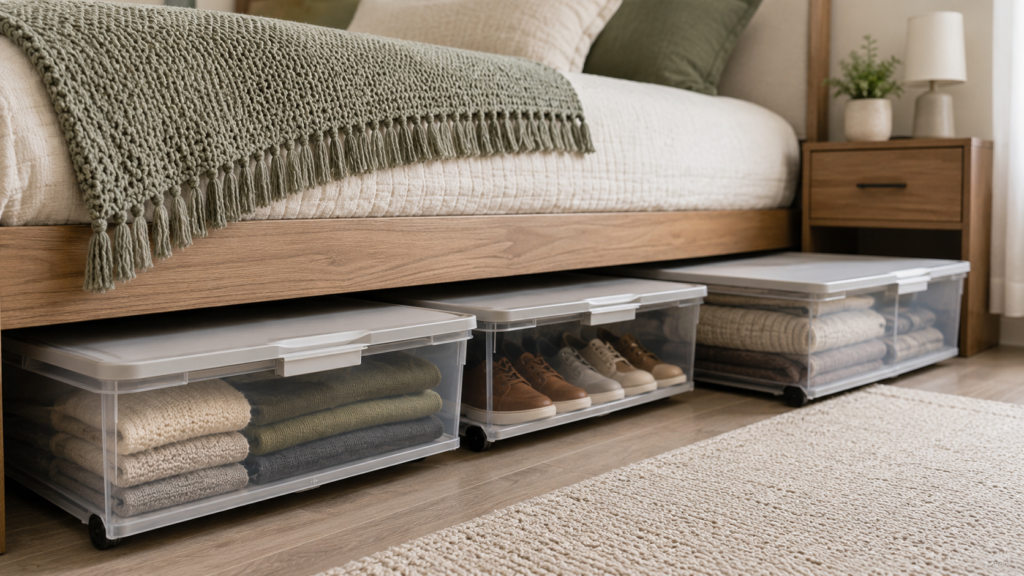
Revisit the closet as your wardrobe and seasons change. When every category has enough space and an obvious home, getting dressed becomes faster and the bedroom stays calmer. For additional space-saving solutions, explore our guide to under bed storage ideas.
Bedroom Closet Organization Ideas: Planning Checklist
Inventory hanging, folded, shoe, and accessory storage separately. Measure usable width, shelf depth, door movement, and comfortable reach.
Place daily clothes at eye level and heavy containers on stable lower shelves.
Closet Organization Mistakes to Avoid
Avoid overloaded rods, unstable upper bins, blocked ventilation, and keeping clothes that are damp or damaged.
Use our wardrobe organization ideas and CPSC anchoring guidance.
Frequently Asked Questions
What should be organized first?
Start with the category that causes the most daily friction, usually hanging clothes or shoes.
How often should a closet be reviewed?
Review it seasonally and whenever storage becomes difficult to access.