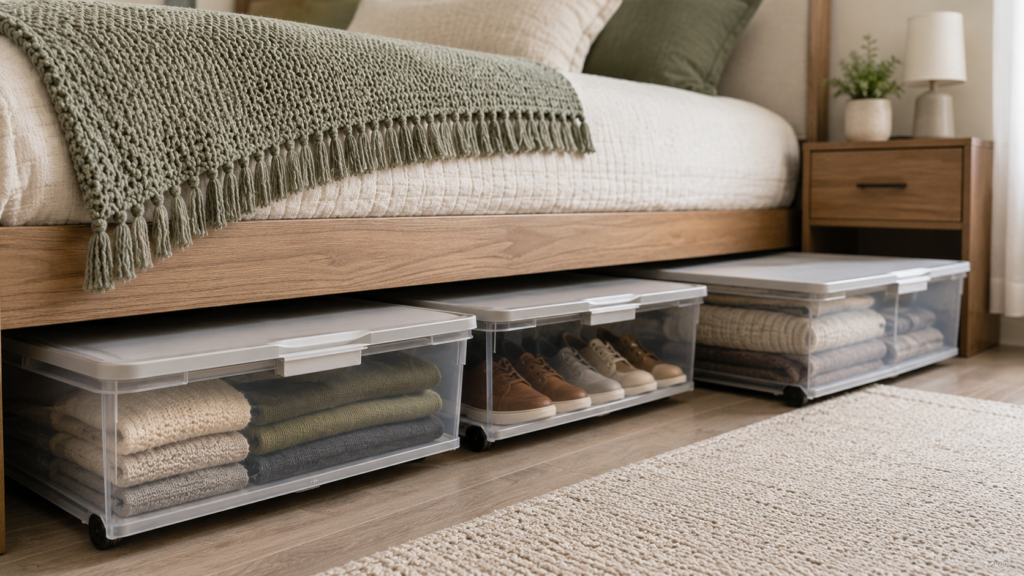
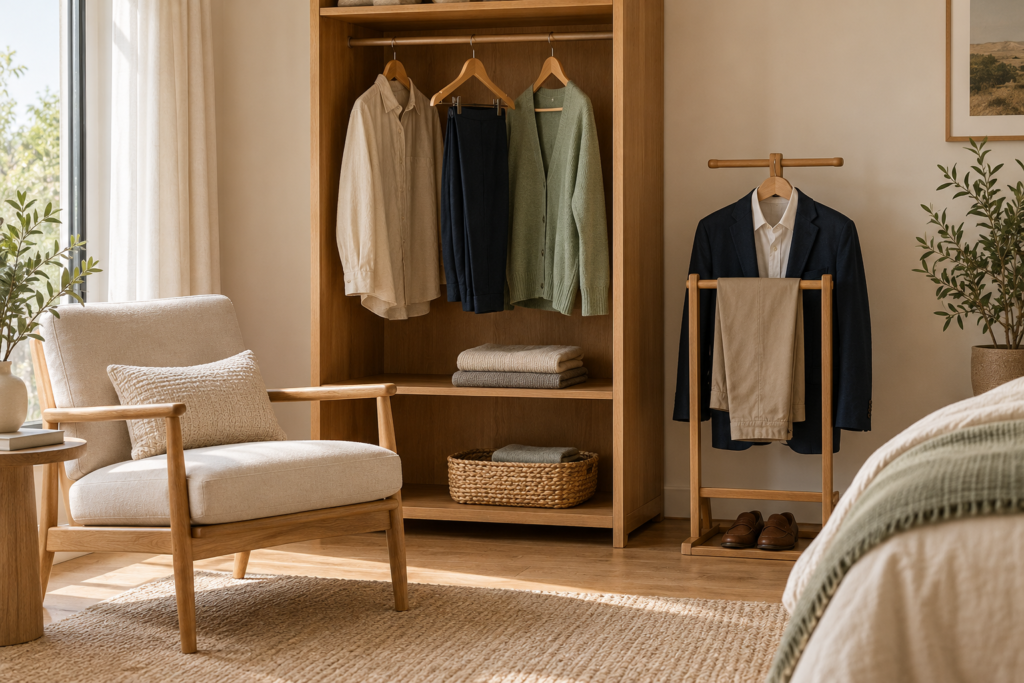
Worn once clothes storage solves a familiar bedroom problem: clothing that you plan to wear again ends up on a chair, the bed or the floor. A cardigan worn briefly, a pair of trousers or tomorrow’s outfit needs a clear temporary home so it does not disappear into a mixed pile.
The most useful setup is small, easy to reach and separate from clothing waiting to be washed. You do not need a new wardrobe or a large organizing system. Start with one location that fits your room, then give it a clear capacity limit.
This guide focuses on clothing between wears. For longer-term wardrobe planning, see our wardrobe organization ideas. Here, the aim is to keep a few current garments accessible without turning temporary storage into another crowded closet.
Decide What Belongs in the Rewear Zone
Before choosing storage, sort the clothing currently on your chair. Some items may be ready to wear again, others need laundering, and some simply belong back in their usual place.
“Worn once” describes how many times you wore something; it does not automatically mean the garment is suitable for another wear. Consider its condition, how you used it and its care instructions. Keep clothing with visible dirt, stains or noticeable odor out of the ready-to-rewear zone.
Airing is not a substitute for cleaning. A hook or rail can give clothing room to hang, but it does not remove soil or make an item clean. Follow the garment’s care label when washing, drying or arranging professional cleaning. The American Cleaning Institute’s laundry basics guide explains how to use fabric-care instructions.
Use three destinations during your initial sort:
- Ready to rewear: garments you have checked and intend to use again soon.
- Needs cleaning: clothing for the laundry hamper or a separate professional-cleaning bag.
- Return to regular storage: clean items that landed on the chair while you were choosing an outfit.
Choose a capacity rule that you can see immediately, such as three hangers or one shallow shelf. When that space fills, review its contents before adding more storage.
Choose Storage That Fits Your Clothing
Match the support to the garments you actually leave out. A hook may suit a robe with a hanging loop, while a structured jacket needs a suitable hanger. Fold clothing that would stretch or lose its shape when hung.
Scroll sideways to read the full table.
| Storage option | Useful for | Check before using |
|---|---|---|
| Dedicated hangers | Shirts, trousers and garments normally stored hanging | Hanger shape and space between garments |
| Wall hooks | Items with suitable hanging loops | Fixings, load rating and pressure on the fabric |
| Valet stand | One planned outfit | Stability, garment support and floor clearance |
| Open shelf | Knitwear and other folded items | Shelf depth and an easy-to-remove stack |
| Shallow basket | A few dry, suitable folded garments | Smooth lining and a strict capacity limit |
1. Reserve a Few Dedicated Hangers
The simplest worn once clothes storage may already be inside your wardrobe. Reserve a small section of the rail for garments you plan to wear again, using a divider or a different hanger color to identify it.
Keep the section distinct from freshly laundered clothing. A small label reading “rewear” can make the purpose clear, particularly in a shared wardrobe.
Use hangers suited to the clothing. Broad support may be appropriate for a jacket, while trousers need a hanger that holds them securely without unwanted marks. Avoid hanging several garments over one hanger; the hidden layers become difficult to identify.
Set a hanger limit. For example, three reserved hangers create an obvious review point. If all three are occupied, choose what you will wear next and move anything that needs cleaning to the correct destination.
2. Use a Small Row of Wall Hooks
A few wall hooks can move suitable garments off the chair without adding furniture. Place them near your dressing area, where returning an item feels like one easy action.
Check the hanging length before installing them. A long robe should not trail onto the floor, and the clothing should not cover a switch, heater or ventilation opening.
Use hooks for garments that can tolerate that type of support. Hanging a delicate top by its neckline or placing a heavy knit over a small hook may distort it. A suitable hanging loop is often more practical.
Follow the hook manufacturer’s instructions for the wall surface and expected load. If you rent, confirm which fixings are permitted before making holes.
Keep one item per hook where possible. Layers of clothing turn a visible system into a hidden pile. Our bedroom wall storage ideas cover other ways to plan useful vertical space.
3. Give Tomorrow’s Outfit a Valet Stand
A valet stand is useful when your main problem is an outfit waiting for the next morning. It gives a shirt, jacket and trousers a defined place without using the chair back.
Choose a stable design with support appropriate for your garments. Measure its full footprint, including clothing hanging from it, rather than checking only the base.
Place it outside your main walking route and allow wardrobe doors and drawers to open fully. A compact stand becomes inconvenient if you must move it every time you dress.
Keep it to one outfit. If several days of clothing accumulate, the stand becomes another chair pile. Move the previous outfit through your sorting routine before preparing the next one.
4. Reserve One Open Shelf for Folded Items
An open shelf suits clothing you normally fold, including knitwear that would lose its shape on a hanger. Use an existing wardrobe shelf or a small section of a suitable shelving unit.
Reserve only enough space for a short, visible stack. You should be able to identify and remove an item without pulling apart several layers.
A shelf divider can separate the rewear section from other clothing. Check that its edges are smooth and that it fits the shelf without damaging the finish.
Store only dry garments here. Do not fold damp clothing into a stack or treat a closed cupboard as a drying area. Follow the garment’s drying instructions when needed.
Label the zone by its purpose rather than adding detailed categories. “Ready to rewear” is enough for a small temporary collection.
5. Use an Over-Door Rack Where Clearance Allows
An over-door rack can provide temporary storage when wall space is limited. Before buying one, check the gap above the door, the door thickness and the space behind it.
The door should close normally with the rack installed. It should also open without clothing striking furniture, becoming trapped or dragging across the floor.
Check the rack’s load rating and use it only on a suitable door. Follow any instructions about protective pads and fitting; forcing the door shut can damage the door or frame.
Choose a small number of usable hooks rather than filling every available position. If you cannot see the garment underneath the top layer, reduce the contents.
6. Keep a Shallow Basket for Suitable Folded Clothing
A shallow open basket works when you prefer folded storage and have no spare shelf. It can hold a few dry garments while keeping them contained.
Choose a smooth interior or a suitable lining so rough wicker and exposed edges do not catch fabric. The basket should be easy to lift and light enough to move comfortably.
Give it a location separate from the laundry hamper. Similar baskets placed side by side can create confusion, so label the rewear basket or choose a clearly different shape.
Keep the contents shallow and visible. A deep basket encourages compression and makes lower items easy to forget. When clothing rises above the rim, sort it rather than pushing it down.
A basket is a holding space, not a cleaning method. Do not use it for damp garments or clothing that needs laundering.
7. Divide a Compact Rail into Ready-to-Rewear Spaces
A compact clothes rail can help when several people share a bedroom or the existing wardrobe is difficult to access. Choose this option only if it has a clear permanent parking space.
Measure the rail with garments hanging on it. Sleeves and trouser legs can extend beyond the frame, reducing the usable walking space.
Use a divider or a small label to create a section for each person. Assign a limited number of hangers so one collection does not gradually occupy the entire rail.
Follow the manufacturer’s assembly and loading instructions. Keep the rail stable and avoid hanging heavy bags from one end unless the design allows it.
If your room already lacks a wardrobe, our small bedroom storage ideas without a closet can help you plan the broader layout. Keep this temporary rewear section distinct from your main clothing storage.
An Example Setup Without Buying Furniture
Imagine a bedroom with an existing wardrobe, one available shelf and a chair covered in clothes. The following is an illustrative arrangement you can adapt:
- Three reserved hangers: checked shirts and trousers intended for another wear.
- One labeled shelf section: a small folded collection of suitable knitwear.
- Existing laundry hamper: garments that need washing.
- A separate labeled bag: items awaiting professional cleaning, where required.
- The chair: cleared for sitting.
You do not need all seven storage options. Choose one hanging solution and, if necessary, one folded location. Adding several competing zones makes it harder to remember where clothing belongs.
A Simple Reset Routine
Use the same short sequence when changing clothes:
- Check the garment: decide whether it needs cleaning or is suitable for another wear.
- Choose its destination: laundry, professional cleaning, regular storage or the rewear zone.
- Support it correctly: use its assigned hanger, hook or folded space.
- Check capacity: review the zone if its hangers or shelf space are full.
Review the temporary zone when planning your next outfit and again on laundry day. If something repeatedly stays there unused, decide whether to clean it and return it to regular storage.
If you keep dropping clothing onto the chair, check the practical obstacle. Your hooks may be too far away, the hangers may be crowded or the basket may be difficult to reach. Adjust that step before buying another organizer.
Frequently Asked Questions
Where should I put clothes worn once but not ready for laundry?
Use a small, clearly identified rewear zone. Dedicated hangers suit garments normally hung, while an open shelf suits clothing normally folded. Check each item’s condition before deciding to wear it again.
Can I put worn once clothes back in the wardrobe?
If you decide an item is suitable for another wear, a reserved wardrobe section can keep it organized. Use a divider or different hangers to distinguish it from freshly laundered clothing. Keep garments needing cleaning out of that section.
Is a basket better than hooks?
A shallow basket suits a few dry folded items. Hooks suit garments with appropriate hanging loops or construction. Choose according to the clothing’s support needs and the available space.
Does airing clothes replace washing?
No. Hanging clothing in an open space does not remove dirt or replace the cleaning method on its care label. Treat airing space and laundry decisions as separate parts of your routine.
How can I stop the bedroom chair from filling up again?
Place your chosen storage near where you change, give it a visible capacity limit and sort garments as you remove them. A small system that takes one easy action is more useful than several storage options you rarely use.
Give Clothing Between Wears a Clear Home
Practical worn once clothes storage starts with a clear decision about each garment, followed by a suitable temporary location. Reserve a few hangers, one shelf or a small rack rather than allowing the collection to spread across the room.
Start by clearing the chair today. Sort its contents, choose one storage option and set a capacity limit. The goal is a bedroom where clothing is easy to find and the chair is available when you need it.