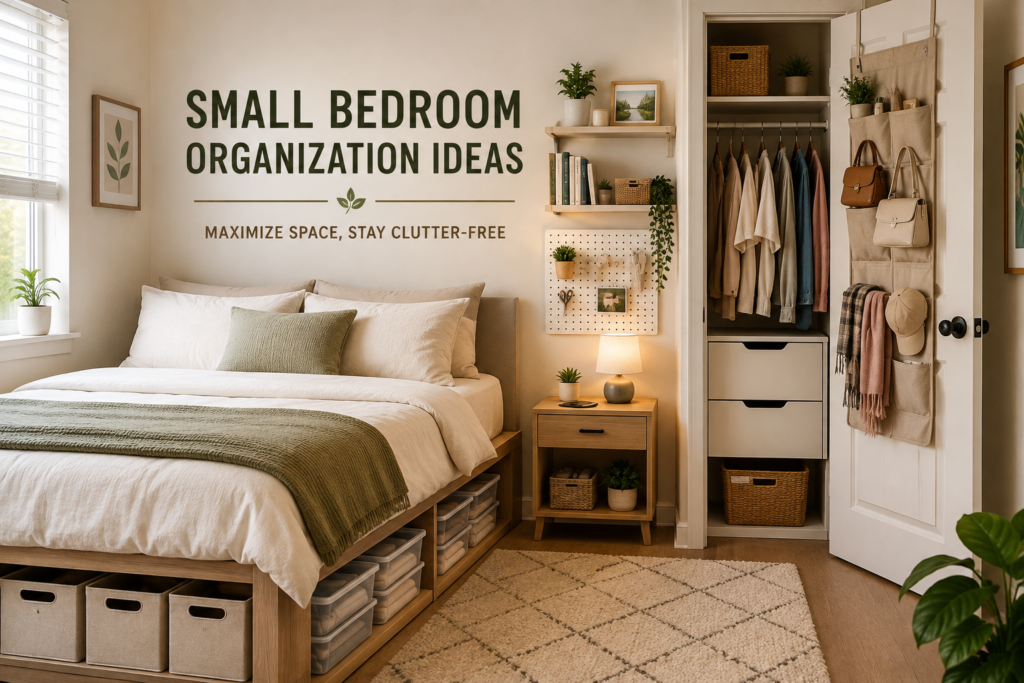
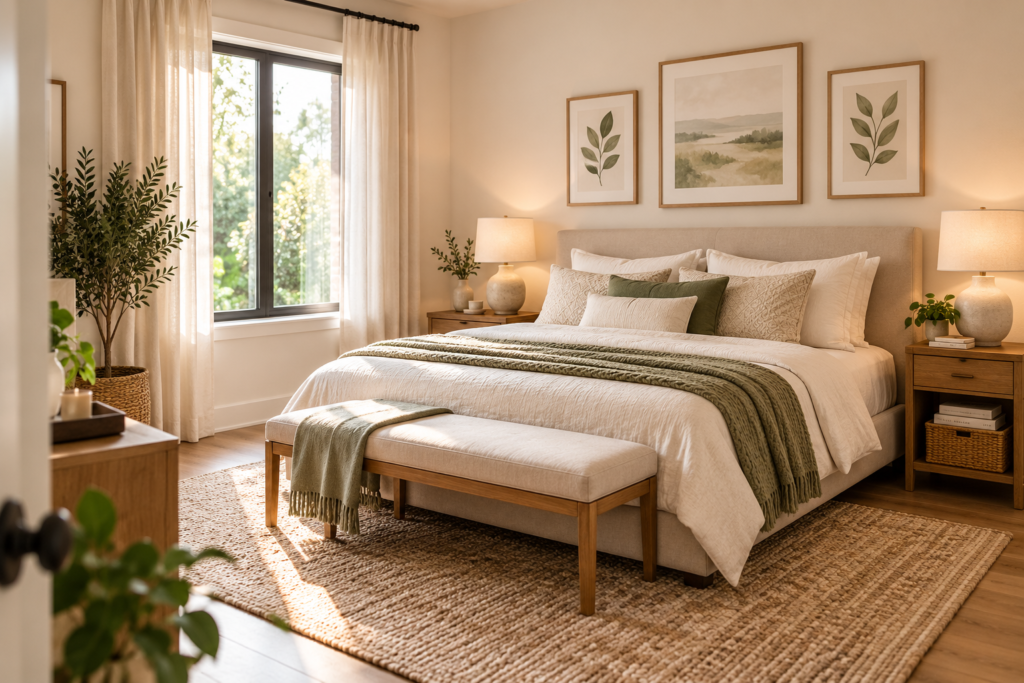
A well-planned bedroom feels calmer, works better, and makes daily routines easier. These small bedroom decor ideas focus on practical changes that suit both compact homes and larger spaces. You do not need a complete renovation; careful placement, useful storage, and a few measured upgrades can create a noticeable improvement.
Start with the area that causes the most frustration, then apply the ideas that match your space, budget, and habits. The goal is not to copy every trend, but to create a room that stays comfortable and easy to maintain. For more related guidance, explore our small bedroom organization ideas before planning your next update.
Table of Contents
Build a Soft Neutral Color Palette
Use one calm base color across the largest surfaces, then add warmth through wood, textiles, or a restrained accent. Similar wall, curtain, and bedding values reduce abrupt visual breaks.
Neutral does not mean colorless. Muted green, dusty blue, warm cream, and pale clay can feel restful when repeated in small amounts.
Create a Simple Bed Focal Point
Let the bed provide the main visual anchor with a headboard, artwork, or carefully chosen wall color. Keep competing furniture and accessories quieter.
Centering is not mandatory in an irregular room. Prioritize safe access on the used sides, drawer clearance, and a clear route to the door.
Use Wall-Mounted Bedside Lights
Swing-arm sconces free nightstand space and direct light toward reading. Place controls within comfortable reach and choose a design that can move without hitting the wall or headboard.
Hardwired work should follow local requirements. Plug-in models still need cords routed away from bedding and walking paths.
Choose Slim Nightstands
Measure the gap beside the bed and the height of the mattress before shopping. A narrow table with one drawer can hold glasses, a book, and charging items without crowding circulation.
Do not sacrifice stability for an extremely small footprint. The surface must support the lamp and essentials without tipping.
Layer Bedding Without Bulk
Use breathable sheets, one main cover, and a limited number of cushions or throws. Vary texture rather than stacking many heavy layers that require daily removal.
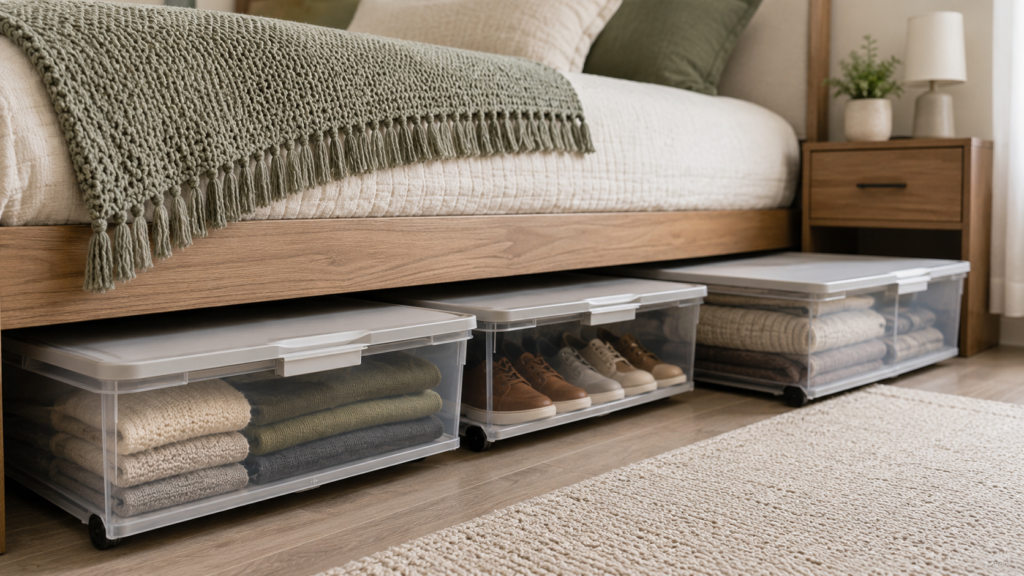
Store seasonal bedding outside the immediate sleep area. A bed that can be reset quickly keeps the whole room looking calmer.
Hang Curtains Near the Ceiling
Higher curtain placement can emphasize ceiling height and expose more glass when panels are open. Measure the full drop before ordering and ensure the rod extends beyond the window where space permits.
Choose fabric appropriate for privacy and daylight. Keep curtains clear of heaters and vents.
Add One Well-Placed Mirror
Position a mirror to reflect daylight or an uncluttered part of the room. A tall mirror can also support dressing without requiring several small reflective accessories.
Check the reflection from the bed and doorway, and secure the mirror with hardware suitable for its weight and wall type.
Keep Artwork Proportional
Relate artwork to the bed or furniture below it. One substantial piece or a compact coordinated group usually looks calmer than scattered small frames.
Use paper templates to test size and spacing. Secure items above the bed carefully and avoid heavy objects where inappropriate.
Use a Rug to Define the Bed
A rug extending beyond the sides and foot of the bed creates a soft landing and visually connects the sleep zone. In a compact room, runners on the used sides can be easier to fit.
Check door clearance and use a suitable rug pad to reduce movement and curled edges.
Bring in Natural Texture
Wood, linen, cotton, cane, or woven details add warmth without relying on many colors. Repeat one or two materials across the room for continuity.
Choose easy-care surfaces and avoid rough baskets where they may snag clothing or bedding.
Limit Decorative Accessories
Display a few meaningful objects and keep daily necessities in closed storage. Leaving part of each nightstand and dresser clear makes cleaning easier and prevents small items from multiplying.
Rotate seasonal decor instead of displaying everything at once. Empty space is part of the design.
Add Warm Evening Lighting
Combine a soft general light with focused bedside lamps. Warm evening illumination can feel restful, while a brighter task source supports reading and dressing.
Use compatible bulbs and controls, keep fixtures away from fabric, and route cords safely. Lighting should be reachable without crossing the dark room.
Frequently Asked Questions
What makes a small bedroom feel calmer?
A cohesive palette, clear walking space, limited accessories, and lighting at several levels create a calmer visual rhythm.
Can a small bedroom use dark colors?
Yes. Use darker color deliberately on one feature or in accents, while maintaining adequate lighting and visual continuity.
For more practical space planning, see our small bedroom organization ideas.
For furniture tip-over prevention, review the U.S. Consumer Product Safety Commission’s Anchor It! guidance.
Small Bedroom Decor Ideas: Final Checklist
The most effective small bedroom decor ideas are the ones that solve a real problem without making the room harder to use. Start with one improvement, observe how it affects your routine, and build from there. A measured approach helps you avoid unnecessary purchases and produces a space that looks intentional rather than crowded.
Small changes can add up quickly when every item has a clear purpose and location. Keep surfaces manageable, review the setup seasonally, and adapt it as your needs change. With thoughtful planning, your bedroom can remain practical, inviting, and easier to enjoy every day.