Kitchen dish towel storage works best when clean towels, in-use towels and laundry each have a clear place. If towels end up piled by the tap or mixed with cleaning cloths, adding another basket may just move the confusion. This guide helps you choose a compact storage layout, test it with your real towels and keep the clean-to-laundry routine easy to follow.
Table of Contents
Kitchen Dish Towel Storage Starts With Three Separate Zones
Before choosing a rack or basket, decide where towels belong at three different stages: clean and ready, currently in use, and waiting for laundry. A drawer can hold fresh towels well but cannot replace an open drying spot. A hook makes a towel reachable but does not tell anyone whether it is still suitable for drying dishes.
For a small kitchen, choose one compact clean reserve, one reachable drying position and one separate laundry destination. Keep towels for drying clean dishes distinct from cloths used for wiping counters or spills. Simple visual cues, such as different colors or different locations, are easier to follow than an elaborate labeling system.
The storage options below are editorial suggestions you can adapt to your kitchen. They are not claims of product testing. For the surrounding cabinet layout, our kitchen drawer organization guide covers broader drawer planning.
1. Reserve a Shallow Drawer for Clean, Dry Towels
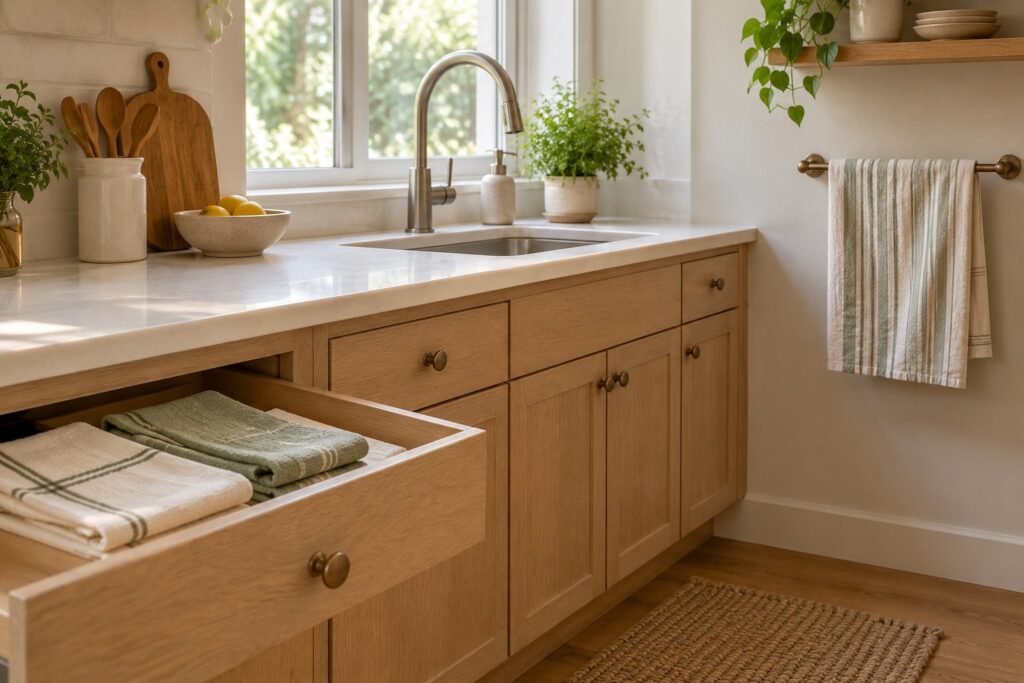
A drawer near the sink is a useful starting point when you can reach it without crossing the main cooking area. Store only fully dry, clean towels inside it. Avoid placing the reserve below a dripping sink rim or next to bottles that may leak.
Measure the usable interior width, depth and height, including any space lost to runners or the drawer front. Fold your actual towels, place one normal laundry batch inside and close the drawer. The drawer should glide freely without catching thick folds. A divider can keep dish towels apart from oven mitts, but leave enough space to remove one towel without lifting the whole pile.
Best fit: a household with an available drawer and a predictable laundry routine. If the stack presses against the top of the opening, move backup towels elsewhere rather than forcing more into the daily drawer.
2. File-Fold the Reserve So Every Towel Is Visible
File folding works when the drawer is deep enough for towels to stand on edge. Fold each towel to a height below the drawer opening, then arrange the folds in a single visible row. This makes a missing towel easy to notice and reduces the need to pull apart a stack.
Test the arrangement with your least structured towel, not just the thickest one. Soft cotton may collapse when the drawer is half empty. A simple open divider or a smaller washable tray can support the row without tightly compressing the fabric. Leave some space between groups so putting away laundry does not become a precision task.
If standing folds fall over repeatedly, use a short flat stack instead. The useful choice is the one you can restore quickly after a wash, rather than the one that looks neat only when the drawer is full.
3. Give the In-Use Towel an Open Drying Bar
A bar lets you spread a towel instead of leaving it bunched on the countertop. Locate it within comfortable reach of the sink, clear of splashes where possible and away from stovetop heat. Keep the fabric from brushing the floor, waste bin or cleaning bottles.
Mock up the position with the longest towel you own before installing anything. Open nearby cabinet doors and drawers and check that the fabric does not become trapped. The towel needs room to hang without pressing against a damp surface. Follow the hardware maker’s mounting instructions and load limit.
Air drying is a storage step, not a cleaning method. Hanging a used towel does not make it clean again. Keep a separate towel for drying clean dishes and replace any cloth that becomes dirty or is used for a spill.
4. Use an Over-Cabinet Bar After Checking Door Clearance
An over-cabinet bar can add a drying position without drilling, provided it fits the door thickness and allows the cabinet to close normally. It is most useful on a door that is opened infrequently while you work at the sink.
Check the bracket against the top edge, hinge movement and any neighboring drawer. Use a protective pad only if the manufacturer permits it and it does not stop the door from closing. Hang an actual towel, open the door fully and check whether the fabric swings into stored products. Avoid a position where the towel drapes against a waste bin.
Skip this option when the bracket scratches the finish, the door needs extra force to close, or the towel interferes with another person’s movement. A poorly fitting removable bar is less convenient than a simple open hook in a better position.
5. Assign Separate Hooks to Different Towel Jobs
If a bar will not fit, use spaced hooks with a clear purpose for each position. For example, one location can hold a hand-drying towel while another holds a dish-drying towel. Avoid hanging several damp towels on the same hook.
Choose a hook that supports the towel’s loop or folded edge without dropping it. Check that the longest fabric stays clear of the floor and that the hooks are far enough apart for towels not to overlap. For adhesive hardware, confirm that the surface, preparation method and curing time match the maker’s instructions. Do not assume every adhesive is suitable for steam, painted surfaces or repeated moisture.
Keep spare clean towels in the reserve rather than hanging every towel you own. A crowded rail makes it harder to identify which towel is in use and which was recently washed.
6. Use a Small Washable Basket When Drawer Space Is Limited
A compact open basket can hold a few clean, fully dry towels on a shelf or a protected corner of the counter. Choose a location away from the sink’s splash zone and food preparation area. The basket should contain the daily reserve without taking over your working surface.
Check the inside for rough edges that may catch loops in the fabric. Use a washable liner if needed and follow the basket’s care instructions. Keep the reserve small enough that you can lift the basket to wipe beneath it. If towels become damp from nearby activity, change the location rather than adding a lid to conceal the problem.
For more ideas about preserving usable worktop space, see our kitchen counter organization guide. A towel basket should serve a daily job, not become another obstacle around the sink.
7. Keep Backup Towels Away From the Sink Cabinet
Not every towel needs to live beside the sink. Store less frequently used backups in a dry, accessible cupboard or linen area and bring a small working reserve into the kitchen. This helps when the nearest drawer also has to hold utensils or other daily essentials.
Use one visible container or shelf section for the backups, and return freshly washed towels there when the kitchen reserve is full. Rotate the order occasionally so the same towels are not used repeatedly while the rest remain untouched.
Check the location for dampness and leaking products before storing textiles. The cabinet under a sink may contain plumbing, cleaners and spill risks, so evaluate it carefully. Our kitchen under-sink organization guide focuses on that cabinet’s separate storage constraints.
8. Create a Clear Laundry Return Point
Give used towels a destination that is separate from the clean reserve. A small washable collection container near the laundry area is often easier to maintain than an extra basket in a crowded kitchen. The important part is that everyone knows where used towels go.
Avoid sealing damp fabric in a closed container or piling it against clean towels. If laundry cannot run immediately, keep used textiles separate and allow wet fabric to dry in an appropriate place before temporary collection. A towel removed because it is dirty should not go back into service simply because it has dried.
The USDA advises washing dishcloths often using the hot cycle of a washing machine. Check the textile’s care label and use suitable laundering instructions. Read the agency’s Cleanliness Helps Prevent Foodborne Illness guidance for the food-safety context. Storage and color coding support a routine; they do not replace washing.
Choose a Kitchen Dish Towel Storage Layout That Fits Your Space
Choose the smallest arrangement that keeps the three stages separate. Start with the drawer, shelf or basket you already have, then add a drying location only if the current one fails a practical test. You do not need a complete matching organizer set.
Scroll sideways to read the full table.
| Available space | Clean reserve | In-use position | Fit check |
|---|---|---|---|
| Spare shallow drawer | Short stack or supported file folds | Open bar near sink | Drawer closes without catching fabric |
| No spare drawer | Small washable shelf basket | Spaced purpose-specific hooks | Basket stays outside splashes and preparation space |
| Rental kitchen | Existing dry shelf or drawer | Removable bar if compatible | Door closes freely and finish stays protected |
| Very limited sink space | Small daily reserve with backups elsewhere | Nearby wall position away from heat | Longest towel clears doors, bin and floor |
Run a Real-Towel Fit Test Before Buying Hardware
Use your actual towels to test the layout. A bar’s advertised width does not tell you how your longest towel will hang, and the outside dimensions of a basket do not reveal its usable capacity.
For a drawer, put away one normal laundry batch and remove a single towel with one hand. For a bar or hook, hang the towel and open every nearby door and drawer. For a basket, place it where it will live and check whether you can still prepare food, operate the tap and wipe the surrounding counter.
Run the arrangement through a normal meal cleanup. If you have to move the basket to use the sink, cannot tell which towel is for dishes, or leave used towels on the worktop, change that part of the system before buying another organizer.
Plan a Working Reserve Around Your Laundry Routine
There is no universal towel count that suits every home. Estimate the towels your household normally replaces between laundry loads, then add a small spare allowance for unexpected spills. This is a planning example, not a food-safety replacement schedule.
For example, if a household normally puts two towels into laundry per day and washes every two days, four towels cover that ordinary interval. Adding two spares gives a starting reserve of six. If towels become soiled sooner, replace them sooner and adjust the reserve. A larger collection should never be a reason to delay washing dirty cloths.
Keep the reserve within its assigned space. When the drawer is too full, first remove worn-out towels and relocate backups. Extra dividers cannot create the clearance needed for an overfilled drawer.
Kitchen Dish Towel Storage Mistakes to Avoid
Mixing clean and used towels: a single attractive basket cannot communicate both states reliably. Keep the laundry return separate.
Using one towel for every job: wiping counters, drying hands and drying clean dishes should not all depend on one cloth. Make the roles easy to identify.
Choosing an oven handle by default: proximity to heat, fabric length and appliance instructions matter. Use a position away from the cooking zone instead.
Buying hardware before testing doors: check thickness, hinges, opening paths and the actual hanging towel. Stop using any setup that obstructs the door or damages the surface.
Letting appearance decide capacity: tightly rolled towels may look tidy but are awkward if every removal disturbs the rest. Keep the arrangement easy to use and refill.
A Short Reset After Kitchen Cleanup
Check whether the dish towel and hand towel are still suitable for their assigned jobs, and send soiled cloths to laundry. Put the next clean towel within reach. Leave appropriate in-use fabric spread on its drying position rather than folded into a damp heap.
Wipe the area beneath the clean reserve if needed, return any displaced towels and check that the drying position is clear of the bin and floor. When the clean reserve repeatedly runs out before laundry day, adjust the quantity or wash routine instead of allowing used cloths to drift back into the drawer.
Frequently Asked Questions
Where should I store clean dish towels in a small kitchen?
Use a dry drawer or protected shelf near the sink when possible. A small washable basket also works if it stays away from splashes and does not reduce usable preparation space. Store only fully dry, clean textiles in the reserve.
Is a bar better than a hook for a dish towel?
A bar usually makes it easier to spread the fabric. A hook is useful in a narrow spot if the towel hangs without bunching against another towel or surface. Test the actual towel and available clearance before choosing either option.
Can dish towels stay under the kitchen sink?
Inspect the cabinet first. Leaks, cleaners and dampness make many under-sink cabinets unsuitable for clean textiles. A dry drawer or cupboard elsewhere is usually easier to keep separate from those risks. Do not store towels where they can contact leaking products.
How often should dishcloths be washed?
USDA guidance is to wash them often in the hot cycle of a washing machine. Replace soiled cloths promptly, follow suitable care instructions and keep dirty fabric separate from clean reserves. A towel that looks dry is not necessarily clean.
Final Thoughts
Useful kitchen dish towel storage makes the next action obvious: take a clean towel, use it for its assigned job, place it where it can dry appropriately and send it to laundry when needed. Start with a small reserve and test the clearances before adding hardware. A simple setup that your household follows is easier to maintain than a crowded display.