
Extra sheets, duvet covers, blankets, and pillows can consume valuable bedroom space when they are folded into unstable piles or pushed into any available corner. Bulky bedding also traps dust easily, so an improvised storage system often creates more work rather than less.
These bedroom bedding storage ideas focus on clean, breathable, and accessible solutions. The best arrangement protects fabric from moisture and sunlight, keeps matching sets together, and makes it simple to find what you need without emptying an entire cupboard.
Table of Contents
1. Bedroom Bedding Storage Ideas: Start With a Linen Edit
Take every sheet set, pillowcase, blanket, duvet cover, and spare pillow out of storage before buying containers. Check sizes, condition, and how often each item is actually used. Set aside stained, torn, uncomfortable, or mismatched pieces that no longer serve your household.
Keep a practical quantity for each bed rather than storing unlimited backups. A smaller collection gives fabric room to breathe and helps you see what is available. Donate clean usable items where accepted, and follow local textile-recycling guidance for worn pieces that cannot be reused.
2. Keep Complete Sheet Sets Together
Store the fitted sheet, flat sheet, and matching pillowcases as one unit. Fold the pieces into a compact rectangle, then place the bundle inside one pillowcase from the set. This prevents small pieces from disappearing and makes bed-changing faster.
If several beds use the same size, distinguish sets by color, material, or a small tag on the shelf edge. Avoid complicated labels that require constant updating. A simple system based on bed size and season remains useful as your collection changes.
3. Use the Upper Shelf of a Wardrobe
The upper shelf of a bedroom wardrobe is useful for lightweight bedding that is needed weekly or monthly. Shelf dividers keep folded stacks upright, while shallow fabric bins stop pillowcases and lightweight covers from sliding behind other items.
Do not build tall piles that collapse when the bottom item is removed. Limit each stack to one category and leave a little open space above it. Frequently used sheets should sit toward the front; seasonal blankets can occupy the less convenient corners.
4. Choose Breathable Fabric Storage Bags
Cotton or nonwoven fabric bags protect duvets and quilts from dust while allowing some air movement. Choose bags with sturdy handles so bulky items can be moved without pulling on the fabric, and use transparent windows only if they do not reduce breathability.
Wash and dry bedding completely before packing it. Even slight dampness can encourage odors or mildew. Avoid airtight plastic for long-term storage in areas with fluctuating temperature, and never place a storage bag directly against a wall that has shown condensation.
5. Add a Storage Bench at the Foot of the Bed
A lidded bench can store blankets, throws, and spare covers while also providing a place to sit. Measure the walking space around the bed before choosing one, and confirm that doors, drawers, and the bench lid can open fully.
Use two lightweight internal bins instead of one deep cavity. One can hold everyday throws and the other guest bedding. This prevents smaller pieces from settling beneath a heavy duvet and makes the contents easier to lift safely.
6. Use Under-Bed Space Carefully
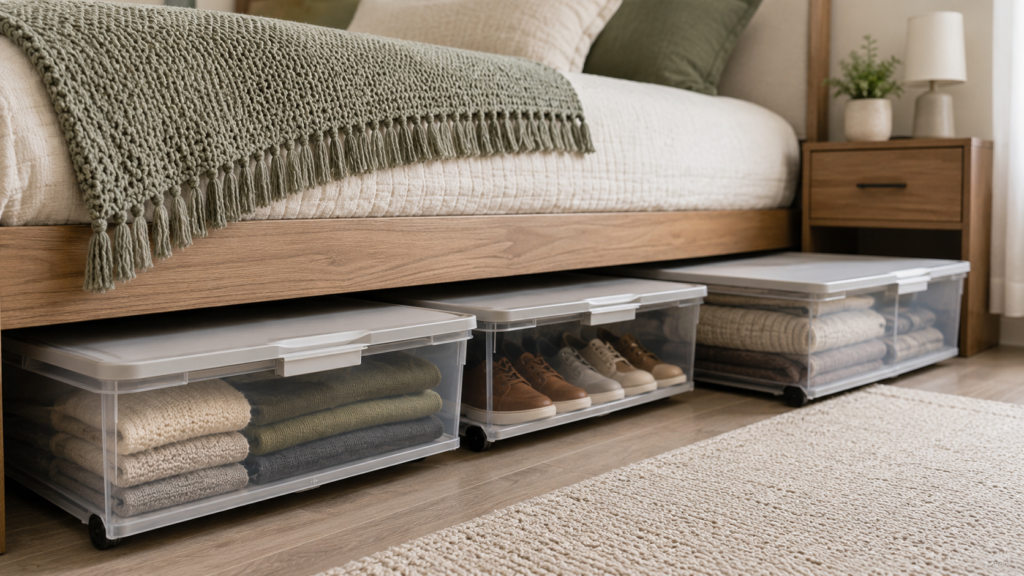
Low under-bed containers work well for seasonal sheets and flat-folded blankets when wardrobe space is limited. Select a container with a secure lid, smooth edges, and enough clearance to slide without scraping the floor or snagging a bed skirt.
Vacuum beneath the bed before loading the container and check the area periodically for dust or moisture. Keep the heaviest items divided between two boxes so each one remains manageable. For more layout options, see our under-bed storage ideas.
7. Dedicate One Dresser Drawer to Bed Linens
A wide dresser drawer is a convenient place for the sheet set currently in rotation. Fold items to the same depth and arrange bundles front to back so every option remains visible when the drawer opens.
Do not force bulky blankets into a drawer designed for clothing. Overfilling can strain slides and wrinkle fabric. Keep only compact linens here, and move seasonal or guest bedding to a higher-capacity location.
8. Store Guest Bedding as a Ready-to-Use Kit
Prepare one guest kit with sheets, pillowcases, a light blanket, and a clean mattress protector. Keeping the pieces together saves time before visitors arrive and prevents guest linens from becoming mixed with everyday bedding.
Place the kit in a breathable zippered bag or a handled bin on a clearly assigned shelf. Add a simple size marker if you have more than one guest bed. Launder the set after use and return it only when fully dry.
9. Fold Bulky Blankets to Fit the Shelf
Rather than using one standard fold for every blanket, fold each item to match the depth of its shelf or container. Consistent dimensions create stable stacks and reduce the wasted space behind folded fabric.
Place dense wool blankets and weighted blankets low, where they are easier to lift and less likely to fall. Follow the manufacturer’s care and storage instructions, particularly for weighted products that may have limits on folding or hanging.
10. Use Vacuum Bags Only for Short-Term Space Saving
Vacuum bags can reduce the volume of washable synthetic duvets and spare pillows during a move or a short seasonal rotation. They are less suitable for delicate fills that may lose loft under prolonged compression.
Confirm the care label before compressing any item, and do not use this method for damp bedding. Release and air the contents when the storage period ends. If loft does not return promptly, stop compressing that item in the future.
11. Protect Bedding From Light, Dust, and Moisture
Keep stored fabric away from direct sunlight, which can fade color and weaken fibers over time. A clean closed cupboard or breathable covered bin provides better protection than an exposed decorative stack.
The U.S. Environmental Protection Agency recommends controlling indoor moisture to help prevent mold. Review its mold and moisture guidance, address leaks promptly, and avoid storing linens against damp exterior walls.
12. Create a Simple Rotation Routine
Place freshly washed sets at the back or bottom and take the next set from the front or top. This gentle rotation prevents one favorite set from wearing out while forgotten bedding occupies space.
Review the storage area at the start of each season. Air bulky items, wipe shelves, and confirm that containers are clean and dry. A ten-minute check is usually enough when every category already has a defined home.
Where Is the Best Place to Store Extra Bedding?
The best location is clean, dry, shaded, and easy to reach. A bedroom wardrobe, linen cupboard, dresser drawer, or protected under-bed container can all work when the space has stable conditions and enough airflow.
Match the location to frequency of use. Everyday sheets belong at waist or eye level, guest sets can sit slightly higher, and seasonal duvets may occupy under-bed or upper-shelf space. Avoid garages, damp basements, and hot attics unless they are properly conditioned.
Final Thoughts
Effective bedroom bedding storage ideas do more than hide bulky fabric. They keep complete sets together, protect materials from dust and moisture, and make regular bed changes easier.
Begin by reducing the collection, then assign one breathable storage location to each category. With stable folds, sensible weight placement, and a seasonal check, sheets and blankets can remain fresh without crowding the bedroom.