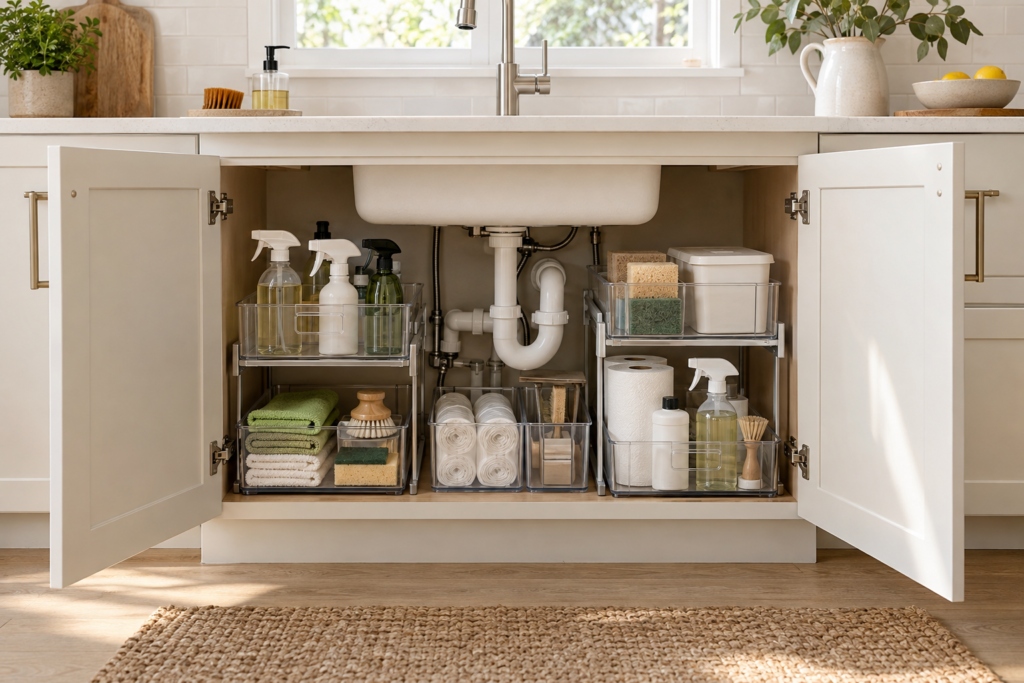
A kitchen sink cabinet can quickly become crowded with cleaning sprays, sponges, trash bags, dishwasher supplies, and other everyday essentials. Pipes and disposal units also make this cabinet difficult to organize. With a thoughtful setup, however, even a small space can remain tidy, safe, and easy to use.
These kitchen under-sink organization ideas will help you work around plumbing, reduce clutter, prevent leaks from causing damage, and keep frequently used supplies within easy reach.
Table of Contents
1. Kitchen Under-Sink Organization Ideas: Empty and Clean the Cabinet
Begin by removing everything from beneath the sink. Check each product and discard empty bottles, damaged supplies, dried sponges, and items you no longer use.
Vacuum loose debris and wipe the cabinet with a suitable cleaner. Allow the surface to dry completely before returning anything. Starting with an empty cabinet makes it easier to understand the available space and plan an effective layout.
2. Check for Leaks and Moisture
Inspect the pipes, valves, cabinet corners, and base for signs of moisture, staining, mold, or slow leaks. Fixing plumbing issues before organizing helps protect both the cabinet and your supplies.
You can also place an absorbent mat or waterproof liner across the cabinet floor. A removable liner makes spills easier to clean and may help you notice small leaks before they cause significant damage.
3. Measure Around the Plumbing
Under-sink cabinets rarely provide one large open storage area. Pipes, garbage disposals, water filters, and valves divide the cabinet into several awkward spaces.
Measure the height, width, and depth available on each side of the plumbing before purchasing organizers. Remember to leave clear access to shutoff valves and removable plumbing components so maintenance can be completed without emptying the entire cabinet.
4. Use Stackable Drawers
Stackable drawers make good use of vertical space while keeping small supplies accessible. They can hold dishwasher tablets, microfiber cloths, spare sponges, gloves, and cleaning accessories.
Choose drawers that fit beside the pipes rather than directly underneath them. Clear designs make it easier to see what is stored inside, while labeled drawers help everyone return items to the correct place. Avoid stacking drawers so high that they interfere with plumbing or become difficult to open.
5. Add a Pull-Out Organizer
A pull-out organizer allows you to reach products stored near the back without moving everything in front. It works especially well for cleaning bottles, dish soap refills, and other frequently used supplies.
Select a narrow organizer that can slide beside the drainpipe. Before installing it, confirm that the cabinet door can close properly and that the organizer will not hit hinges or plumbing connections when pulled forward.
6. Group Supplies in Portable Bins
Use separate bins to create simple categories, such as everyday cleaning, dishwashing, recycling supplies, and backup products. This prevents unrelated items from mixing together.
A portable cleaning caddy is particularly useful because you can lift the entire group out when cleaning another room. Bins with handles are easier to remove from deep cabinets, and washable plastic designs are practical for products that may leak.
7. Install an Adjustable Tension Rod
A tension rod can create extra storage above shorter products without requiring screws. Install it between the cabinet walls and hang lightweight spray bottles by their trigger handles.
Position the rod where bottles will not press against the sink basin, plumbing, or cabinet doors. Do not overload it, as excessive weight may cause the rod to slip. This solution works best for a small number of frequently used spray bottles.
8. Use the Cabinet Doors Carefully
The inside of each cabinet door can hold lightweight essentials that would otherwise occupy shelf space. Adhesive caddies or slim door-mounted organizers can store sponges, cleaning cloths, brushes, gloves, or trash bag rolls.
Measure the clearance between the door and the products inside the cabinet before installation. Place organizers away from hinges and ensure they do not collide with pipes when the door closes. Avoid storing heavy bottles on adhesive organizers.
9. Store Trash Bags in a Dispenser
Loose rolls and boxes of trash bags can take up unnecessary space. A compact dispenser keeps bags contained and makes it easier to remove one when needed.
Mount a lightweight dispenser inside a cabinet door or place it vertically in a narrow bin. You can also remove bags from bulky packaging and fold them neatly into a labeled container. Store large backup packages elsewhere when cabinet space is limited.
10. Place Frequently Used Items in Front
Arrange the cabinet according to how often you use each item. Everyday supplies such as dish soap, dishwasher tablets, sponges, and surface cleaner should remain near the front.
Store refills and less frequently used products toward the back or in a clearly labeled backup bin. This arrangement reduces unnecessary searching and makes daily kitchen routines faster.
11. Keep Cleaning Products Safe
Safety should guide every under-sink storage decision. Keep cleaning products in their original containers with labels intact, and never mix household chemicals.
If children or pets can access the kitchen, install a reliable child-safety lock or move hazardous products to a high, secured cabinet. Sharp tools, pest-control products, and potentially dangerous supplies should also be stored securely. Always follow the manufacturer’s storage instructions.
For help identifying cleaning products made with safer ingredients, explore the EPA Safer Choice program.
12. Create a Simple Maintenance Routine
An organized cabinet stays functional when it is checked regularly. Once a month, remove misplaced items, wipe up spills, inspect for leaks, and note which supplies need replacing.
Avoid filling every available inch. Leaving a little open space makes products easier to reach and allows you to notice moisture or plumbing problems sooner. A short maintenance routine prevents clutter from rebuilding over time.
What Should Be Stored Under the Kitchen Sink?
The cabinet is generally suitable for frequently used dishwashing and cleaning supplies, provided they are stored safely. These may include dish soap, dishwasher products, sponges, brushes, gloves, microfiber cloths, trash bags, and a limited number of household cleaners.
Avoid storing food, paper products that can absorb moisture, electrical appliances, or anything that could be damaged by a plumbing leak. Large quantities of backup products may be better stored in a pantry, utility closet, or another dry location.
Final Thoughts
The best kitchen under-sink organization ideas focus on safety, accessibility, and realistic use of the available space. Begin by cleaning the cabinet and checking for leaks, then add organizers that fit around the plumbing instead of forcing a standard layout into an awkward area.
Stackable drawers, pull-out organizers, portable bins, door storage, and a tension rod can all improve functionality when used carefully. Most importantly, keep hazardous products secure and maintain access to plumbing connections.
With clearly defined categories and a quick monthly reset, your under-sink cabinet can remain clean, practical, and much easier to manage.
For more ways to improve cabinet space, explore our kitchen cabinet organization ideas.