Extra toilet paper should be easy to reach, but bulky packaging and loose rolls can quickly make a bathroom look untidy. The challenge becomes greater in a small bathroom where floor space, cabinets, and open surfaces are limited.
These bathroom toilet paper storage ideas use overlooked walls, narrow corners, baskets, cabinets, and multipurpose furniture to keep spare rolls clean and accessible. Choose a solution that suits your available space, household needs, and preferred level of visibility.
Table of Contents
1. Bathroom Toilet Paper Storage Ideas: Use a Slim Floor-Standing Holder
A narrow floor-standing holder is practical when there is no suitable wall or cabinet space. Some models hold the active roll at the top and several replacements underneath, keeping everything together in one compact footprint.
Measure the space beside the toilet before choosing a holder and confirm that it will not obstruct movement or cleaning. Select a stable, moisture-resistant design that cannot tip easily when a roll is removed.
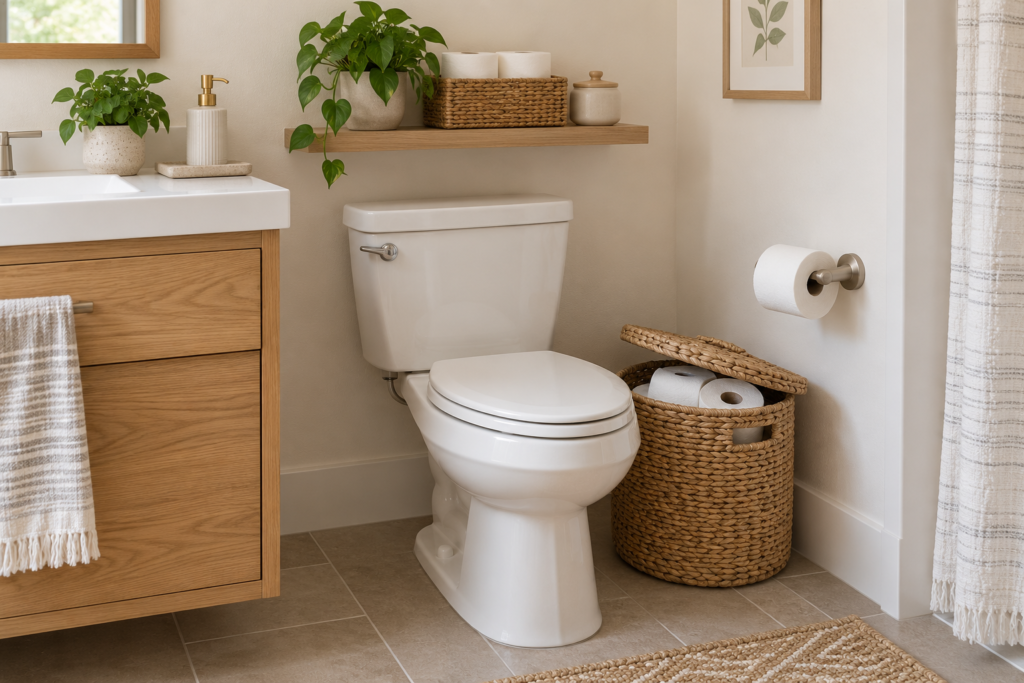
2. Place Rolls in a Lidded Basket
A lidded basket conceals spare rolls while adding warmth and texture to the bathroom. It can sit on the floor, beneath a console, or on a sturdy lower shelf.
Choose a washable or lined basket and avoid placing it where water regularly splashes. A lid provides additional protection from dust and moisture while maintaining a calm, uncluttered appearance.
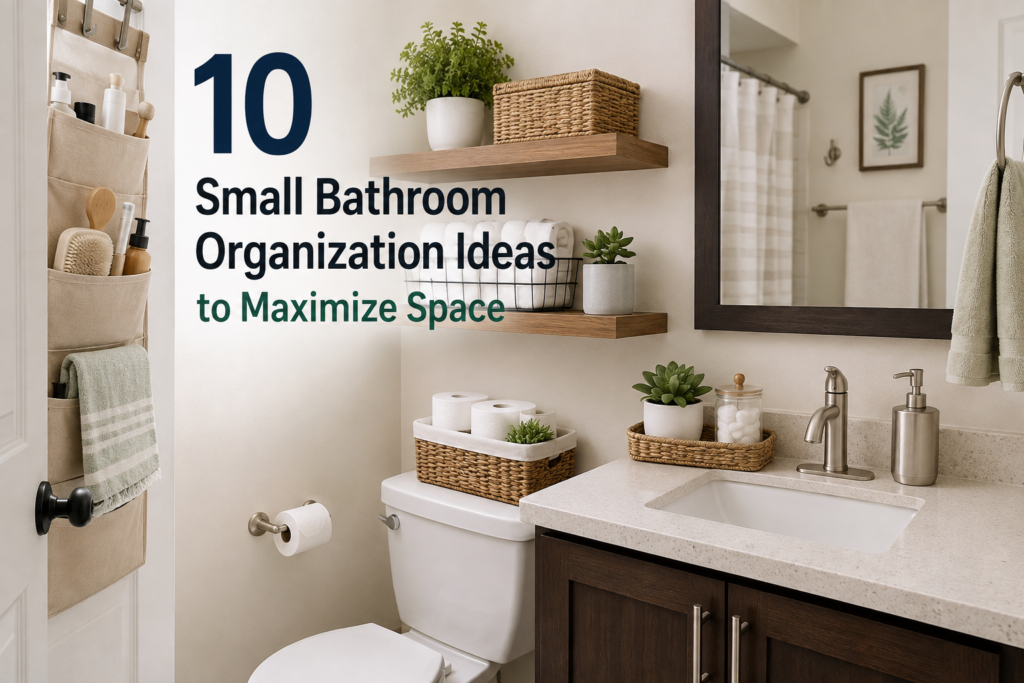
3. Add Floating Shelves Above the Toilet
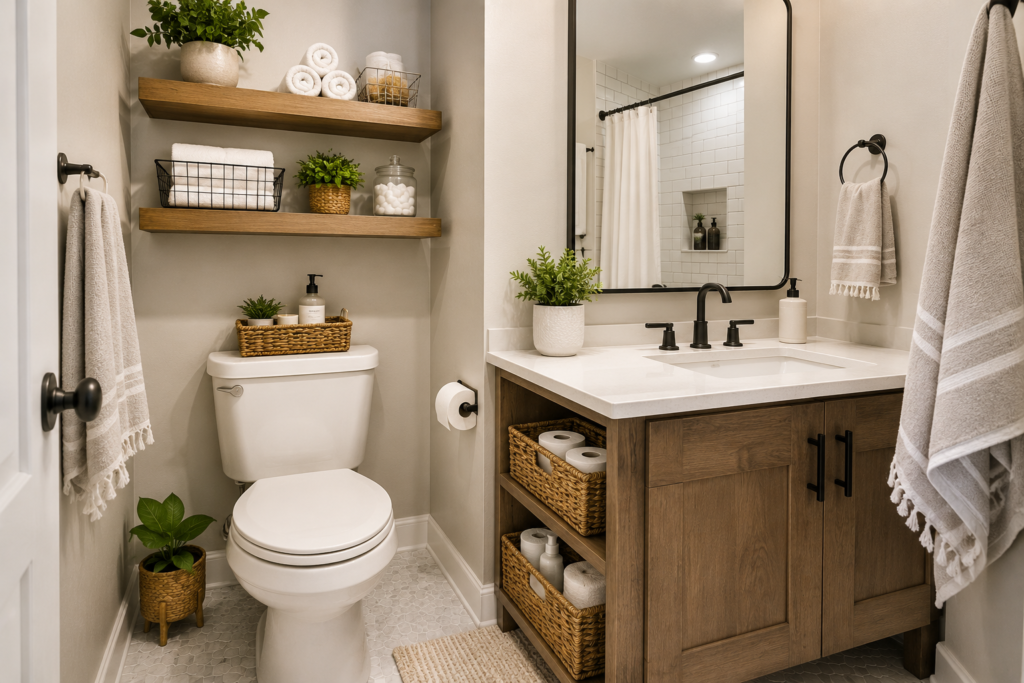
The wall above a toilet often provides useful vertical space. One or two floating shelves can hold spare rolls in a small basket alongside a plant or another simple decorative item.
Install shelves securely and high enough to avoid accidental bumps. Do not overload them or stack loose rolls too close to the edge. Keeping paper inside a container creates a safer and more polished arrangement.
4. Choose an Over-the-Toilet Cabinet
An over-the-toilet cabinet uses vertical space while keeping supplies behind closed doors. It is useful for storing toilet paper, personal-care products, and other lightweight bathroom essentials.
Confirm that the unit fits around the toilet and does not interfere with the tank, flush controls, or plumbing access. Tall freestanding units should be anchored according to the manufacturer’s instructions.
5. Use a Wall-Mounted Roll Dispenser
A wall-mounted dispenser can store several rolls without occupying the floor. Vertical designs are especially suitable for a narrow wall beside the toilet or vanity.
Position the dispenser where rolls can be reached comfortably but remain away from the shower, sink splashes, and damp towels. Use suitable fixings for the wall type instead of relying on weak adhesive for a heavily used holder.
6. Store Rolls Inside a Vanity
Closed vanity storage keeps toilet paper hidden and protected. Reserve one dry shelf, drawer, or bin for rolls rather than mixing them with leaking toiletries or cleaning products.
Use a shallow basket so the entire supply can be lifted out easily. If plumbing occupies much of the cabinet, place paper on the side farthest from pipes and inspect the area periodically for moisture.
7. Use a Narrow Rolling Cart
A slim rolling cart can fit between a vanity and wall while providing several levels of flexible storage. Keep toilet paper on a dry shelf and use the remaining tiers for neatly contained everyday supplies.
Choose locking wheels if the cart moves too easily. Leave enough clearance to pull it forward without scratching fixtures or blocking the bathroom door.
8. Repurpose a Decorative Container
A clean ceramic crock, metal bin, wooden box, or fabric-lined container can turn visible rolls into an intentional part of the room. This approach works well when only two or three replacements need to remain nearby.
Make sure the container is wide enough for rolls to be removed without tearing and easy to clean. Avoid materials that absorb moisture quickly when the bathroom has limited ventilation.
9. Add Storage Behind the Door
The back of the bathroom door can support a lightweight fabric organizer or slim rack. Use the lower pockets for spare rolls and reserve upper pockets for other light supplies.
Check that the organizer does not prevent the door from closing or scrape the wall. Avoid placing excessive weight on hooks, especially when the door is hollow or frequently opened with force.
10. Use a Recessed Wall Niche
A recessed niche offers streamlined storage without projecting far into the room. It can hold a compact basket of rolls while preserving valuable floor space.
This option is best considered during renovation because wall cavities may contain wiring, pipes, or structural elements. Consult a qualified professional before cutting into a wall, and avoid installing paper storage in a consistently wet shower zone.
11. Choose a Storage Stool
A compact stool with an internal compartment can combine storage with a useful surface. It may hold spare rolls while supporting folded clothing or a lightweight basket during daily routines.
Confirm that the stool is designed for bathroom conditions and follow its weight restrictions. Do not use it as a step unless the manufacturer specifically identifies it as suitable for that purpose.
12. Create a Small Backup Zone
Not every roll from a bulk package needs to remain in the bathroom. Keep a manageable supply near the toilet and store the unopened remainder in a dry linen closet or utility area.
Refill the bathroom container during a regular weekly reset. This approach prevents overfilled shelves and makes the room easier to clean while ensuring that replacement rolls remain available.
How Many Rolls Should You Store in the Bathroom?
The appropriate quantity depends on household size, available space, and how frequently supplies are replenished. For many bathrooms, three to six spare rolls provide a practical balance between convenience and clutter control.
Guest bathrooms may need only two or three visible replacements, while a family bathroom may benefit from a slightly larger protected supply. The goal is accessibility rather than filling every shelf.
Keep Toilet Paper Clean and Dry
Paper absorbs moisture easily, so avoid storing rolls directly beside a shower, bathtub, leaking pipe, or damp towel. Closed cabinets and lidded containers provide better protection in humid rooms.
Use the exhaust fan during and after bathing, address leaks promptly, and allow wet surfaces to dry. The EPA’s guide to moisture and mold control provides additional guidance for maintaining a drier indoor environment.
Final Thoughts
Practical bathroom toilet paper storage ideas do not require a large cabinet or expensive renovation. A slim holder, lidded basket, floating shelf, narrow cart, or protected vanity compartment can make effective use of the space already available.
Keep only a sensible number of rolls in the room, protect them from moisture, and choose organizers that do not obstruct movement or plumbing access. For more ways to arrange bathroom linens without creating clutter, explore our bathroom towel storage ideas.
A simple system that matches the room and household routine will keep replacement rolls accessible while helping the bathroom remain calm, clean, and organized.