Seasonal clothes can overwhelm a bedroom when coats, sweaters, summer pieces, and accessories compete for the same drawers and rails. These bedroom seasonal clothing storage ideas protect fabrics, use overlooked space, and make each seasonal change easier.
Start with clean, completely dry clothing and measure every storage area before buying containers. For more bedroom guidance, explore our under-bed storage ideas and bedroom closet organization ideas.
Table of Contents
- Sort Clothes by Season
- Wash Everything Before Storage
- Use Clear Under-Bed Containers
- Add Fabric Bins to Upper Shelves
- Try Vacuum Bags for Bulky Items
- Protect Delicate Fabrics
- Use Slim Garment Bags
- Create an Accessories Box
- Label Every Container Clearly
- Keep Moisture and Pests Away
- Use a First-In Rotation System
- Schedule Two Seasonal Reviews
1. Sort Clothes by Season
Start by dividing clothing into the current season, the next season, and true off-season items. Keep transitional layers accessible because weather changes can be unpredictable. Remove damaged or unworn pieces before storage so valuable space is reserved for clothes you will actually use.
2. Wash Everything Before Storage
Clean every garment before packing it away. Body oils, food residue, and unnoticed stains can attract pests or become harder to remove over time. Make sure items are completely dry, then empty pockets and fasten buttons or zippers to help garments keep their shape.
3. Use Clear Under-Bed Containers
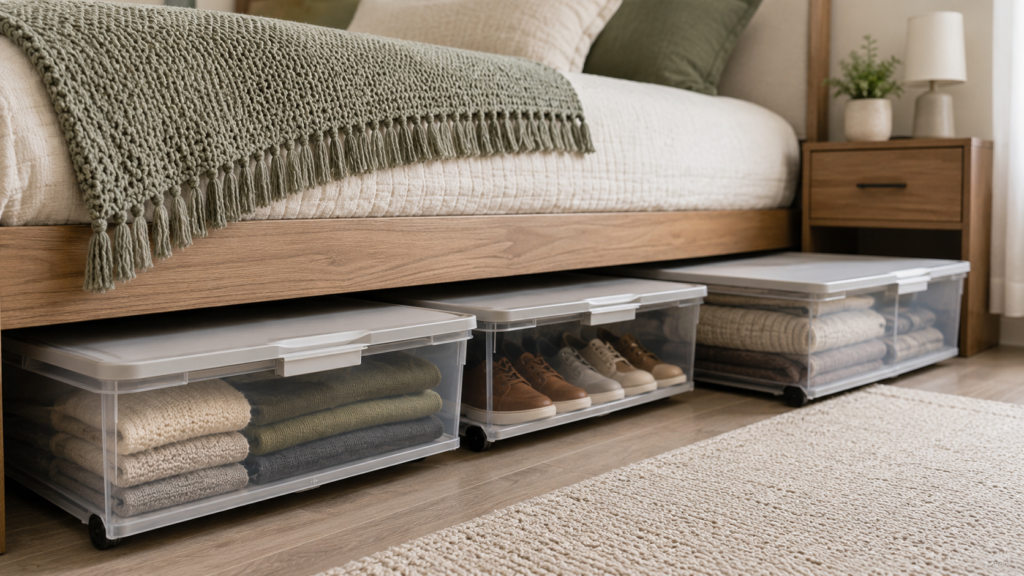
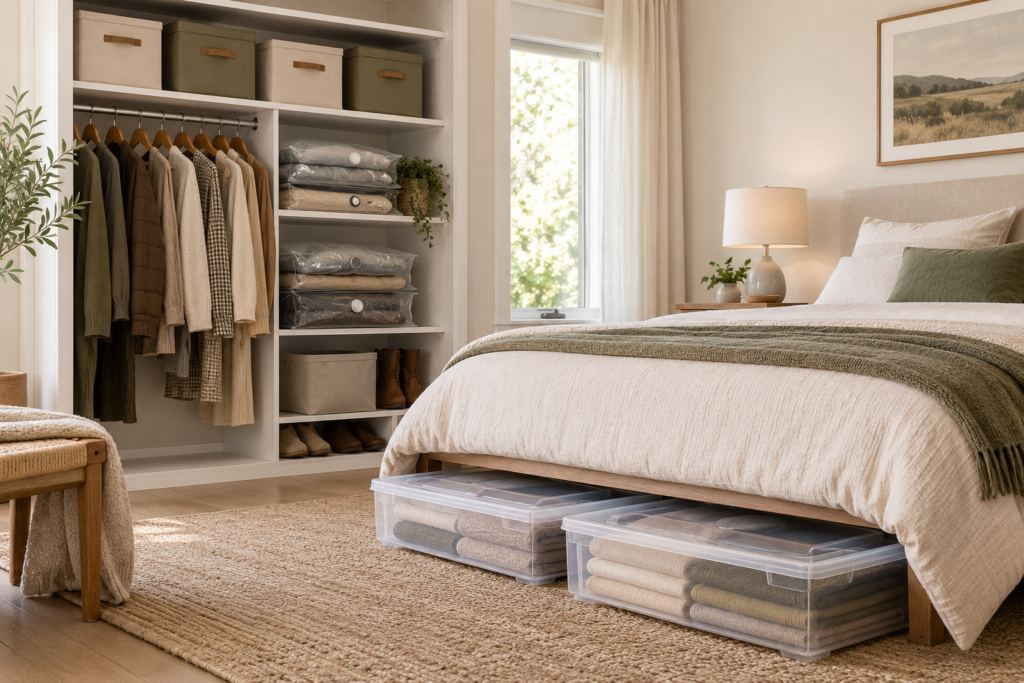
Low clear containers make the unused area beneath a bed practical for folded sweaters, jeans, or seasonal accessories. Choose lids that close securely and measure floor clearance before buying. Group similar items together and avoid packing bins so tightly that fabrics are crushed.
4. Add Fabric Bins to Upper Shelves
Upper closet shelves are ideal for lightweight fabric bins containing off-season clothes. Select bins with sturdy handles so they are easy to lift down. Keep frequently needed transitional pieces in front and long-term storage behind. Do not overload high shelves with heavy containers.
5. Try Vacuum Bags for Bulky Items
Vacuum bags can reduce the volume of puffer jackets, spare blankets, and other bulky textiles. Fold items evenly, follow the bag instructions, and avoid compressing natural down or delicate fibers for long periods. Store sealed bags flat and inspect them occasionally for lost suction.
6. Protect Delicate Fabrics
Wrap delicate knits, silk, embroidery, or sentimental garments in acid-free tissue and place them in breathable boxes. Avoid thin plastic dry-cleaning bags, which can trap moisture. Fold heavy sweaters rather than hanging them, and add tissue at creases to reduce permanent lines.
7. Use Slim Garment Bags
Breathable garment bags protect coats, suits, and occasion wear from dust while allowing airflow. Choose clear windows or consistent color coding so contents remain easy to identify. Leave space between bags and use supportive hangers that match the garment’s weight.
8. Create an Accessories Box
Store seasonal scarves, gloves, hats, and belts together in a divided box. Roll soft items loosely and use small pouches for pairs of gloves. Keeping accessories separate prevents them from disappearing inside larger clothing bins and makes the first seasonal outfit easier to assemble.
9. Label Every Container Clearly
A clear label should state the category, season, and household member, such as winter sweaters or summer clothes. Place labels on the front and top so they remain visible from different angles. Update labels whenever contents change rather than relying on memory.
10. Keep Moisture and Pests Away
Store clothing only in dry, clean areas with good airflow. Use cedar blocks or lavender sachets if appropriate, but keep oils from touching fabric. Avoid cardboard boxes in damp basements or hot attics, and never use mothballs without carefully following safety directions.
11. Use a First-In Rotation System
Place recently packed clothing behind older stored items so everything receives regular use and inspection. When seasons change, pull out one category at a time, check condition, and return only pieces that still fit your lifestyle. This prevents forgotten bins from building up.
12. Schedule Two Seasonal Reviews
Review stored clothing in spring and autumn. Check for moisture, pests, damaged containers, and items that no longer fit or suit your needs. Donate usable pieces promptly, repair favorites, and update labels. Short planned reviews keep seasonal storage manageable all year.
Final Thoughts
Good bedroom seasonal clothing storage combines careful preparation, breathable protection, useful labels, and regular reviews. Use under-bed space for accessible folded items, upper shelves for lightweight bins, and garment bags for pieces that must hang. A simple twice-yearly routine will protect clothes and keep the bedroom calm.
Bedroom Seasonal Clothing Storage Ideas: Rotation Checklist
Sort clothing by current season, size, condition, and actual use before choosing containers. Wash and dry every item completely, then repair loose buttons or small tears so garments are ready when the season returns.
Choose breathable storage for natural fibres and sealed, moisture-resistant containers only where dampness or pests are controlled. Label the outside with category and season instead of relying on memory.
Seasonal Clothing Storage Mistakes to Avoid
Do not pack damp clothing, overload hanging rails, or place delicate garments in direct contact with unfinished wood. Avoid long-term storage in areas with unstable heat or humidity.
Review our under-bed storage ideas for low-space options. The EPA moisture-control guidance explains why keeping storage areas dry matters.
Frequently Asked Questions
How often should seasonal clothing be reviewed?
Review it when seasons change and again before buying replacements. Remove items that no longer fit, need repair, or were not worn during the last relevant season.
Should clothes be stored in vacuum bags?
Vacuum bags can save temporary space for suitable washable items, but prolonged compression may not suit structured or delicate garments. Follow garment-care and bag-manufacturer directions.