Baking sheets, muffin tins, cooling racks, and cutting boards are awkward to stack and frustrating to retrieve. The most useful baking sheet storage ideas keep these flat items upright, separated, and close to the oven. These twelve solutions work in cabinets, drawers, pantries, and small kitchens without requiring a complete renovation.
Table of Contents
- 1. Install Vertical Cabinet Dividers
- 2. Repurpose a Sturdy File Sorter
- 3. Choose a Pull-Out Rack
- 4. Divide a Deep Drawer
- 5. Use the Cabinet Above the Oven
- 6. Create a Pantry Baking Zone
- 7. Separate Roasting Pan Lids
- 8. Add Tension Rod Dividers
- 9. Mount a Cabinet Door Rack
- 10. Protect Delicate Pans
- 11. Sort Trays by Size and Use
- 12. Keep the Storage Zone Light
1. Install Vertical Cabinet Dividers
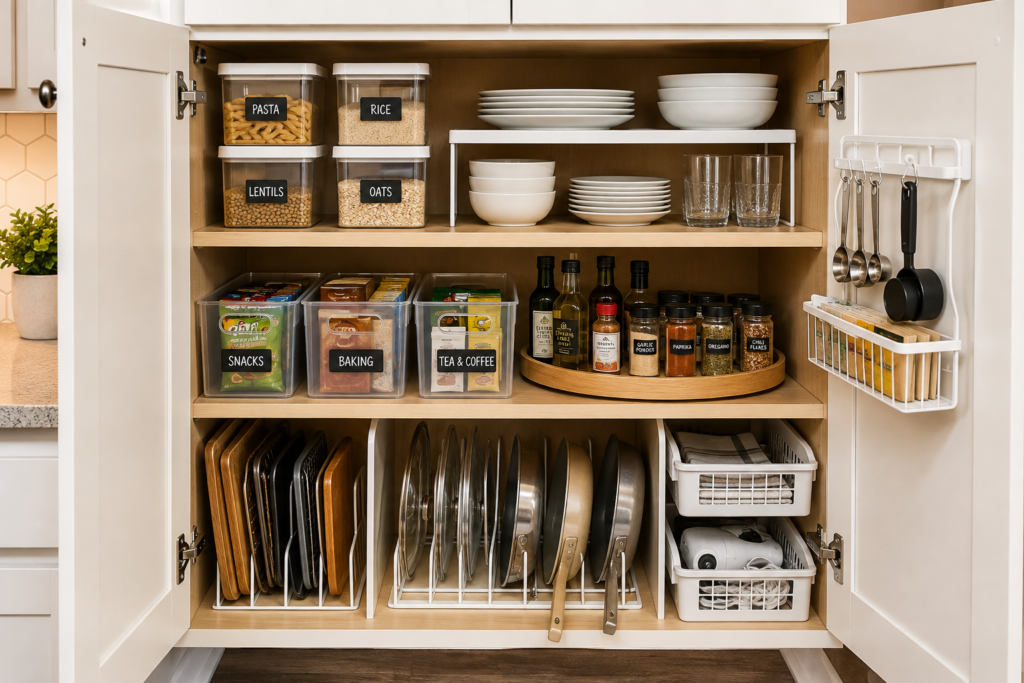
Vertical dividers are one of the simplest ways to stop baking sheets from collapsing into a heavy stack. Fit them inside a base or wall cabinet and leave enough width for your thickest pan. Separate sheet pans, muffin tins, cooling racks, and cutting boards into clear sections.
2. Repurpose a Sturdy File Sorter
A metal or solid plastic file sorter can create instant compartments on a cabinet shelf. Choose a wide, stable model that will not tip when a heavy tray is removed. Add non-slip shelf liner underneath so the organizer stays in place during daily use.
3. Choose a Pull-Out Rack
A pull-out tray organizer brings the entire collection forward, which is helpful in deep lower cabinets. Measure the door opening, hinges, and interior depth before buying hardware. Full-extension runners make the pans at the back just as accessible as those at the front.
4. Divide a Deep Drawer
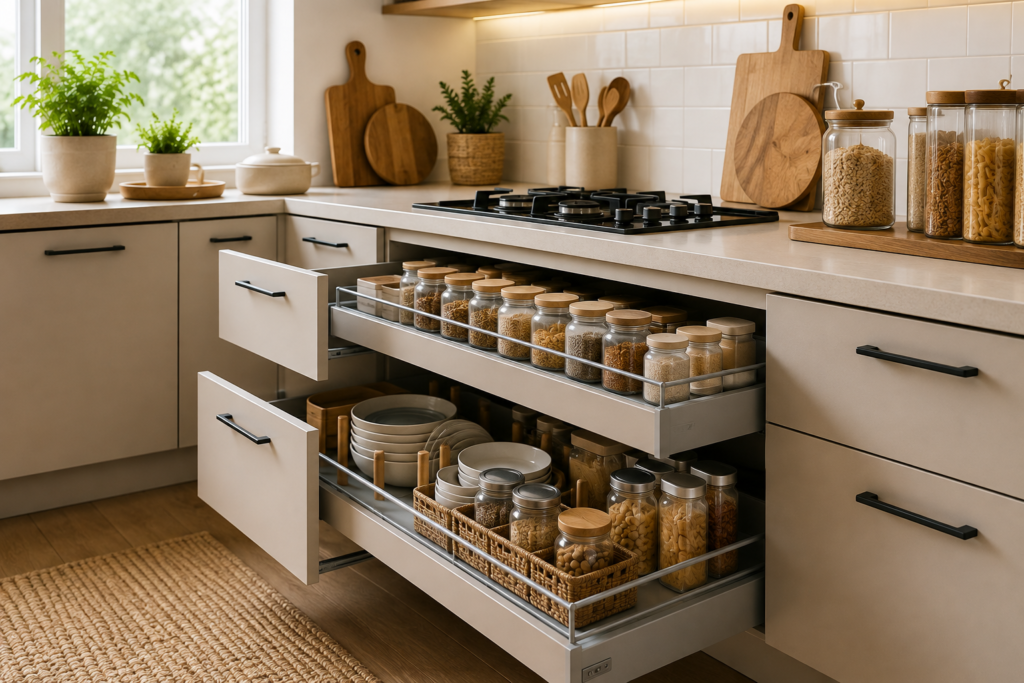
If your kitchen has a wide pot drawer, use adjustable pegs or dividers to store baking pieces upright. Keep the heaviest trays nearest the drawer sides or directly over the runners. This layout reduces lifting and keeps counters clear while you prepare food.
5. Use the Cabinet Above the Oven
The cabinet above a wall oven can be a convenient home for flat bakeware that is used frequently. Avoid overloading a high shelf, and keep lightweight cooling racks or silicone mats higher than heavy pans. Use dividers so items can be removed one at a time.
6. Create a Pantry Baking Zone
Group trays near flour, mixing bowls, and other baking essentials to create a practical pantry zone. A low shelf is best for heavier metal pans. For more ways to improve nearby storage, explore these pantry organization ideas.
7. Separate Roasting Pan Lids
Large lids make baking trays harder to organize when everything shares one slot. Store lids in a dedicated divider, shallow drawer, or door-mounted rack. Match each lid to its pan before organizing and remove duplicates or damaged pieces that no longer fit correctly.
8. Add Tension Rod Dividers
Short tension rods can form removable vertical lanes inside a cabinet. Position pairs of rods from front to back and test their grip before adding pans. This renter-friendly idea works best with lightweight sheets and racks; permanent dividers are safer for a large, heavy collection.
9. Mount a Cabinet Door Rack
A slim rack on the inside of a cabinet door can hold cutting boards, silicone mats, or one lightweight tray. Check that the door can support the weight and that the rack clears interior shelves. Use screws or mounting hardware recommended for the door material.
10. Protect Delicate Pans
Place thin felt protectors or clean cloths between non-stick pans that must be stacked. Avoid forcing oversized trays into narrow slots, as scraping can damage finishes. Keeping each section slightly loose makes it easier to remove one pan without rubbing against its neighbors.
11. Sort Trays by Size and Use
Put everyday half-sheet pans in the easiest slot and move seasonal roasting trays to a higher or less convenient cabinet. Group similar shapes together so each category is easy to scan. This simple order prevents rarely used pieces from blocking the items needed every week.
12. Keep the Storage Zone Light
Limit each compartment to what fits comfortably. If a divider bows or trays lean heavily, redistribute the weight or remove extras. Regularly check for rust, sharp edges, and warped pans. The USDA food-safety guidance offers additional information for safe kitchen routines.
Final Thoughts
Good baking sheet storage turns an unstable stack into a simple, visible system. Start with vertical separation, place heavy pieces low, and keep the pans you use most within easy reach. Even one inexpensive divider can save cabinet space and make baking preparation noticeably smoother.
Baking Sheet Storage Ideas: Fit Checklist
Measure cabinet height, tray width, and handle projections before installing dividers. Store sheets vertically only when each piece can stand without bending.
Keep heavy pans low and separate frequently used trays from occasional bakeware.
Baking Sheet Storage Mistakes to Avoid
Avoid unstable stacks and narrow slots that scrape coatings. Let pans cool and dry completely before storage.
See our cabinet organization ideas and FoodSafety.gov guidance.
Frequently Asked Questions
Is vertical storage better?
It is useful when dividers are stable and trays fit without warping.
Where should heavy pans go?
Use a low, strongly supported cabinet within comfortable reach.