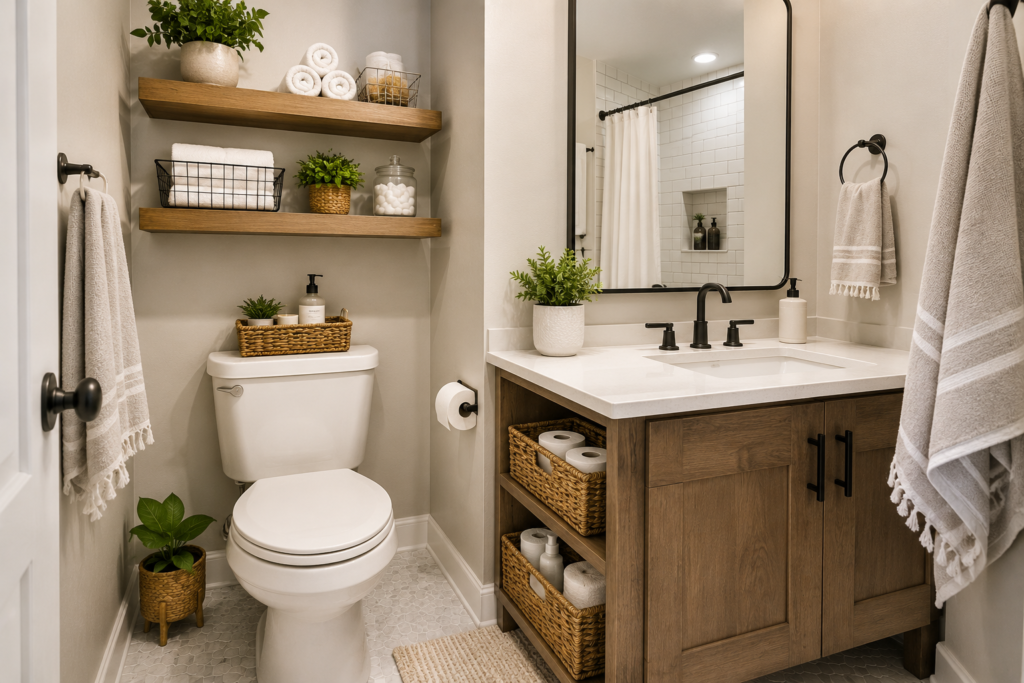

Bathroom cleaners are useful, but loose bottles, damp cloths, and mixed supplies can create clutter and unnecessary risk. Thoughtful bathroom cleaning supply storage keeps products upright, contained, and away from children and pets. Use these twelve practical ideas to build a tidy system that also makes weekly cleaning faster.
Table of Contents
- 1. Sort Products Before Storing
- 2. Use a Handled Cleaning Caddy
- 3. Add Child-Resistant Storage
- 4. Install a Pull-Out Bin
- 5. Use Clear Containment Bins
- 6. Protect the Cabinet From Leaks
- 7. Hang Spray Bottles Carefully
- 8. Separate Clean and Used Cloths
- 9. Store Bulk Refills Elsewhere
- 10. Keep Original Labels Visible
- 11. Create a Small Daily-Cleaning Kit
- 12. Review the Cabinet Regularly
1. Sort Products Before Storing
Empty the cabinet and group products by purpose: toilet, mirror, shower, floor, and general cleaning. Remove empty containers and set aside anything you no longer use. Never combine leftover products. Keeping cleaners in their original containers preserves instructions and important safety information.
2. Use a Handled Cleaning Caddy
A sturdy caddy keeps frequently used bottles together and makes it easy to carry supplies from one bathroom to another. Choose a model with high sides and a comfortable handle. Keep the load light enough to lift safely and return the caddy immediately after cleaning.
3. Add Child-Resistant Storage
Store household cleaning products where children and pets cannot reach them, ideally in a locked or securely latched cabinet. An under-sink latch can add protection, but it should not replace careful supervision. Follow the product label and local poison-safety recommendations.
4. Install a Pull-Out Bin
A pull-out organizer improves access in a deep vanity cabinet. Measure around pipes, hinges, and the door opening before installation. Place taller bottles in the back section and small brushes or sponges near the front so everything remains visible when the bin is extended.
5. Use Clear Containment Bins
Clear bins prevent small items from spreading and make leaks easier to notice. Assign one bin to each category rather than mixing unrelated products. For more ways to use this difficult space, see these under-sink bathroom storage ideas.
6. Protect the Cabinet From Leaks
Place a washable tray or waterproof liner beneath bottles to catch drips before they damage the cabinet. Check caps and spray nozzles before storage, and keep every container upright. Clean any spill according to the directions on the product label and ventilate the room as advised.
7. Hang Spray Bottles Carefully
A tension rod can hold lightweight spray bottles by their triggers and free the cabinet floor for bins. Make sure the rod is secure and does not press against plumbing. Do not use this method if children can access the cabinet or if bottles may fall when the door opens.
8. Separate Clean and Used Cloths
Keep clean microfiber cloths in a dry, breathable basket. Place used cloths in a separate washable container and launder them promptly according to their care instructions. Color-coding cloths by task can prevent a toilet-cleaning cloth from being used on mirrors or countertops.
9. Store Bulk Refills Elsewhere
Large refill bottles can overwhelm a compact vanity. Keep only the active products in the bathroom and move sealed backups to a secure utility cabinet. Avoid hot, humid locations and follow every label’s storage directions. A small inventory list helps prevent unnecessary duplicate purchases.
10. Keep Original Labels Visible
Arrange bottles so the product name and warnings face forward. Avoid transferring cleaners into decorative or food containers, which can cause dangerous confusion. If a label becomes unreadable, follow local household hazardous-waste guidance rather than guessing what the product contains.
11. Create a Small Daily-Cleaning Kit
A mini kit with a mirror cloth, approved surface cleaner, and small brush makes quick touch-ups easier. Keep it separate from heavy-duty products and store it securely after use. Limiting the kit to a few essentials prevents the countertop from becoming permanent storage.
12. Review the Cabinet Regularly
Once a month, check for leaks, damaged containers, expired products, and damp cloths. Return misplaced items to their assigned bins and wipe the liner. For poison-prevention information, consult the Poison Control guidance on cleaning products, and call local emergency services if an exposure causes serious symptoms.
Final Thoughts
A safe, organized bathroom cleaning cabinet relies on containment, clear categories, and secure access. Keep products in original containers, protect the shelf from leaks, and store backups elsewhere. A quick monthly review will keep the system reliable while making routine bathroom cleaning simpler.
Bathroom Cleaning Supply Storage Ideas: Safety Checklist
Keep every cleaner in its original labelled container and group products by task in leak-resistant bins. Store chemicals where children and pets cannot access them.
Ventilate the storage area and inspect bottles for corrosion or leaks. Follow label directions and local disposal rules.
Cleaning Supply Storage Mistakes to Avoid
Never mix cleaners, reuse food containers, or store incompatible products together. Do not place heavy bottles on unstable overhead shelves.
Review our under-sink bathroom storage ideas and EPA Safer Choice information.
Frequently Asked Questions
Can cleaners stay under the bathroom sink?
Only when the cabinet stays dry, plumbing remains accessible, and hazardous products are secured from children and pets.
Should cleaning products be decanted?
No. Keep them in original containers so safety labels and instructions remain available.