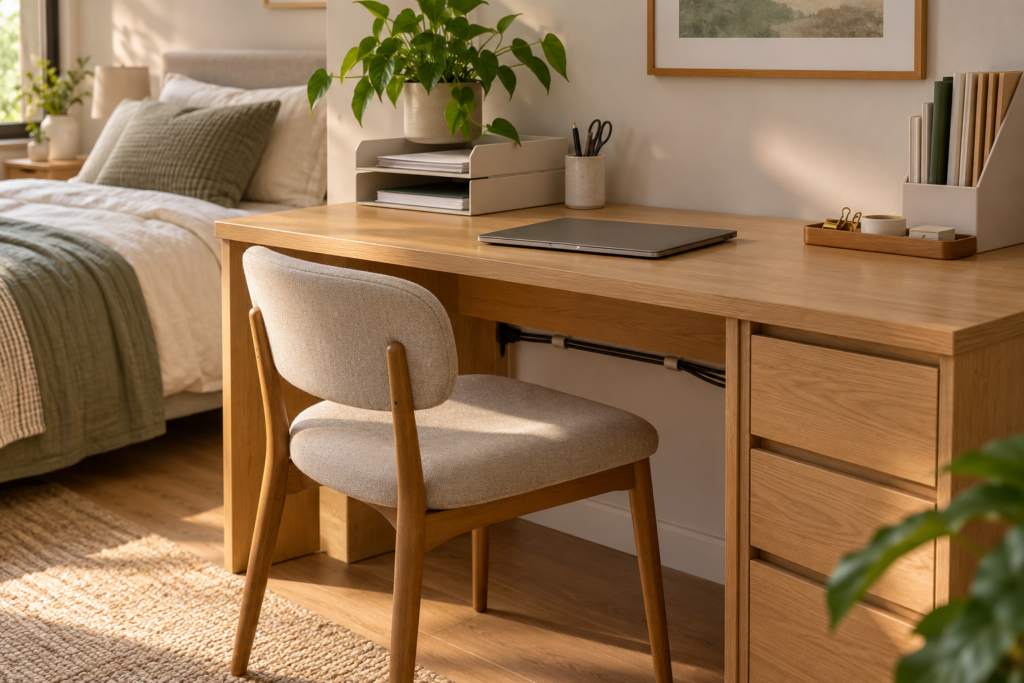
A bedroom desk can quickly collect papers, chargers, beauty products, books, and everyday odds and ends. The best bedroom desk organization ideas create a clear work surface without making the room feel like an office. Use the twelve practical solutions below to give every item a home, reduce visual clutter, and make daily resets easier.
Table of Contents
1. Bedroom Desk Organization Ideas: Start With a Clean Surface
Remove everything from the desktop and return only the items you use most days. A lamp, notebook, pen cup, and current device may be enough. Keeping at least half of the surface open gives you room to work and instantly makes the bedroom feel calmer.
2. Divide the Drawers
Use adjustable dividers or small trays to separate pens, sticky notes, cables, and personal items. Measure the inside of each drawer before buying organizers. Shallow containers stop small supplies from sliding together and make it easy to see what needs replenishing.
3. Add a Compact Desk Hutch
A low hutch adds storage without taking more floor space. Use its cubbies for notebooks, a small file box, and frequently used supplies. Choose a design that leaves enough open wall and breathing room so the desk still looks light rather than crowded.
4. Use the Wall Above the Desk
Install a narrow shelf, pegboard, or pinboard above the work surface. Keep lightweight items at eye level and place less-used supplies higher up. For more vertical-storage inspiration, see these bedroom wall storage ideas.
5. Control Charging Cables
Attach adhesive cable clips along the back edge of the desk and bundle extra length with reusable ties. If you use a cable enclosure, it must be intended for that equipment and used according to its ventilation and loading instructions. Keep plugs accessible and the enclosure outside walking routes. Label both ends of similar cords so you can disconnect the correct device without pulling everything apart.
6. Create a Simple Paper Station
Give incoming papers three destinations: action, file, and recycle. A vertical sorter uses less desk space than stacked trays and keeps important pages visible. Review the action section weekly so paperwork does not quietly become permanent bedroom clutter.
7. Store Supplies in Matching Cups
Matching cups or small jars make pens, brushes, scissors, and rulers easy to reach while creating a coordinated look. Keep only one useful category in each container. Extras can live in a drawer, which prevents the desktop holders from becoming overfilled.
8. Choose a Slim Rolling Cart
A narrow cart is useful when the desk has few drawers. Assign one shelf to work supplies, one to creative materials, and one to personal items. Roll it beside the desk during use and tuck it into a closet or quiet corner when you want the bedroom to feel restful.
9. Hide Occasional Items
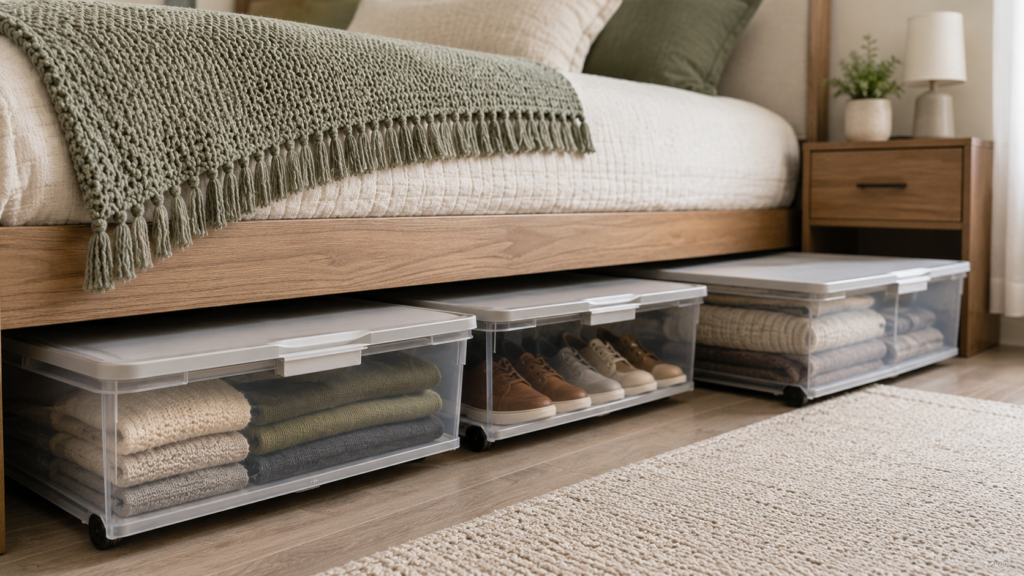
Store printer paper, spare notebooks, and backup stationery in a closed cabinet, closet bin, or under-bed box. Keeping occasional items away from the desk protects valuable workspace. These under-bed storage ideas can help in a small room.
10. Keep a Small Catchall Tray
Use one attractive tray for the few items that move in and out each day, such as glasses, earbuds, or a watch. The tray creates a visual boundary and prevents loose objects from spreading. Empty it regularly rather than allowing it to become another junk drawer.
11. Limit Desk Decor
Choose one or two decorative elements, such as a framed photo and a small plant. Too many objects reduce working space and collect dust. Repeating the bedroom’s existing colors helps the desk blend into the room instead of looking like a separate work zone.
12. Build a Five-Minute Reset Routine
At the end of the day, return supplies, file papers, wipe the surface, and plug in devices. A short repeatable routine works better than an occasional major cleanout. If you spend long periods at the desk, review the OSHA computer workstation guidance for practical setup considerations.
Design the Desk Around Tasks and Comfortable Reach
List the activities completed at the desk—computer work, study, paperwork, creative projects, or video calls. Keep only the tools for the main task within immediate reach. Reference materials can sit on a nearby shelf, while occasional supplies belong in a labeled drawer or box.
Measure the Working Envelope
- Record desktop width and depth after the monitor or laptop is positioned.
- Leave clear space for comfortable hand and arm movement.
- Check drawer clearance against the chair and nearby furniture.
- Keep the primary screen and frequently used items comfortably positioned for the user.
Scroll sideways to read the full table.
| Zone | Contents | Rule |
|---|---|---|
| Active surface | Current device, notebook, one pen | Reset at the end of each session |
| Top drawer | Daily small supplies | Use shallow dividers |
| Reference zone | Books and active files | Limit to current work |
| Archive zone | Completed records | Use a retention and disposal routine |
Manage Power and Cables Safely
Route cables so they are not stretched, crushed by drawers, or placed across a walking path. Keep vents open and liquids away from electronics. Use power strips and charging equipment according to their manufacturer’s instructions; do not overload outlets or hide heat-producing equipment in an unventilated box.
Control Paper at the Point of Entry
Use one inbox for unsorted paper and give it a fixed processing time. File essential documents, act on time-sensitive items, and securely dispose of papers that are no longer required. Multiple “temporary” piles quickly become permanent clutter.
Five-Minute Shutdown Routine
- Save work and return digital files to the correct folder.
- Move paper into action, file, or disposal.
- Return supplies to their assigned drawer section.
- Disconnect or store devices according to their guidance.
- Clear enough surface to begin the next task without rearranging.
A productive desk is not empty at every moment; it is easy to reset and supports the user without unnecessary searching, reaching, or cable hazards.
Desk-Organization Questions
What should stay on a small desk?
Keep the current device, one writing tool, and materials for the active task. Everything else should have a nearby return point.
How can cables stay accessible but tidy?
Group them by device, label similar plugs, and route them along a safe edge without crushing, stretching, or blocking ventilation.
What if paper keeps returning?
Use one inbox and a fixed processing schedule. A container controls paper only when each item eventually becomes an action, file, or disposal decision.
Test the Desk During Work and at Bedtime
Before buying another organizer, test the desk with the equipment and tasks you actually use. Open the laptop, place the keyboard and mouse, and lay out a notebook or textbook. Leave enough clear space to turn a page and move your arms comfortably. A tray that fits an empty desk can become an obstacle once a normal work session begins.
Next, check the surrounding bedroom. Pull the chair out fully, open nearby drawers, and walk between the desk and the bed. Keep that route clear of bags, cords, and rolling carts. If the chair blocks the wardrobe or bedside storage, changing the desk position may help more than adding shelves above it.
Give charging equipment a separate test. Confirm that plugs remain accessible, cables are not pinched behind furniture, and ventilation openings on equipment remain unobstructed. Follow the manufacturer’s instructions for power accessories. Use removable labels to identify cables before securing them, and allow enough slack to move equipment without pulling on a connection.
For shared use, divide the work area by task instead of adding permanent piles for each person. Keep one small container for writing tools, one folder for active papers, and a separate place for supplies that are used occasionally. Return personal items to their own storage after the session.
Finally, try a bedtime reset for a week. Clear cups and packaging, put active papers in their folder, and return loose tools to the drawer. Record anything that repeatedly stays on the desktop. That item needs a more convenient home or a deliberate place in the work zone. A useful bedroom desk organization system should support a real working session and leave the room easy to use afterward.
Final Thoughts
Effective bedroom desk organization is less about buying many containers and more about creating simple limits. Keep the daily essentials close, move backup supplies elsewhere, and protect open work space. With a few dedicated zones and a quick evening reset, the desk can support focus while the bedroom remains calm and comfortable.