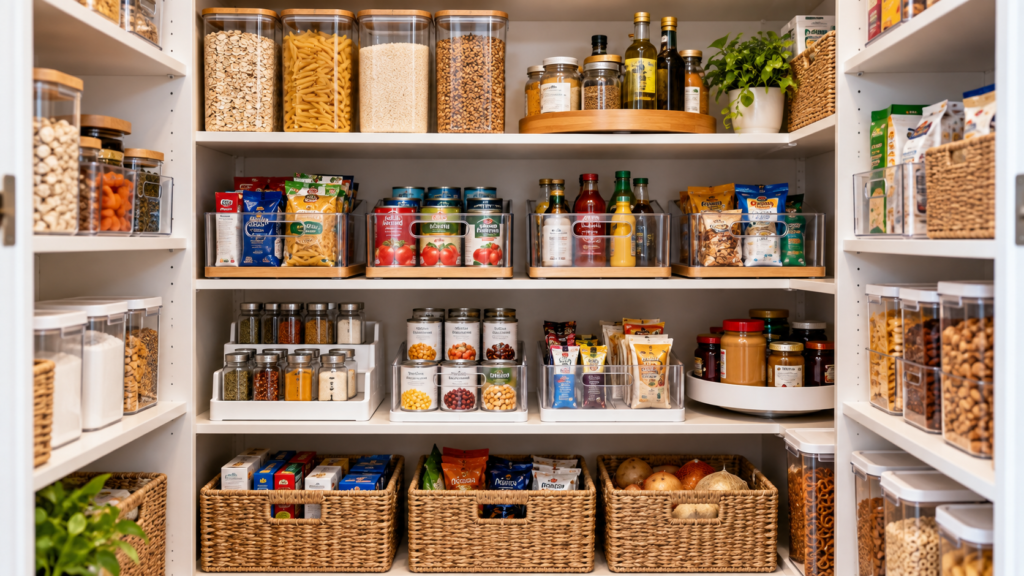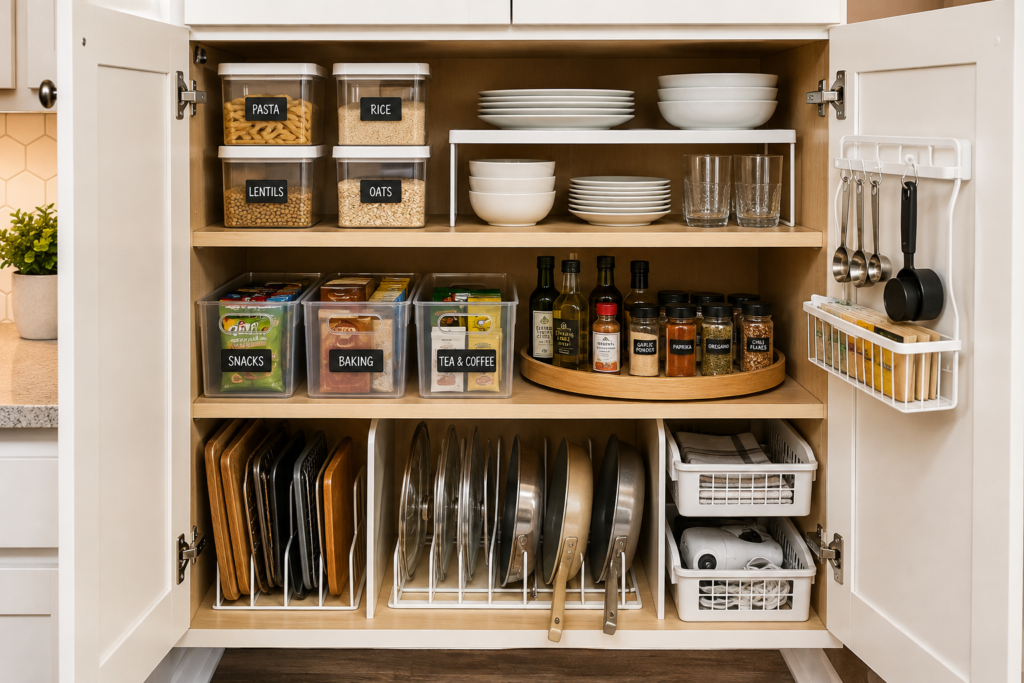
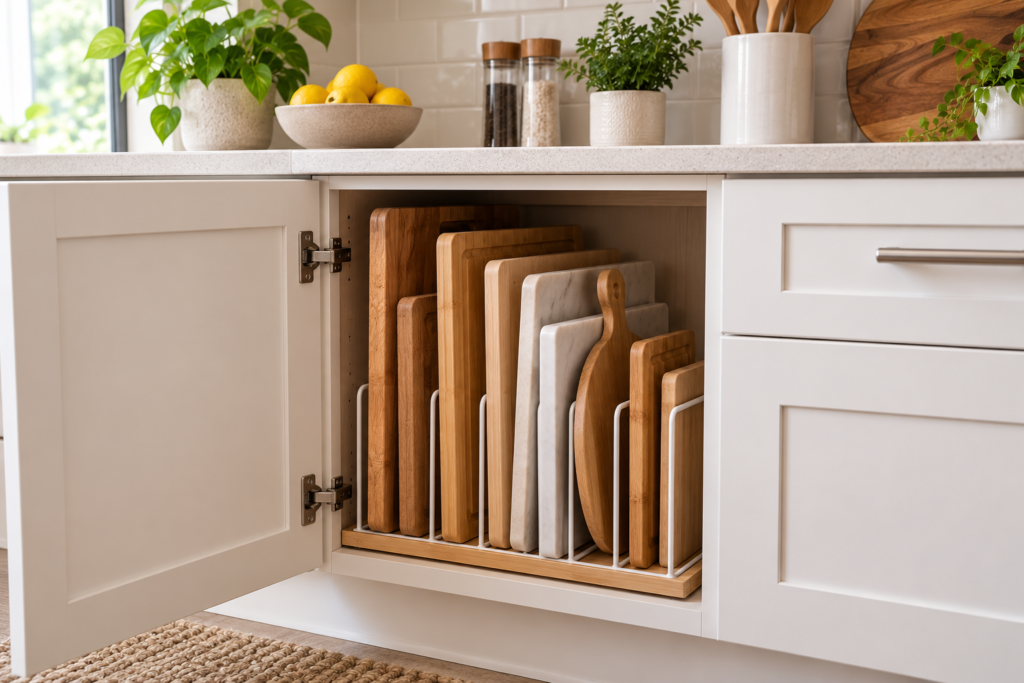
Kitchen cutting board storage ideas can make one of the most frequently used kitchen tools much easier to organize. Cutting boards often end up stacked on countertops, leaning against walls, or buried underneath baking sheets and other cookware.
A better storage system keeps boards easy to reach while giving them enough space to stay organized between uses. The right solution depends on the number and size of your boards, your available cabinet space, and how frequently you use each one.
From simple vertical dividers to pull-out storage, these practical ideas can help you create a cleaner and more functional kitchen.
Table of Contents
- Why Organize Cutting Boards?
- 12 Kitchen Cutting Board Storage Ideas
- How to Choose the Right Storage Method
- How to Set Up Your Cutting Board Storage
- Keeping Cutting Boards Clean and Dry
- Common Storage Mistakes
- Frequently Asked Questions
- Final Thoughts
Why Organize Cutting Boards?
Cutting boards come in different materials, thicknesses, and sizes. When they are stacked together without a system, grabbing the board at the bottom often means moving everything above it first.
Organized storage can make boards easier to select while reducing unnecessary countertop clutter. Vertical storage is particularly useful because each board can often be removed independently.
Good storage should also consider cleanliness. Cutting boards should be cleaned appropriately after use and allowed to dry before being placed into enclosed storage.
If nearby food-storage accessories are also creating cabinet clutter, our kitchen food storage container lid organization ideas can help organize another frequently messy kitchen category.
12 Kitchen Cutting Board Storage Ideas
1. Store Cutting Boards Vertically in a Cabinet
Vertical storage is one of the simplest ways to organize several cutting boards. Instead of stacking them horizontally, place the boards upright so each one remains visible and accessible.
A lower cabinet near your main food-preparation area can work particularly well. Make sure the compartment is wide and tall enough for the boards without forcing them into position.
2. Use Adjustable Cabinet Dividers
Adjustable dividers can turn an open cabinet into individual storage slots. Give large cutting boards wider sections and smaller boards narrower ones.
This approach can also prevent boards from falling sideways whenever one is removed. Choose dividers suitable for the cabinet dimensions and the weight of the items being stored.
3. Add a Cutting Board Organizer Rack
A freestanding organizer rack provides separate slots without requiring permanent cabinet modifications. It can work inside a cabinet, pantry, or on a countertop when appropriate.
Measure the thickness of your cutting boards before selecting a rack because narrow slots may not accommodate thicker wooden boards.
4. Create a Dedicated Drawer
A deep kitchen drawer can provide convenient cutting board storage when the dimensions are suitable. Boards can be stored flat or vertically with properly secured dividers, depending on the drawer design.
Keep the drawer limited to compatible preparation tools instead of allowing unrelated utensils to accumulate around the boards.
5. Store Boards Beside Baking Sheets
Cutting boards and baking sheets can sometimes share a vertical cabinet because both are relatively flat. Separate the two categories with a divider so you can reach one without disturbing the other.
This is especially useful in smaller kitchens where dedicating an entire cabinet to cutting boards is unrealistic.
6. Use an Inside-Cabinet-Door Rack
An appropriately designed rack mounted inside a cabinet door can make use of otherwise empty space. This solution works best for lighter boards that fit comfortably within the available clearance.
Before installing anything, check that the rack and boards will not collide with shelves or prevent the cabinet door from closing correctly.
7. Keep Everyday Boards Near the Prep Zone
The board you use every day should not necessarily be stored with rarely used specialty boards. Keep your most frequently used options near the area where you normally prepare food.
Less frequently used boards can occupy a secondary cabinet or pantry location. Organizing by frequency often makes a kitchen more efficient than organizing everything solely by appearance.
8. Use a Countertop Board Stand
If cabinet space is limited, a compact countertop stand can keep a few frequently used cutting boards upright.
Choose a location that does not interfere with food preparation or expose the boards unnecessarily to splashes from the sink or cooking area. Limiting the stand to a small number of boards helps prevent the countertop from looking crowded.
9. Separate Boards by Size
Group large, medium, and small cutting boards so you can quickly select the right one for the task. Size-based organization also makes it easier to design storage slots that actually fit the collection.
If one oversized board prevents everything else from fitting neatly, consider giving it a separate location.
10. Separate Different Cutting Board Materials
Wood, plastic, and other cutting board materials may have different care requirements. Storing them in separate slots can make the collection easier to manage.
Always follow the manufacturer’s cleaning and maintenance instructions for each board rather than assuming every material should be treated the same way.
11. Use a Pull-Out Cabinet Organizer
A pull-out organizer can make cutting boards stored deep inside a lower cabinet easier to access. Instead of reaching behind other kitchen items, the organizer brings the boards toward you.
This can be particularly useful when boards share a cabinet with trays, racks, or baking sheets. Choose a system suitable for the cabinet and follow its installation and weight requirements.
12. Declutter the Cutting Board Collection
Before buying another organizer, review how many cutting boards you actually use. Damaged, excessively worn, or unnecessary boards can take up valuable storage space.
Keep a practical selection based on your cooking habits and replace boards when their condition makes them difficult to clean properly.
How to Choose the Right Storage Method
Start by measuring your cutting boards. Record the height, width, and approximate thickness of the largest boards before purchasing an organizer or installing dividers.
Next, identify where you naturally reach for a cutting board during food preparation. Storage close to that location usually works better than an aesthetically perfect system located across the kitchen.
Consider the weight of your boards as well. Heavy wooden boards need stable storage, while lightweight plastic boards may work in a wider range of organizers.
Finally, leave enough room to remove and return each board without scraping it against surrounding items.
How to Set Up Your Cutting Board Storage
Remove all cutting boards from their current locations and inspect the collection. Group the boards by size, material, or frequency of use depending on which system makes the most sense for your household.
Clean the cabinet, drawer, or countertop area before setting up the new storage system.
Place frequently used boards in the easiest positions to reach. Larger or less frequently used boards can occupy secondary slots.
Test the setup by removing and replacing each board. If several items need to be moved every time you want one board, adjust the layout before considering the system finished.
Keeping Cutting Boards Clean and Dry
Storage works best when cutting boards are properly cleaned and dried before being put away. Moisture trapped between stacked boards can make the storage area harder to keep clean.
The USDA recommends washing cutting boards after each use with hot, soapy water and notes that nonporous boards can be washed in a dishwasher when appropriate. It also advises replacing excessively worn boards with hard-to-clean grooves.
You can review the USDA guidance on cutting boards and food safety for additional information.
Always check the care instructions for your specific cutting board, especially wooden or specialty boards that may have different washing and maintenance requirements.
Common Storage Mistakes
One common mistake is storing cutting boards while they are still damp. Allow them to dry appropriately before placing them into enclosed or tightly packed storage.
Another mistake is using organizer slots that are too narrow. Forcing thick boards into undersized spaces makes the organizer inconvenient and may damage surrounding items.
Avoid creating an oversized collection simply because storage space exists. Keeping boards you genuinely use makes the entire system easier to maintain.
Finally, do not place a convenient organizer somewhere that interferes with cabinet doors, drawers, appliances, or normal food preparation.
Frequently Asked Questions
What is the best way to store cutting boards?
Vertical cabinet storage is practical for many kitchens because individual boards can be removed without lifting an entire stack. However, the best method depends on your available space and the size and weight of your boards.
Can cutting boards be stored vertically?
Yes, many cutting boards can be stored vertically in a stable rack or divided cabinet. Make sure the organizer adequately supports the boards and does not force them into slots that are too narrow.
Can I store cutting boards in a drawer?
Yes, if the drawer is large and strong enough for the boards. Deep drawers can work especially well with suitable dividers that keep boards organized.
Should cutting boards be completely dry before storage?
Cutting boards should be appropriately cleaned and allowed to dry before enclosed or closely packed storage. Follow the manufacturer’s care instructions for your particular board material.
How do I organize several different cutting boards?
Try grouping them by size, material, or frequency of use. Keep everyday boards in the easiest-to-reach position and specialty boards in secondary storage.
How many cutting boards should I keep?
There is no universal number. Keep enough boards to support your normal food-preparation routine while following appropriate food-safety practices, and remove boards that are excessively worn or no longer useful.
Final Thoughts
The best kitchen cutting board storage ideas make boards easy to reach, easy to return, and simple to keep organized. You do not need a complicated cabinet system to improve the space.
Start by decluttering the collection, measure the boards you want to keep, and choose a storage location near your normal preparation area. Vertical dividers, racks, drawers, and pull-out organizers can all work depending on your kitchen layout.
Most importantly, combine good organization with proper cleaning and drying habits so your cutting board storage remains practical as well as tidy.