Kitchen measuring cup and spoon storage ideas can make baking and everyday cooking much easier. These small tools often disappear into crowded drawers, get separated from their sets, or end up scattered across several cabinets. A simple storage system keeps every cup and spoon easy to find while making better use of valuable kitchen space.
Before choosing a storage method, gather all your measuring tools, match complete sets, and remove duplicates you rarely use. Keep the sizes you reach for most often in the easiest spot, then choose an organizer that fits your drawer, cabinet, or available wall space.
Table of Contents
- Why Organized Measuring Tool Storage Matters
- 12 Kitchen Measuring Cup and Spoon Storage Ideas
- How to Set Up Your Storage System
- Common Storage Mistakes to Avoid
- Frequently Asked Questions
- Final Thoughts
Why Organized Measuring Tool Storage Matters
Measuring cups and spoons are small, but poorly organized sets can create surprising amounts of clutter. Nested cups may slide around inside a drawer, spoons can become separated, and bulky sets can take up more cabinet space than necessary.
A dedicated storage location solves these problems while making cooking faster because you always know where each measurement is located. The best system depends on how often you cook, how many sets you own, and whether your kitchen has more drawer, cabinet, or wall space available.
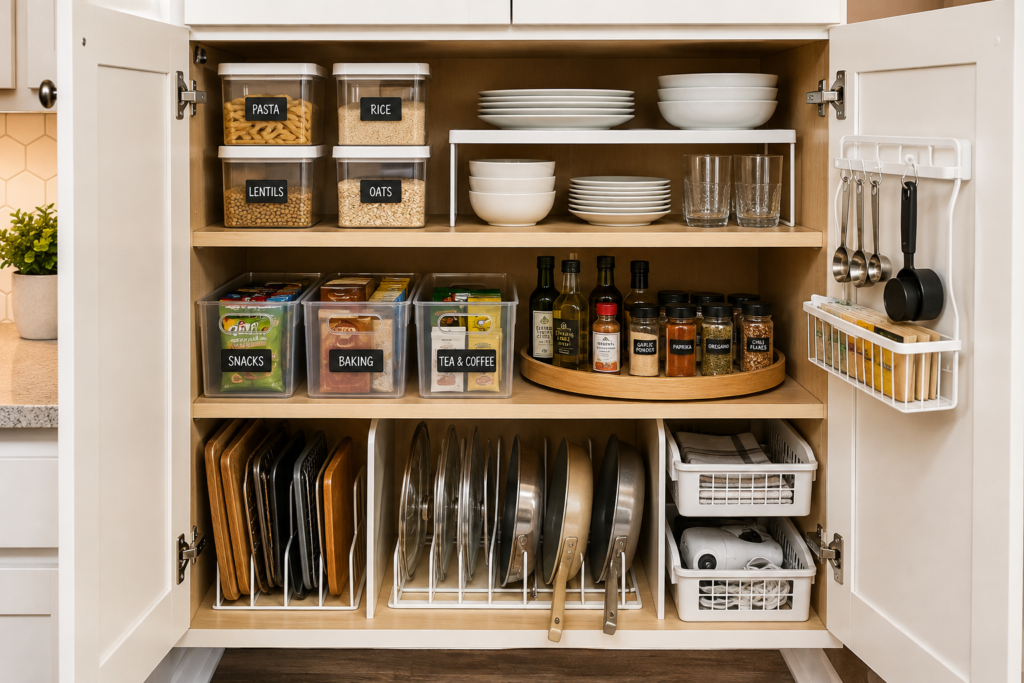
If several other kitchen tools are competing for the same space, these kitchen cabinet organization ideas can help you create practical zones before deciding where your measuring tools should live.
12 Kitchen Measuring Cup and Spoon Storage Ideas
1. Use a Divided Drawer Organizer
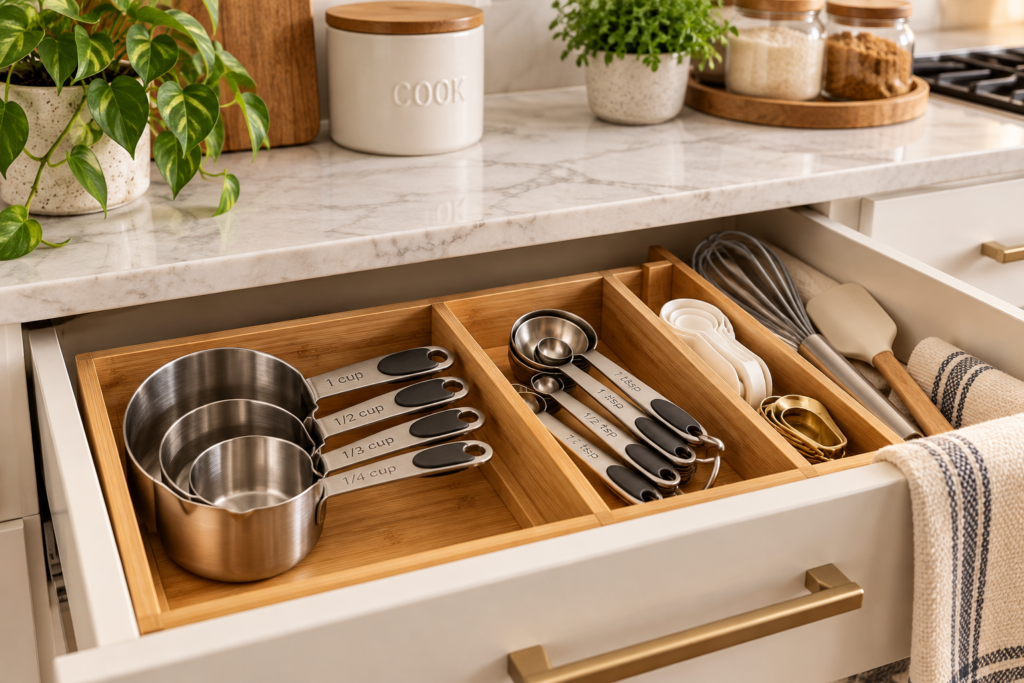
A divided drawer organizer is one of the easiest kitchen measuring cup and spoon storage ideas to maintain. Give measuring cups one compartment and measuring spoons another so they do not become mixed with whisks, peelers, spatulas, and other utensils.
Choose an organizer that fits the drawer closely enough to prevent it from sliding whenever the drawer opens. Adjustable dividers are especially useful because you can change the compartment sizes as your collection changes.
2. Add Hooks Inside a Cabinet Door
The inside of a cabinet door is valuable storage space that often goes unused. Install a row of suitable hooks and hang individual measuring cups and spoons where they remain visible and easy to reach.
Before installing the hooks, close the cabinet carefully and make sure the tools will not hit shelves or stored items. Lightweight measuring sets work particularly well with this approach.
3. Hang Each Size on a Labeled Hook
If you frequently reach for individual measurements, dedicate one hook to each size. Arrange them from smallest to largest and add simple labels for the measurements you use most often.
This system eliminates the need to search through nested sets while cooking. It can also help everyone in the household return each piece to the correct location after use.
4. Store Nested Sets in a Shallow Bin
Nested measuring cups are naturally compact, but they can still move around inside a large drawer. A shallow bin gives the complete set a defined home while keeping it contained.
Place measuring spoons beside the cups or keep the spoon set together on its ring. This solution works well if you prefer a simple system that requires no permanent cabinet modifications.
5. Create a Dedicated Baking Drawer
If you bake regularly, group measuring cups and spoons with other frequently used baking tools. A dedicated drawer can hold measuring equipment, spatulas, pastry brushes, a small whisk, and similar essentials.
Keep the drawer selective rather than filling it with every baking item you own. Larger cake pans, mixing bowls, and specialty equipment can remain elsewhere while everyday tools stay within easy reach.
6. Use a Pegboard Storage System
A small kitchen pegboard can turn an empty wall into flexible vertical storage. Hooks can hold measuring cups, spoons, strainers, and other lightweight utensils without occupying valuable drawer space.
Pegboards are particularly useful in kitchens with limited cabinetry. Leave some breathing room between items so the arrangement remains practical and visually tidy rather than crowded.
7. Add a Slim Pull-Out Organizer
A narrow pull-out organizer can make use of an awkward cabinet gap or deep storage area. Use small containers within the organizer to separate measuring cups, spoons, and other compact cooking tools.
The pull-out design makes items at the back easier to reach, reducing the chance that extra measuring sets will disappear behind larger kitchen supplies.
8. Hang Measuring Tools on a Rail
A short utensil rail with hooks provides convenient vertical storage above a preparation area or inside a pantry. Measuring cups can hang individually, making their sizes visible at a glance.
Keep the rail away from direct heat and cooking splatter. Positioning it close to your normal food-preparation zone can make the setup more useful during everyday cooking.
9. Use Small Clear Containers
Clear containers are useful when measuring tools share a larger drawer or cabinet with other items. One container can hold cups while another holds spoons and other small baking accessories.
Because the containers are transparent, you can quickly see what is inside without pulling everything out. Choose low-sided containers for drawers so tools remain easy to grab.
10. Mount a Compact Organizer Under a Shelf
The space directly beneath a cabinet or pantry shelf can sometimes accommodate a compact hanging organizer. This creates an additional storage layer without taking away the usable shelf surface above it.
Measure the available clearance before adding an organizer. It should not interfere with food containers, appliances, or anything stored underneath the shelf.
11. Keep Everyday and Specialty Sets Separate
You probably do not need specialty measuring tools every day. Keep your standard cups and spoons in the most accessible drawer, then move specialty sets to a secondary cabinet or labeled container.
This prevents rarely used pieces from competing for prime kitchen space. It also makes the everyday storage system easier to maintain because fewer items need to fit into the main organizer.
12. Build a Simple Measuring Station
Create a compact measuring station near the area where you usually prepare food. Combine cups, spoons, a small kitchen scale, and frequently used baking tools in one drawer or cabinet zone.
The goal is not to store every cooking accessory together. Instead, group tools that are commonly used during the same task so you can prepare ingredients with fewer trips around the kitchen.
How to Set Up Your Storage System
Start by taking every measuring cup and spoon out of your drawers and cabinets. Match complete sets, remove damaged pieces, and decide whether duplicate sizes are actually useful. Keeping unnecessary extras usually makes organization harder.
Next, choose a location based on frequency of use. Everyday measuring tools should be near your primary preparation area. Specialty pieces can go in a less accessible cabinet or pantry container.
Finally, test your chosen organizer before making permanent changes. Open and close drawers and cabinet doors several times to confirm that nothing catches, falls, or blocks nearby storage.
When measuring tools are used during food preparation, keeping the surrounding workspace and utensils clean is equally important. The FoodSafety.gov four steps to food safety provide useful guidance on clean food-preparation practices.
Common Storage Mistakes to Avoid
Avoid placing measuring tools loosely in an oversized utensil drawer. Even a neatly arranged drawer can quickly become messy when small pieces slide underneath larger utensils.
Do not add too many organizers either. Every container and divider consumes some usable space, so choose the simplest system that keeps your tools separated and accessible.
Another common mistake is storing measuring tools far from where they are used. An attractive organization system is not very helpful if you have to cross the kitchen every time you need another spoon size.
Also avoid keeping several incomplete sets simply because they might be useful someday. A smaller collection of complete, reliable measuring tools is usually easier to organize and use.
Frequently Asked Questions
What is the best way to store measuring cups and spoons?
For most kitchens, a divided drawer organizer or hooks inside a cabinet door provide a useful combination of accessibility and space efficiency. The right choice depends on whether you have more available drawer or vertical cabinet space.
How do I keep measuring spoons together?
Keep them on their original ring if you prefer using the complete set together. If you frequently need individual sizes, separate them and hang each spoon on a labeled hook or store them side by side in a narrow drawer compartment.
Can measuring cups be stored on a cabinet door?
Yes. Lightweight measuring cups can be hung on suitable hooks inside a cabinet door. Check the clearance before installation so the cups do not collide with shelves when the door closes.
How can I organize measuring tools in a small kitchen?
Use vertical space whenever possible. Cabinet-door hooks, wall rails, pegboards, and compact bins can keep measuring tools accessible without using much drawer or countertop space.
Should I keep duplicate measuring sets?
Keep duplicates only if you regularly use them. Frequent bakers may benefit from having more than one complete set, while occasional cooks can usually save space by keeping a single reliable set and removing unnecessary extras.
Final Thoughts
The best kitchen measuring cup and spoon storage ideas are simple enough to maintain every day. Whether you choose a divided drawer, cabinet-door hooks, a wall rail, or a dedicated baking station, give every piece a clear home and keep the tools you use most within easy reach.
Start with the storage space you already have before buying additional organizers. A few thoughtful adjustments can turn scattered measuring tools into a tidy, practical system that makes everyday cooking and baking easier.