What this guide covers: Choose the size, material, liner and position of a blanket basket, then arrange everyday throws so they are easy to return. To compare ottomans, cabinets and other storage formats, see the full living room blanket storage guide.
Living room blanket basket storage ideas offer a simple way to keep throws close at hand without leaving them piled across sofas and chairs. Blankets make a living room feel warm and comfortable, but when several are used regularly, they can quickly create visual clutter.
A well-placed basket gives everyday throws a clear home while adding useful texture to the room. The best solution depends on how many blankets you own, where you normally use them, and how much floor or furniture space is available.
Table of Contents
- Why Use Baskets for Living Room Blankets?
- 12 Living Room Blanket Basket Storage Ideas
- How to Choose the Right Blanket Basket
- How to Create an Easy-to-Maintain System
- Common Blanket Storage Mistakes
- Frequently Asked Questions
- Final Thoughts
- Test Basket Capacity, Fabric Contact and Floor Clearance
Why Use Baskets for Living Room Blankets?
Baskets work particularly well for throws because they provide open, flexible storage. Unlike a tightly packed cabinet, a basket lets you grab a blanket quickly and return it without reorganizing an entire shelf.
They can also make use of awkward areas beside sofas, underneath consoles, or in empty corners. This makes basket storage practical in both large living rooms and compact spaces.
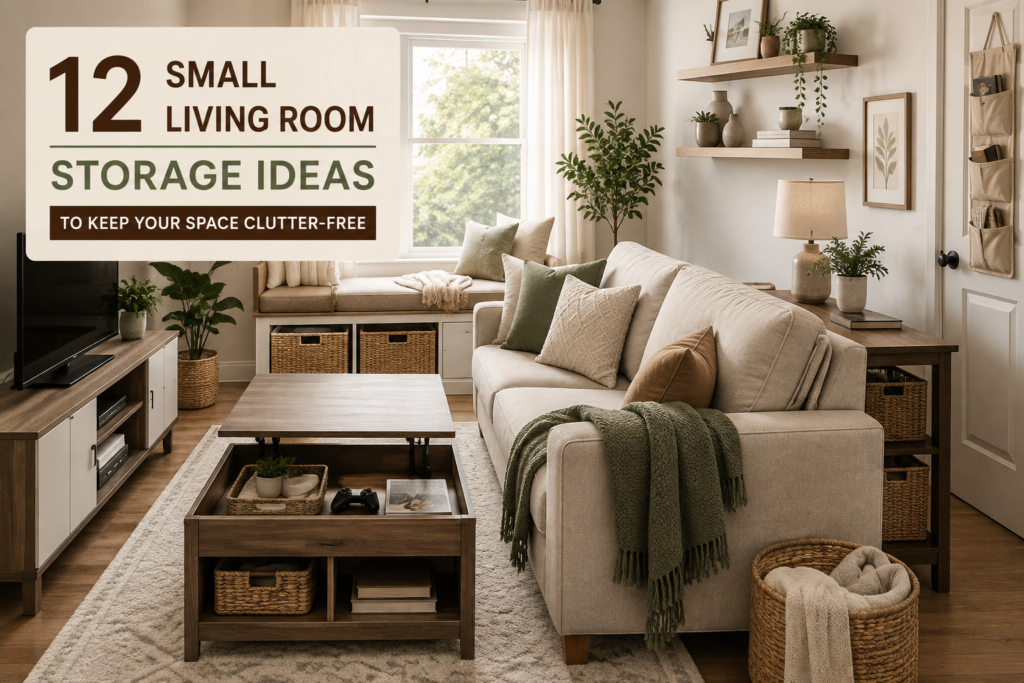
If blankets are only one part of the clutter problem, these small living room storage ideas can help you create dedicated places for other everyday items as well.
12 Living Room Blanket Basket Storage Ideas
1. Place a Large Woven Basket Beside the Sofa
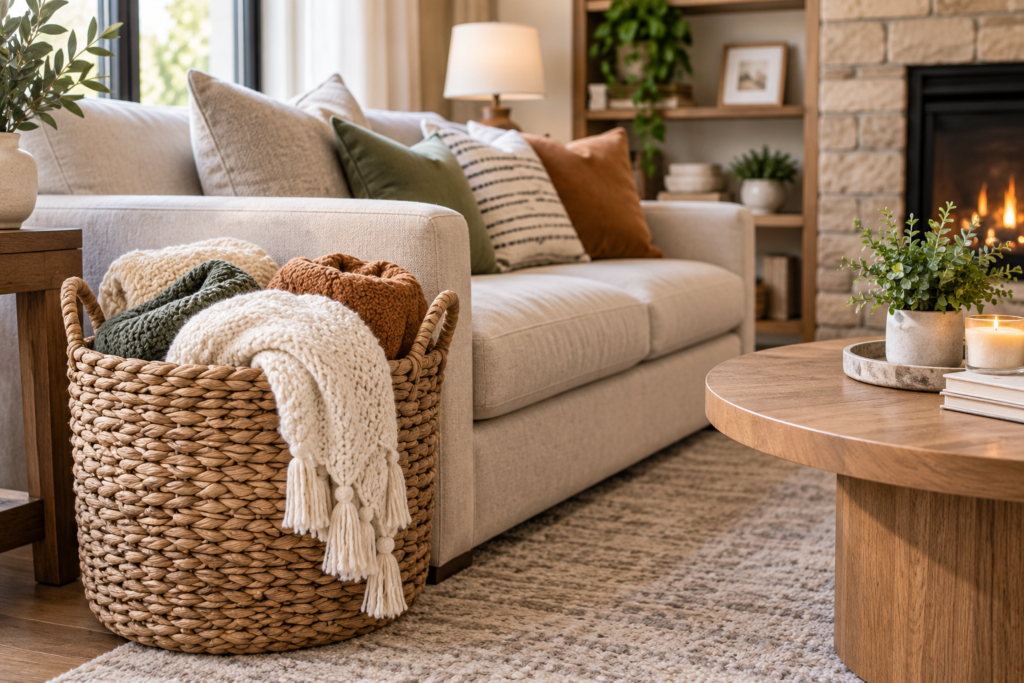
A generous woven basket beside the sofa is one of the easiest living room blanket basket storage ideas to maintain. It keeps throws close to the seating area and turns an otherwise unused patch of floor into practical storage.
Choose a basket large enough for the blankets you use regularly without stuffing them tightly inside. Leaving a little breathing room makes it easier to return a throw after use.
2. Use a Tall Basket in an Empty Corner
A tall basket can make good use of a narrow corner that is too small for furniture. Roll or loosely fold blankets vertically so they remain visible and easy to reach.
This arrangement works particularly well for lightweight throws. Check that the basket is stable and does not obstruct a walkway or door.
3. Add a Basket Under a Console Table
The open area beneath a console table is often overlooked. A low, wide basket can slide underneath and store several folded blankets while keeping the floor arrangement visually tidy.
Measure both the height and width of the opening before buying a basket. Leave enough clearance so it can be pulled out without scraping the furniture.
4. Use Two Smaller Baskets Instead of One Large One
When a household uses several different types of throws, two smaller baskets can be easier to manage than one oversized container. For example, keep lightweight blankets in one and heavier seasonal throws in another.
This prevents frequently used items from becoming buried at the bottom of a deep basket and makes it easier to rotate blankets as the weather changes.
5. Choose a Soft-Sided Basket for Tight Spaces
A fabric or other soft-sided basket can work well beside furniture where a rigid container would feel bulky. Flexible baskets are also easier to move when you need to vacuum or rearrange the room.
Look for one that holds its shape reasonably well when partly filled. A basket that constantly collapses may make the room look less organized rather than more orderly.
6. Store Rolled Throws Vertically
Rolling blankets can make a deep basket easier to browse because each throw remains visible from the top. This is particularly useful when several blankets have different colors, weights, or textures.
Roll them loosely rather than compressing them unnecessarily. The goal is simple organization, not fitting the maximum possible number into the basket.
7. Use a Lidded Basket for a Cleaner Look
If you prefer a more minimal living room, a basket with a lid can conceal blankets completely. It can also reduce the amount of everyday dust settling directly onto stored textiles.
Make sure blankets are clean and completely dry before enclosing them. A lid is useful for visual simplicity, but it should not become a reason to hide damp or dirty textiles.
8. Keep One Small Basket Near a Reading Chair
A reading chair or quiet corner can have its own small blanket basket rather than sharing storage with the main sofa. This keeps a favorite throw exactly where it is most often used.
A compact basket also helps prevent the reading area from accumulating books, blankets, chargers, and other unrelated items in one pile.
9. Coordinate the Basket with Existing Materials
Storage can feel more intentional when the basket relates to materials already present in the room. Woven textures can complement wood furniture, while simple fabric baskets may suit softer or more minimal interiors.
You do not need an exact color match. Choosing a basket that works with the room’s general palette is usually enough to make practical storage feel integrated rather than added as an afterthought.
10. Use Handles for Easy Movement
A basket with sturdy handles is useful when blankets move between rooms or when you regularly clear the floor for cleaning. Instead of carrying several throws separately, you can move the entire storage container at once.
Check that the handles feel secure when the basket is loaded. Avoid overfilling it beyond what the basket or handles are designed to carry.
11. Rotate Seasonal Blankets
Not every blanket needs to remain in the living room throughout the year. Keep the throws appropriate for the current season in your accessible basket and move off-season textiles to suitable longer-term storage.
This keeps the everyday basket from becoming overloaded and makes seasonal changes an easy opportunity to inspect, wash, or declutter the collection.
12. Create a One-Basket Limit
In a small living room, setting a simple one-basket limit can prevent blanket storage from expanding indefinitely. Choose the throws your household actually uses and keep only the amount that comfortably fits.
If the basket begins overflowing, review the collection before buying another container. Some blankets may belong in bedrooms, seasonal storage, or a donation pile instead of the main living area.
How to Choose the Right Blanket Basket
Start with capacity. Fold or loosely roll the blankets you want to store and estimate how much space they actually occupy. A basket should hold the intended collection comfortably without requiring you to force everything inside.
Next, measure the location. A beautiful basket is not useful if it narrows a walkway, prevents a cabinet from opening, or feels oversized beside the sofa. Record the available width, depth, and height before shopping.
Consider the basket’s construction as well. Smooth interior surfaces are helpful around delicate throws because rough edges or protruding fibers may catch certain fabrics. Handles are useful if the basket will be moved frequently.
Finally, think about maintenance. Choose a material that can be cleaned according to the manufacturer’s instructions and that suits the conditions in your home.
How to Create an Easy-to-Maintain System
Before filling the basket, gather the blankets currently spread around the living room. Separate frequently used throws from seasonal, decorative, damaged, or rarely used pieces.
Keep the everyday selection close to the seating where it is normally used. This matters because a storage system is much easier to maintain when returning an item takes only a few seconds.
Decide whether folding or rolling works better for your basket. Wide, shallow baskets often suit folded throws, while tall baskets can be easier to use with loosely rolled blankets.
Make returning the blanket part of the normal room reset. A simple system that works without precise folding is often more sustainable for a busy household than an arrangement that has to look perfect every time.
Common Blanket Storage Mistakes
One common mistake is choosing a basket that is too small. When blankets constantly spill over the sides, the container stops reducing clutter and becomes part of it.
The opposite problem is buying an unnecessarily large basket and gradually filling it with unrelated items. Try to keep the container dedicated to blankets so everyone knows what belongs there.
Avoid storing damp blankets in a closed basket. Textiles should be appropriately cleaned and dried before storage. The American Cleaning Institute’s fabric care guidance provides general information about caring for household fabrics; always follow the specific care label on your blanket as well.
Finally, do not place baskets where they create a tripping hazard or restrict movement. Storage should improve the way the living room functions, not make circulation more difficult.
Frequently Asked Questions
What size basket is best for living room blankets?
The right size depends on the number and thickness of your throws. Gather the blankets you intend to store first, then choose a basket that holds them comfortably without excessive compression or overflow.
Is it better to roll or fold blankets in a basket?
Either method can work. Rolling is convenient in tall baskets because individual throws remain visible, while folding often works better in wide, shallow containers. Use whichever method makes the blankets easiest to return after use.
Where should I put a blanket basket in the living room?
Useful locations include beside the sofa, near a reading chair, underneath a console, or in an unused corner. Keep the basket close to where blankets are normally used without blocking walkways.
How do I keep a blanket basket from looking messy?
Avoid overfilling it and limit the basket to blankets rather than miscellaneous living room items. Folding or loosely rolling throws in a consistent way can also create a tidier appearance.
Can blankets be stored in a basket with a lid?
Yes, provided the blankets are clean and completely dry and the storage method is appropriate for the fabric. Follow each blanket’s care instructions, particularly for delicate materials.
How many blankets should I keep in the living room?
There is no fixed number. Keep enough for the people who regularly use the room and the way the space functions. If the basket is consistently overflowing, consider relocating or decluttering rarely used throws.
Test Basket Capacity, Fabric Contact and Floor Clearance
Gather only the throws you intend to keep beside the seating area. Fold or roll them as you normally would and place them together in an existing box to estimate the usable basket space. Use internal dimensions when comparing baskets: a tapered base, thick liner or curved sides can reduce capacity.
- Leave room to remove one throw without pulling out the entire collection.
- Check the inside with your hand for rough weave, splinters or sharp hardware that could snag knit fabric.
- Choose a smooth liner when needed, and make sure its care routine is realistic.
- Mark the proposed footprint beside the sofa. Test walking past it and opening adjacent furniture.
- Lift the basket with the normal contents. Handles are useful only if the filled basket is comfortable to move.
If rolls collapse or the top overflows, reduce the number of blankets or use a wider basket. A lid gives a calmer appearance, but adds an extra step and should close without compressing throws. Keep damp textiles out of both open and lidded baskets.
Final Thoughts
The most useful living room blanket basket storage ideas combine easy access with sensible limits. A well-sized basket beside the sofa, beneath a console, or in an unused corner can keep favorite throws close without allowing them to take over the room.
Choose a basket based on the blankets you actually use, the available space, and how easily the system can be maintained. When every throw has a simple place to return to, the living room can stay cozy without looking cluttered.