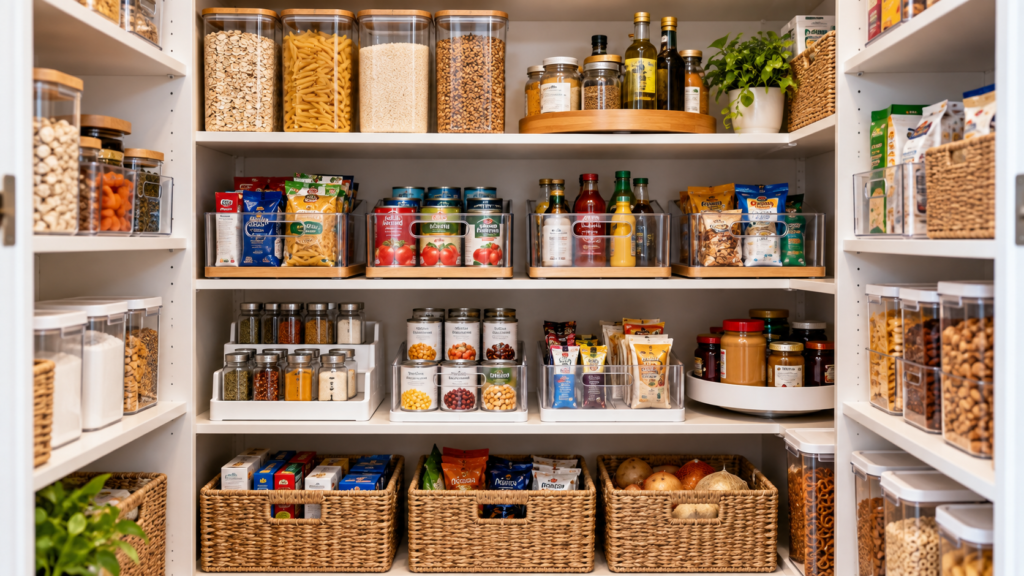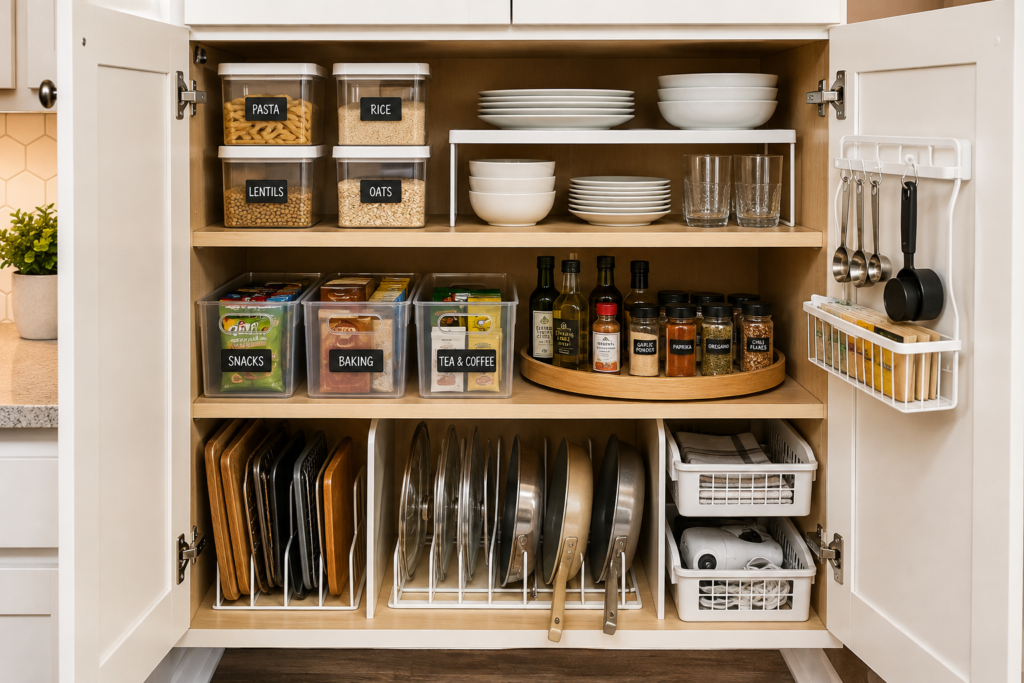
Kitchen baking sheet storage ideas can turn one of the most awkward cabinet categories into a simple, easy-to-use system. Baking sheets, muffin tins, cooling racks, pizza pans, and serving trays are relatively thin, but their different sizes and shapes can make them frustrating to stack and retrieve.
The familiar approach of piling every pan horizontally often creates a problem: the baking sheet you need ends up underneath several other pieces. Pulling it out becomes noisy and inconvenient, and the entire stack may need to be rearranged afterward.
A better system gives pans defined spaces and makes frequently used pieces easy to remove individually. In many kitchens, you can achieve this by reorganizing an existing cabinet rather than adding more storage.
Table of Contents
- Why Organize Baking Sheets?
- 12 Kitchen Baking Sheet Storage Ideas
- How to Choose the Right Storage Method
- How to Organize Baking Sheets Step by Step
- Cleaning and Drying Before Storage
- Common Baking Sheet Storage Mistakes
- Frequently Asked Questions
- Final Thoughts
Why Organize Baking Sheets?
Baking equipment can consume a surprising amount of cabinet space when every piece is stacked together. Large trays create wide piles, while smaller pans and cooling racks can slide between them and become difficult to find.
An organized setup lets you see what you own and retrieve one item without unloading the entire cabinet. It can also reveal duplicate pans or specialty pieces that are occupying valuable space despite rarely being used.
Good organization is not about fitting the maximum number of pans into one cabinet. The goal is to create a practical arrangement that makes cooking, baking, and cleanup easier.
If other flat kitchen items are causing similar cabinet clutter, our kitchen cutting board storage ideas offer additional ways to organize vertical cabinet space.
12 Kitchen Baking Sheet Storage Ideas
1. Store Baking Sheets Vertically
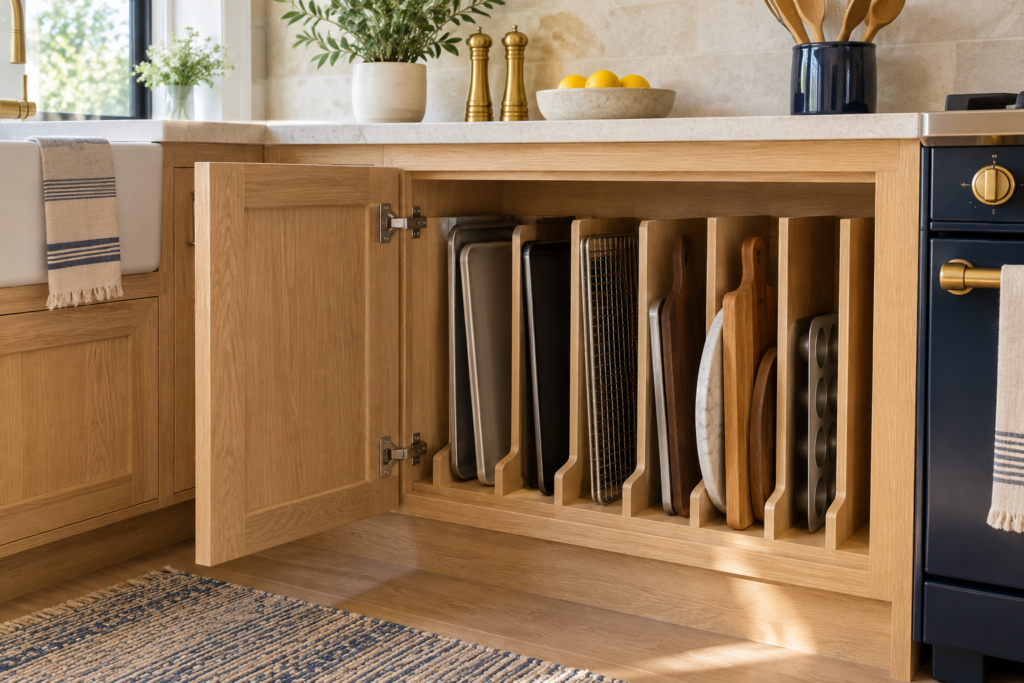
Vertical storage is one of the most practical ways to organize flat bakeware. Instead of lifting several pans to reach the bottom one, you can slide individual pieces in and out.
Choose a cabinet tall enough for your largest frequently used baking sheet and avoid packing the section so tightly that pans are difficult to remove.
2. Add Adjustable Cabinet Dividers
Dividers create individual sections for baking sheets, muffin tins, cooling racks, and other flat items. Adjustable models allow you to change the spacing according to the thickness of your cookware.
Measure the cabinet’s usable dimensions before purchasing an organizer, including any hinges or shelf supports that reduce available space.
3. Use a Freestanding Pan Organizer
A freestanding rack can introduce vertical slots without permanently altering the cabinet. This can be useful for renters or anyone who wants a system that can easily be rearranged.
Check the organizer’s dimensions and intended load before use. A rack should remain stable when pans are inserted and removed.
4. Dedicate a Narrow Cabinet to Bakeware
A narrow cabinet that feels inconvenient for dishes or food containers may be ideal for flat baking equipment.
Keeping baking sheets, cooling racks, and muffin tins together also creates a defined bakeware zone instead of spreading related items across several cabinets.
5. Use a Deep Drawer for Baking Pans
If your kitchen includes a sufficiently deep drawer, it may provide convenient storage for frequently used bakeware. Dividers can prevent pans from leaning into one another.
Follow the cabinet or drawer manufacturer’s guidance regarding appropriate loading, particularly when storing heavier cookware.
6. Separate Baking Sheets from Muffin Tins
Although both belong to the same general category, flat baking sheets and deeper muffin tins do not always stack efficiently together.
Give each type its own slot or section. Separating different shapes makes the storage area easier to use and prevents awkward nesting arrangements.
7. Give Cooling Racks Their Own Slot
Cooling racks are thin enough to disappear between larger pans. A dedicated narrow slot keeps them visible and makes them easier to retrieve.
If a rack fits inside a matching baking sheet and the pair is almost always used together, storing them as a set may also be practical.
8. Organize Pans by Frequency of Use
Put the baking sheets you use every week in the most accessible slots. Specialty trays used only occasionally can occupy less convenient positions.
Frequency-based organization reduces unnecessary movement during everyday cooking and keeps the most valuable storage space focused on your actual routine.
9. Create a Baking Zone
If possible, store bakeware near other frequently used baking tools or close to the area where you normally prepare recipes.
This does not mean every baking supply must fit in one cabinet. Instead, aim for a logical zone so you are not repeatedly walking across the kitchen to collect basic equipment.
10. Use Shelf Space Above Vertical Pans
Some cabinets have enough height to accommodate vertical pans below a shelf while using the space above for lighter baking supplies.
Measure carefully before changing shelf positions. Keep the arrangement accessible and avoid creating unstable stacks simply to use every inch of space.
11. Keep Oversized or Rarely Used Trays Separately
An unusually large roasting tray or specialty pan can make an otherwise efficient organizer difficult to use. If an item is used only a few times per year, it may not need prime everyday cabinet space.
Consider another suitable kitchen storage location for occasional pieces while keeping frequently used bakeware together.
12. Declutter Before Buying an Organizer
Pull out all of your baking sheets and pans before purchasing new storage. You may discover duplicates, badly damaged pieces, or specialty pans you no longer use.
Organizing a smaller, useful collection is generally easier than buying a larger rack to accommodate cookware that rarely leaves the cabinet.
How to Choose the Right Storage Method
Begin by measuring your largest baking sheet and the cabinet or drawer you plan to use. Measure width, depth, and usable height rather than assuming a standard organizer will fit.
Next, count the items you actually need to store. Include baking sheets, cooling racks, muffin tins, pizza pans, and other pieces that logically belong in the same zone.
Vertical storage is particularly useful when you regularly need to retrieve individual pans. However, a drawer or another arrangement may be more suitable depending on your cabinetry and the size of your cookware.
Also consider how often each item is used. Your favorite sheet pan should not sit behind specialty bakeware that comes out only once or twice a year.
How to Organize Baking Sheets Step by Step
Empty the existing bakeware storage area completely. Seeing everything together makes it easier to identify duplicates and decide how much space the category truly requires.
Group similar pieces: baking sheets, cooling racks, muffin tins, pizza pans, roasting trays, and specialty bakeware.
Review each group and keep the items that fit your cooking habits. Follow appropriate local guidance when disposing of or recycling unwanted cookware rather than assuming every material can go into household recycling.
Clean the cabinet or drawer before returning anything. Then install or position your chosen divider or organizer according to its instructions.
Place frequently used pans in the easiest slots. Give thin cooling racks a defined position so they do not disappear between larger pieces.
Finally, test the system by removing and replacing several pans. If one item requires you to move half the cabinet, adjust the spacing before considering the job complete.
Cleaning and Drying Before Storage
Cookware should be cleaned according to its material, finish, manufacturer’s care instructions, and the type of food residue involved. A cleaning method suitable for one surface may not be appropriate for another.
Allow washed pans and racks to dry appropriately before returning them to enclosed storage. This also prevents water from collecting on cabinet surfaces or between tightly stored pieces.
Pay attention to corners, rolled edges, seams, and other areas where residue can remain after washing.
For general household hygiene information, the U.S. Centers for Disease Control and Prevention provides guidance on when and how to clean and disinfect your home. For the cookware itself, continue to follow the manufacturer’s specific care instructions.
Common Baking Sheet Storage Mistakes
A common mistake is creating one large horizontal stack. Although stacking seems space-efficient, it can make individual pans frustrating to retrieve when the piece you need is at the bottom.
Another mistake is buying an organizer before measuring. Cabinet hinges, frames, shelf supports, and door openings can reduce usable dimensions.
Avoid forcing too many pieces into narrow divider slots. Storage should allow pans to slide in and out without excessive effort.
Do not let rarely used specialty cookware occupy the easiest storage locations while everyday pans remain difficult to reach.
Finally, avoid returning wet cookware directly to an enclosed cabinet. Let items dry appropriately before storing them.
Frequently Asked Questions
What is the best way to store baking sheets?
For many kitchens, vertical storage with cabinet dividers or a suitable pan organizer makes individual baking sheets easier to see and retrieve. The best solution still depends on your cabinet dimensions and cookware collection.
Can baking sheets be stored vertically?
Yes. Baking sheets, cooling racks, and other flat bakeware are commonly suited to vertical organization when the cabinet is tall and deep enough to accommodate them safely.
How do I organize baking sheets in a small kitchen?
Use an existing narrow cabinet, a suitable deep drawer, or vertical dividers to reduce wasted space. Keep frequently used pans in the kitchen and consider relocating rarely used specialty bakeware if storage is extremely limited.
Can I store cutting boards with baking sheets?
They can share a divided cabinet when the space and organizer are suitable. Giving each category its own slot helps prevent the area from becoming crowded.
Where should cooling racks be stored?
A narrow vertical slot near baking sheets works well. If you nearly always use a cooling rack with one particular sheet pan and they fit together conveniently, storing the pair together can also simplify your routine.
Should baking sheets be stacked or stored upright?
Either arrangement can work, but upright storage often makes individual pieces easier to retrieve. Horizontal stacking may be sufficient for a very small collection where pans are similar in size and used with similar frequency.
Final Thoughts
The most useful kitchen baking sheet storage ideas make each pan easy to see, remove, and return. You should not have to unload an entire cabinet every time you need one baking sheet.
Vertical dividers, freestanding racks, deep drawers, narrow cabinets, and dedicated bakeware zones can all work depending on your kitchen layout.
Start by decluttering and measuring before buying an organizer. Then give frequently used pans the easiest positions and keep cooling racks and specialty pieces from disappearing inside an oversized stack.
A simple, well-spaced system can turn an awkward bakeware cabinet into a practical part of your kitchen and make everyday cooking and baking noticeably easier.