A well-placed rug can make a bedroom feel warmer, quieter, and more visually balanced. The most practical bedroom rug placement ideas consider the bed size, walking routes, door clearance, exposed flooring, and how the rug feels when you step out of bed.
Before choosing a style, measure the bed and the usable floor area around it. A beautiful rug will not work well if it catches under a door, creates a trip edge, or disappears almost completely beneath the furniture. This guide explains several layouts for large and small bedrooms, along with measurement and safety considerations.
Table of Contents
- Place a Large Rug Under the Entire Bed
- Position the Rug Under the Lower Two-Thirds
- Keep the Nightstands Off the Rug
- Use Runners Beside the Bed
- Add a Small Rug at the Foot of the Bed
- Connect Two Twin Beds With One Rug
- Choose a Layout for a Small Bedroom
- Use a Round Rug as a Secondary Feature
- Define a Bedroom Seating Area
- Layer Rugs Carefully
- Select the Right Material and Pile
- Secure the Rug and Protect Walking Routes
- Bedroom Rug Size and Measurement Guide
- Common Rug Placement Mistakes
- Frequently Asked Questions
1. Place a Large Rug Under the Entire Bed
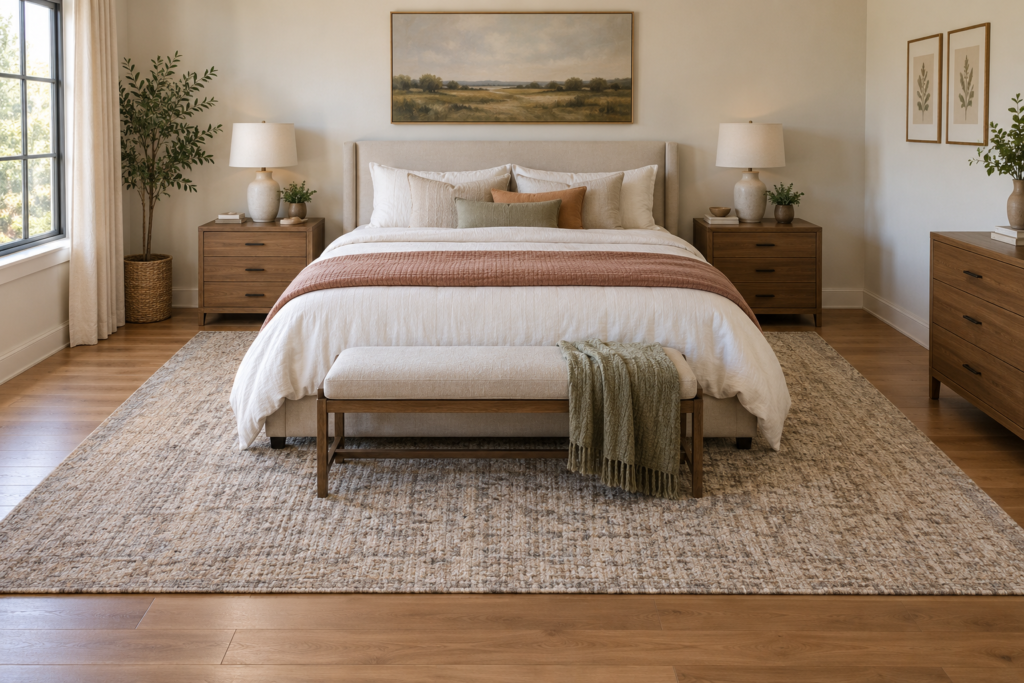
Placing the bed and nightstands completely on one large rug creates a polished, anchored appearance. This arrangement works best in a spacious bedroom where the rug can extend visibly beyond both sides and the foot of the bed. The exposed border should look intentional rather than narrowly squeezed around the furniture.
Measure the combined width of the bed and nightstands before shopping. A standard rug size may not provide enough visible coverage for wide furniture, so mark the proposed edges with painter’s tape. Confirm that the rug will not interfere with wardrobes, bathroom doors, or floor vents.
2. Position the Rug Under the Lower Two-Thirds
This popular layout begins in front of the nightstands and continues beneath the lower portion of the bed. It provides softness where feet usually land while using less rug than a full-bed arrangement. The visible section at the foot also helps connect a bench or storage chest to the sleeping zone.
Position the rug far enough toward the headboard that it extends comfortably beside the bed, not only beyond the foot. Check both sides before lifting the bed onto it. The arrangement should be centered on the bed even if the bed itself is not centered on the room.
3. Keep the Nightstands Off the Rug
Leaving the nightstands on the hard floor can simplify installation and reduce the rug size required. Start the rug just ahead of the nightstand legs, then extend it beneath most of the bed. This creates a clean break between the bedside furniture and the softer sleeping area.
Make sure the front rug edge is straight and not visible as an awkward strip between the bed and nightstands. If the rug is thick, leave enough space that nightstand drawers and cabinet doors can open without rubbing against the pile.
4. Use Runners Beside the Bed
Matching runners are useful when a large area rug would be expensive, difficult to clean, or unsuitable for the room. Place one runner along each accessible side of the bed so it begins near the nightstand and extends toward the foot. This provides a warm surface without covering attractive flooring.
Use runners of equal size and align them with the bed rather than the walls. Secure each one with a correctly sized non-slip pad. Avoid leaving a narrow walking gap between the rug and bed where feet may repeatedly catch an exposed edge.
5. Add a Rug at the Foot of the Bed
A smaller rug can define the foot of the bed when side clearance is limited or the room already has wall-to-wall carpet. Select a width that relates to the bed instead of appearing like an isolated mat. It can sit partly beneath the bed or beneath a lightweight bench.
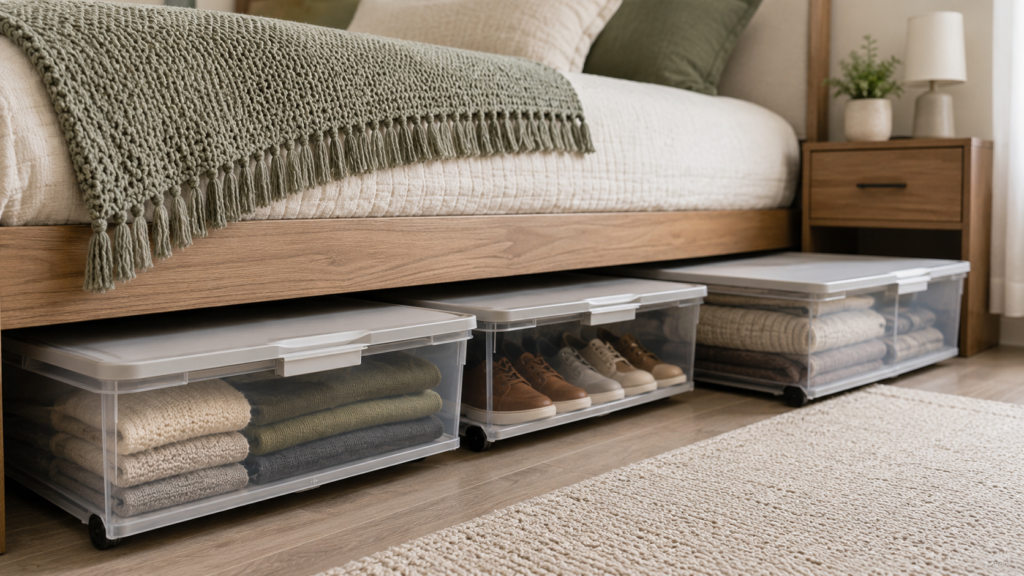
This layout is primarily decorative because it does not provide softness along both bedside areas. Keep it away from the main entrance and check that the rug does not obstruct under-bed drawers. A low-pile construction is easier to manage near frequently moved furniture.
6. Connect Two Twin Beds With One Rug
One larger rug can visually connect two twin beds in a shared bedroom. Center the rug beneath both beds so an even section remains exposed between them and along the outer sides. This helps the beds read as one balanced arrangement rather than two unrelated furniture groups.
If the beds need to move independently, use a centered rug between them or separate bedside runners instead. Account for drawers, trundle beds, ladders, and desk-chair movement. In a child’s room, select a durable, washable surface and keep all rug edges firmly secured.
7. Adapt Bedroom Rug Placement Ideas to a Small Room
In a compact bedroom, prioritize the side used to enter and leave the bed. A medium rug placed under the lower portion of the bed may provide enough visible softness without extending into doorways or wardrobes. Do not force an oversized rug into the room simply to follow a standard layout.
Keep important walking routes clear and allow drawers to open fully. A single runner may be the most practical choice when one side of the bed sits near a wall. For broader space planning, review these small bedroom layout ideas before selecting rug dimensions.
8. Use a Round Rug as a Secondary Feature
A round rug can soften a room dominated by rectangular furniture. It works particularly well beneath a small chair, beside a curved dresser, or in an open corner rather than directly under a large bed. The complete circle should remain visible enough for its shape to feel deliberate.
Avoid placing only a small curved edge beneath the bed because the rug may look undersized. Connect it visually to a chair, pendant light, or round table, and ensure that its edge does not cross the main route between the doorway and bed.
9. Define a Bedroom Seating Area
In a large bedroom, a separate rug can distinguish a chair, small sofa, or reading corner from the sleeping area. Choose a rug large enough to connect the main seating pieces. At least the front legs of the chairs should rest securely on it rather than surrounding a small floating rug.
Leave visual space between the seating rug and any rug beneath the bed. Repeating one color or material across both areas creates continuity without requiring an exact match. If you are adding a reading zone, these reading nook planning ideas offer useful guidance for lighting and furniture clearance.
10. Layer Rugs Carefully
Layering a smaller patterned rug over a large neutral rug can add color and texture. Use a flat, stable base and position the top rug where it will not bunch beneath bed legs or create a raised edge in the walking route. The two shapes should look intentionally connected.
This treatment works best when the rugs have noticeably different but compatible textures. Avoid layering several thick rugs, which can make furniture unstable and doors difficult to open. Use appropriate rug pads or approved securing methods for both layers.
11. Select the Right Material and Pile
The material affects comfort, cleaning, durability, and how easily furniture moves. Wool can feel warm and resilient, while many synthetic fibers provide stain resistance and easier maintenance. Natural-fiber rugs add texture but may feel rough under bare feet and can shed depending on construction.
A medium or low pile is usually easier to vacuum and less likely to obstruct doors. Check care labels before purchasing and consider allergies, pets, humidity, and floor-heating requirements. Choose a rug that suits daily bedroom use rather than appearance alone.
12. Secure the Rug and Protect Walking Routes
Every rug should remain flat and stable. Use a non-slip pad designed for both the rug and the flooring underneath, and replace it if the grip deteriorates. Smooth curled corners promptly and avoid placing loose edges where people step out of bed or enter the room.
Good lighting is also important around changes in floor surface. The U.S. National Institute on Aging recommends removing or securing loose rugs as part of fall-proofing a home. This is especially relevant in bedrooms used by older adults or anyone with limited mobility.
Bedroom Rug Size and Measurement Guide
Bed labels alone are not enough for choosing a rug because frames, headboards, benches, and nightstands vary. Measure the actual furniture and room. Use painter’s tape to mark the rug outline, then walk through the bedroom and operate every door and drawer.
- Measure the full length and width of the bed frame.
- Record the combined width of the bed and both nightstands.
- Measure the clear floor space beside and beyond the foot of the bed.
- Check wardrobe, ensuite, and entrance-door swing.
- Include any bench, chest, floor vent, or under-bed drawer.
- Allow useful rug exposure where feet normally touch the floor.
- Confirm that the selected standard size matches the taped outline.
Common rug dimensions vary by retailer and region, so use the actual listed measurements instead of relying only on labels such as “large” or “bedroom size.” If the ideal size is unavailable, reconsider the placement rather than buying a rug that creates unsafe or awkward edges.
Bedroom Rug Placement Ideas: Common Mistakes
An undersized rug is the most frequent problem. When only a narrow strip appears around a large bed, the rug can make the furniture look heavier and the room less balanced. Another mistake is centering the rug on the room when it should visually support the bed or seating arrangement.
- Buying before measuring the bed frame and floor area.
- Blocking wardrobes, doors, vents, or under-bed storage.
- Leaving loose corners in frequently used walking routes.
- Using thick pile beneath doors or unstable furniture.
- Placing a patterned rug without considering bedding and curtains.
- Failing to use a floor-compatible non-slip pad.
- Choosing a layout that leaves no comfortable landing area beside the bed.
Frequently Asked Questions
How far should a bedroom rug extend beyond the bed?
It should extend far enough to create a useful, comfortable landing area and a visible border that looks proportional to the bed. The exact distance depends on room size, rug availability, bed dimensions, and nearby doors or furniture. Mark the proposed outline with tape and judge it from several viewpoints.
Should nightstands sit on the bedroom rug?
Either arrangement can work. A large rug may hold the bed and both nightstands for a fully anchored look. A smaller rug can begin in front of the nightstands and extend beneath the lower portion of the bed. The edges should appear deliberate and allow drawers and doors to operate freely.
Can a rug be placed over bedroom carpet?
Yes, a rug can add color and define an area over carpet, but it must remain stable. Select a rug and pad specifically suitable for use over carpet, avoid excessive thickness, and check regularly for ripples or movement. Furniture placement may help anchor it when the arrangement remains level.
Final Thoughts
The best bedroom rug placement ideas balance appearance with daily comfort and safe movement. Start with actual furniture measurements, identify where softness is most useful, and select a layout that keeps doors, storage, vents, and walking routes functional.
A large rug beneath the bed, a two-thirds arrangement, matching runners, or a separate seating rug can all work when correctly proportioned. Secure every edge, choose a practical material, and test the proposed footprint before purchasing to create a bedroom that feels calm, comfortable, and complete.