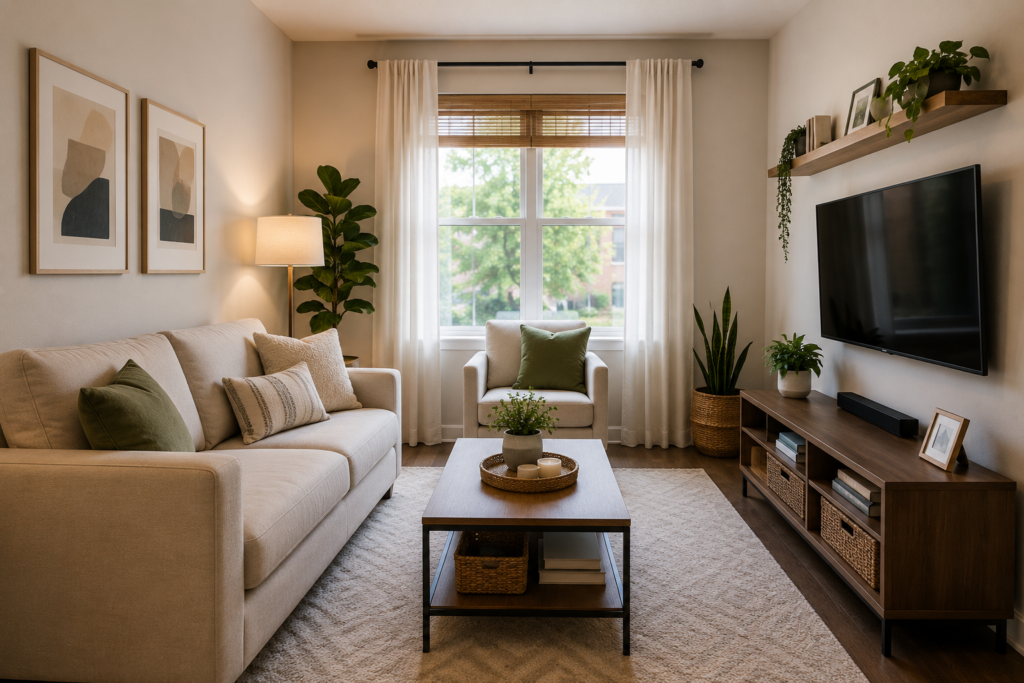
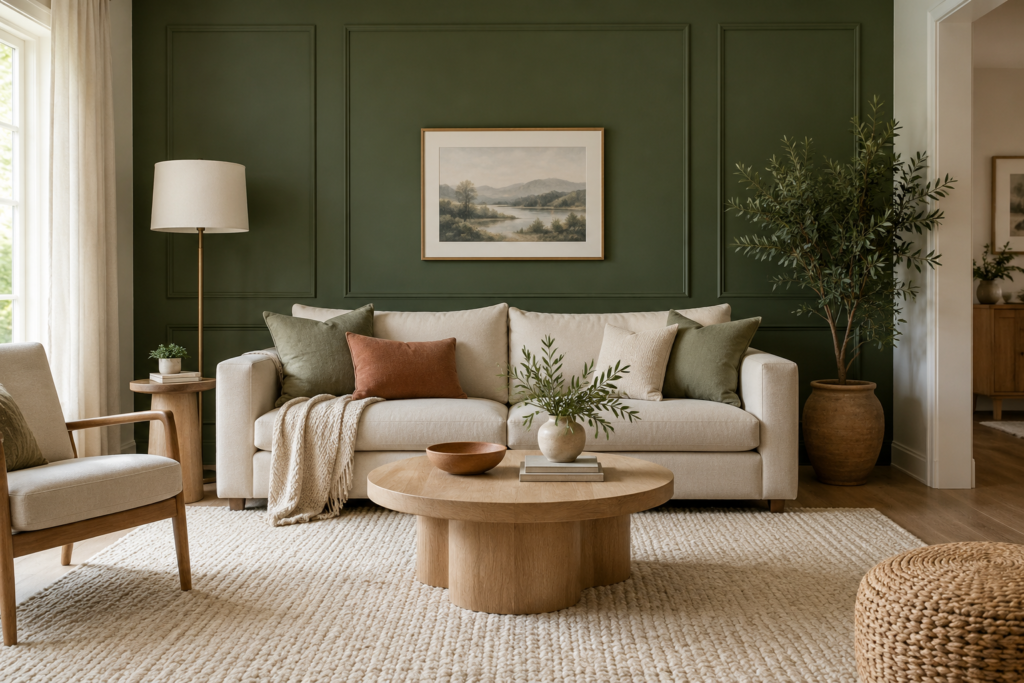
An accent wall can change the mood of a living room without requiring a complete renovation. The best living room accent wall ideas create a clear focal point, support the furniture layout, and use color or texture in a way that still feels balanced with the rest of the room.
Before choosing paint, wallpaper, wood, or decorative panels, study the wall in natural and artificial light. Measure doors, windows, outlets, vents, and furniture that will sit nearby. A successful accent wall should improve the room’s proportions and atmosphere rather than compete with every other feature.
Table of Contents
- Choose the Right Accent Wall
- Use a Confident Paint Color
- Create a Subtle Tonal Contrast
- Add Pattern With Wallpaper
- Introduce Warmth With Wood Slats
- Create Architectural Detail With Molding
- Highlight Brick or Stone Texture
- Build a Balanced Gallery Wall
- Combine the Wall With Shelving
- Design a Calm TV Accent Wall
- Use Lighting to Emphasize Texture
- Try a Renter-Friendly Treatment
- Accent Wall Planning Checklist
- Mistakes to Avoid
- Frequently Asked Questions
1. Choose the Right Accent Wall
Select a wall that already has a reason to attract attention. The wall behind a sofa, fireplace, media console, or main seating group is usually more successful than a random surface near a doorway. Stand at the living-room entrance and notice where your eye naturally settles before making a decision.
Avoid emphasizing a wall broken up by too many doors, vents, or unrelated architectural details. The feature should strengthen the existing layout. If the furniture lacks a clear focal direction, review these living room furniture arrangement ideas before committing to a permanent treatment.
2. Use a Confident Paint Color
Paint is one of the simplest and most flexible ways to create an accent wall. Deep blue, muted green, warm terracotta, charcoal, and earthy brown can add depth while remaining comfortable in a frequently used room. Pull a color from the rug, artwork, or upholstery so the new wall relates to existing furnishings.
Test large painted samples and observe them in morning, afternoon, and evening light. Colors often appear darker across a complete wall than they do on a small card. Choose a finish appropriate for the surface and room conditions, and follow the paint manufacturer’s preparation, ventilation, drying, and coverage instructions.
3. Create a Subtle Tonal Contrast
An accent wall does not need to be dramatically darker than every other wall. A tonal approach uses a deeper or warmer version of the room’s main color to create quiet definition. For example, a warm beige room may suit a soft clay feature wall, while pale gray walls can work with a muted blue-gray focal surface.
This method is especially helpful in small living rooms because it adds interest without visually cutting the space into separate pieces. Repeat the accent tone in two or three small details, such as a cushion, ceramic object, or artwork, to make the palette feel intentional.
4. Add Pattern With Wallpaper
Wallpaper can introduce pattern, movement, and detail that would be difficult to create with paint alone. Botanical designs, restrained geometrics, grasscloth-inspired textures, and small-scale prints can all work in a living room. Match the pattern scale to the size of the wall and the viewing distance.
Order a sample before buying full rolls. Check how the pattern joins, whether the wall requires preparation, and how much material will be lost during matching. On a wall already surrounded by patterned textiles, choose a quieter wallpaper so the elements do not compete.
5. Add Warmth With Wood Slats
Vertical wood slats bring natural warmth and can make a low ceiling appear taller. Closely spaced slats produce a stronger architectural effect, while wider spacing feels lighter. Select a wood tone that works with the floor and main furniture instead of introducing an unrelated finish.
Measure the full wall carefully and plan how the slats will finish at corners, outlets, switches, and baseboards. Use properly seasoned material and suitable fixings. If acoustic backing is included, verify its fire and installation specifications before bringing it into the home.
6. Create Architectural Detail With Panel Molding
Simple picture-frame molding or wall battens can give a plain living room more architectural character. Use symmetrical rectangles for a formal look or wider, simpler panels for a contemporary result. Painting the trim and wall in the same color keeps the effect cohesive and prevents it from looking overly busy.
Sketch the complete arrangement first and mark it with removable tape. Check each section against the sofa, wall lights, switches, and artwork. Small measuring errors become obvious when repeated across several panels, so confirm level and spacing before attaching any permanent material.
7. Highlight Brick or Stone Texture
Existing brick or stone can become a natural focal point when it is cleaned, repaired, and lit carefully. Preserve authentic texture where possible instead of covering it automatically. If using manufactured veneer, choose a profile with realistic variation and plan corners so the installation does not reveal abrupt unfinished edges.
Stone and brick add visual weight, so keep nearby furniture and accessories relatively simple. Confirm that the wall can support the selected material and use an experienced installer for heavy finishes, fireplace surrounds, or surfaces affected by heat and moisture.
8. Turn Artwork Into a Gallery Accent Wall
A gallery arrangement creates a changeable feature without covering the entire wall in a new material. Choose a clear theme, such as family photography, botanical prints, travel images, or mixed artwork connected by a consistent palette. Lay everything on the floor first to test spacing and visual balance.
Center the complete arrangement around the furniture below it rather than around the wall alone. Use suitable hooks and fixings for the wall type and frame weight. Leave enough open space around the collection so it reads as one intentional composition instead of scattered decoration.
9. Combine Living Room Accent Wall Ideas With Shelving
Floating shelves or a shallow built-in unit can make an accent wall both decorative and useful. Paint the wall behind the shelves a contrasting color, or match shelves and background for a seamless effect. Display a restrained mix of books, framed pieces, and practical storage rather than filling every available surface.
Secure shelves with hardware designed for the wall and expected load. Keep heavy objects low and avoid placing unstable items above seating. For help balancing books and décor, use our living room bookshelf organization ideas.
10. Design a Calm TV Accent Wall
A darker paint color or restrained panel treatment behind the television can reduce the visual contrast between a black screen and a pale wall. Keep the design simple because the television and console already create strong horizontal shapes. Closed storage can contain devices and accessories without adding clutter.
Plan power, ventilation, mounting height, and cable routes before adding panels or fixed cabinets. Do not conceal power strips or devices in a way that traps heat. These living room cable management ideas can help create a cleaner result without compromising access.
11. Use Lighting to Emphasize Texture
Light can reveal the depth of wood, brick, molding, and textured wallpaper. Wall-washing ceiling lights create an even effect, while directional sconces produce stronger shadows. Choose a warm or neutral color temperature that works with the room’s other lamps, and avoid glare on televisions and framed artwork.
Electrical work should comply with local requirements and be completed by a qualified professional where necessary. For efficient bulb selection and lighting fundamentals, consult the U.S. Department of Energy’s guidance on energy-saving lighting choices.
12. Try a Renter-Friendly Accent Wall
Renters can create a focal wall with removable wallpaper, a large textile, lightweight framed art, or a freestanding shelving unit. Read product instructions carefully because “removable” materials can still affect weak paint, recently painted walls, or delicate finishes. Test a small hidden area first.
A large artwork arrangement may provide enough impact without covering the complete wall. Keep all installation hardware within lease rules, retain the original room components, and photograph the wall before beginning. Avoid heavy temporary panels that could tip, detach, or damage the surface.
Living Room Accent Wall Planning Checklist
Good planning helps the feature look integrated and prevents costly corrections. Complete the following checks before purchasing materials or moving heavy furniture.
- Confirm that the selected wall supports the room’s natural focal point.
- Measure the full width and height, including openings and trim.
- Record the positions of outlets, switches, vents, and wall lights.
- Test paint, wallpaper, or material samples in changing daylight.
- Compare new colors with the sofa, rug, flooring, and curtains.
- Calculate extra material for wallpaper matching or installation cuts.
- Check manufacturer instructions, wall suitability, and fixing requirements.
- Plan how the design will finish at corners, ceilings, and baseboards.
Living Room Accent Wall Ideas: Mistakes to Avoid
The most common mistake is choosing a feature wall only because it is empty. If that surface conflicts with the furniture arrangement or architecture, extra color will draw attention to the wrong place. Another mistake is selecting materials from a small online image without seeing how they respond to the room’s actual light.
- Creating several competing accent walls in one connected space.
- Ignoring undertones in flooring, upholstery, and fixed finishes.
- Using an oversized pattern on a wall with many interruptions.
- Skipping surface preparation before painting or applying wallpaper.
- Installing shelves or panels without suitable anchors.
- Blocking outlets, ventilation, controls, or cable access.
- Adding so much décor that the wall loses its focal purpose.
Frequently Asked Questions
Which wall should be the accent wall in a living room?
The best choice is usually the wall that naturally anchors the main seating arrangement, fireplace, television, or another clear architectural feature. View the room from its entrance and choose the surface that already attracts attention. Avoid selecting a highly interrupted wall unless those openings form a balanced composition.
Does an accent wall make a small living room look smaller?
Not necessarily. A well-chosen tonal color or restrained pattern can add depth and give the room a clearer focal point. Very dark colors, oversized patterns, and abrupt contrast can feel enclosing when poorly placed, so test samples and keep surrounding elements visually calm.
Should an accent wall be lighter or darker?
Either can work. Darker colors often create depth and emphasis, while lighter textured finishes can brighten a room and add subtle detail. The right choice depends on natural light, room size, existing finishes, and the atmosphere you want to create.
Final Thoughts
Effective living room accent wall ideas begin with the room’s layout rather than a passing trend. Select the right focal surface, test every material in the actual space, and make sure the treatment relates to the furniture, lighting, and architectural details already present.
Whether you choose paint, wallpaper, wood, molding, stone, shelving, or artwork, careful measurement and restrained styling will produce a feature that feels intentional. A single well-planned wall can add character while keeping the living room comfortable, functional, and visually balanced.