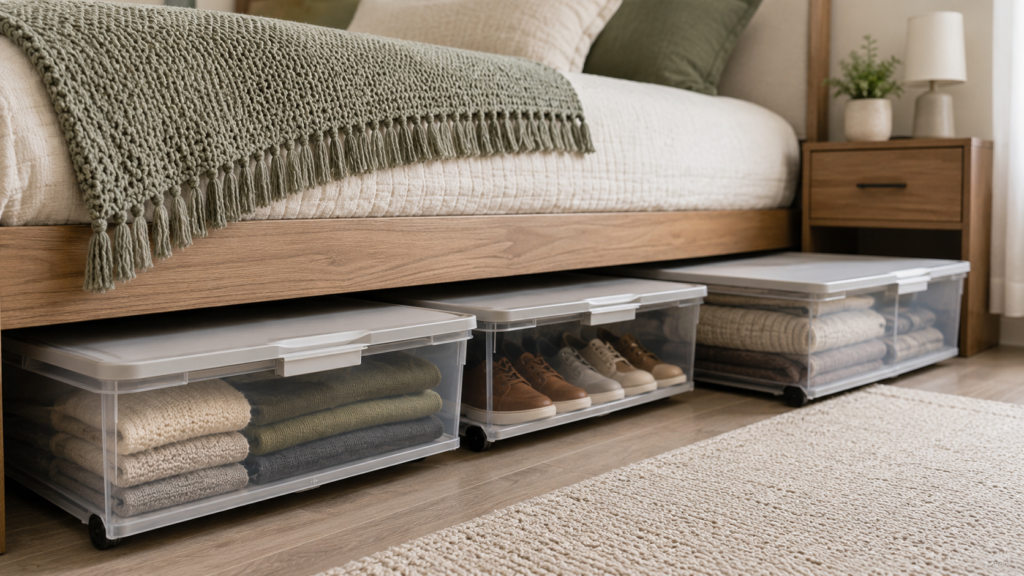
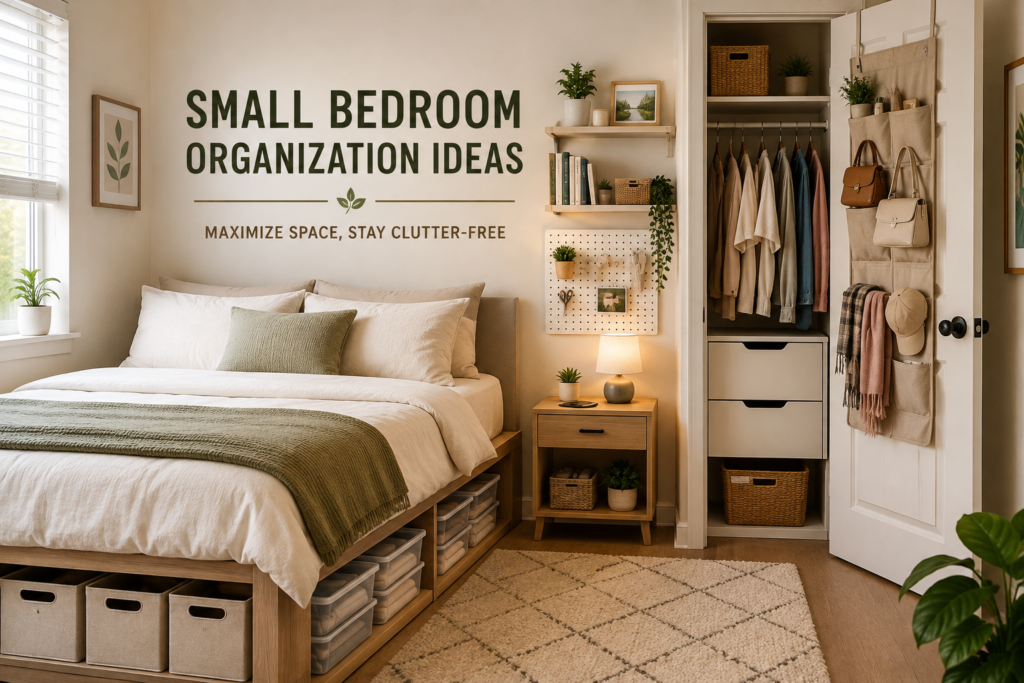
The space beneath a bed can become valuable storage instead of a dusty hiding place. Smart under-bed storage ideas make room for clothing, shoes, bedding, and seasonal items while keeping the bedroom calm and easy to clean.
Before buying containers, measure the height, width, and depth of the usable area, including any center supports. Decide what truly belongs there, then choose containers that slide out easily and protect their contents.
Measure the Clearance Beneath Your Bed
Measure from the floor to the lowest part of the bed frame, not just the side rail. Check several points because center supports, brackets, or an uneven floor can reduce usable height.
Leave a little clearance above each container so it moves without scraping. Record the maximum length and width that can be pulled out from the room’s available walkway.
Use Low-Profile Lidded Bins
Shallow lidded bins protect folded clothes, spare linens, and keepsakes from dust. Choose smooth-sided containers with secure lids and handles that remain reachable under the frame.
Avoid overfilling because bowed lids can catch on the bed. One or two larger bins suit bulky textiles, while several smaller bins make categories easier to separate.
Choose Storage Drawers on Wheels
Rolling drawers are useful when you access under-bed storage every week. Wheels reduce friction and make heavier loads easier to pull out without dragging them across the floor.
Look for low-profile casters and stops that prevent drawers from rolling too far back. On delicate flooring, choose soft wheels and keep the tracks free of grit.
Store Seasonal Bedding in Fabric Bags
Breathable zippered bags are practical for clean, completely dry blankets, duvet covers, and guest linens. Their flexible shape fits shallow gaps better than some rigid containers.
Fold items evenly so the bag stays flat and label the visible end by room or season. Avoid trapping damp fabric, which can lead to odor or mildew.
Organize Shoes in Divided Cases
A divided shoe case keeps pairs together and prevents soles from touching clean textiles. Choose a covered design with a clear top or front-facing label.
Clean and dry shoes before storing them, and reserve the space for seasonal or occasional pairs. Everyday shoes are usually easier to manage near the closet or entry.
Use Clear Containers for Visibility
Clear bins let you identify contents without opening every box. They work especially well for craft supplies, accessories, children’s clothing, or a rotating seasonal wardrobe.
Visibility can still look orderly when each bin contains one category. If you prefer an uncluttered view, use matching opaque bins with large, specific labels.
Add Labels to Every Container
Label the short end that faces outward so you can read it while the bin is under the bed. Use simple descriptions such as winter bedding, guest towels, or summer shoes.
For changing contents, use removable labels or card holders. A quick phone note listing each bin can also prevent unnecessary searching.
Create Separate Zones for Each Person
When two people share a bed, divide the area into clear left and right zones. Give each person consistent containers and access from their own side whenever the room layout allows.
In a child’s room, zones can separate toys, clothes, and school keepsakes. This makes returning items simpler and prevents one mixed pile from taking over the entire space.
Protect Delicate Items from Dust
Photographs, papers, and delicate fabrics need more protection than an open basket provides. Use sealed archival-quality containers when appropriate, and keep sensitive items away from damp floors.
Do not store important documents where leaks, pests, or humidity could damage them. For irreplaceable records, choose a safer dedicated location rather than relying on under-bed space.
Use Vacuum Bags for Bulky Textiles
Vacuum bags can reduce the volume of synthetic comforters, pillows, and out-of-season clothing. Slide compressed bags into a lidded bin to protect them from punctures and dust.
Follow fabric care guidance because long-term compression is not suitable for every material. Avoid compressing down-filled or structured items unless the manufacturer recommends it.
Keep Frequently Used Items Near the Edge
Place weekly-use items near the foot or sides of the bed where they can be reached without moving other containers. Reserve the deepest center area for seasonal belongings.
Attach handles or fabric pulls to soft bags so they do not disappear beyond reach. Keeping a small gap between containers also makes each one easier to grasp.
Declutter Before Filling the Space
Under-bed storage works best as a planned extension of the closet, not a place to postpone decisions. Remove anything broken, outgrown, expired, or no longer useful before assigning containers.
Review the area at least twice a year, ideally when seasons change. Returning only clean, labeled items keeps the system useful and prevents hidden clutter from accumulating.
More Bedroom Organization Ideas
Continue organizing with small bedroom storage ideas without a closet and bedroom shoe storage ideas for a more functional room.
Final Thoughts
The most effective under-bed storage ideas begin with accurate measurements and a clear purpose. Matching containers, readable labels, and easy access turn unused floor space into dependable storage.
Start with one category, leave room for containers to move, and avoid filling every inch. A thoughtful setup will support the rest of your bedroom organization without making the space feel crowded.
Under-Bed Storage Ideas: Measurement Checklist
Measure clear height at several points because bed frames and centre supports reduce usable space. Include room to grip and slide each container without scraping the floor.
Use sealed washable boxes for dust-sensitive items and breathable bags for suitable textiles. Label contents and keep frequently needed items nearest the open side.
Under-Bed Storage Mistakes to Avoid
Do not block heating vents, emergency access, or the bed’s structural supports. Avoid storing damp textiles, food, chemicals, or containers too heavy to move safely.
See our bedroom organization ideas and EPA moisture guidance.
Frequently Asked Questions
How much clearance should a container have?
Leave enough clearance for the lid, handles, floor irregularities, and comfortable removal. Test a cardboard template before purchasing.
How often should under-bed storage be cleaned?
Inspect and vacuum it every few months, or sooner where dust, humidity, or pets are concerns.