A crowded spice collection makes cooking slower because jars disappear behind one another and duplicates are easy to buy. A clear system keeps labels visible, protects flavour, and uses cabinet or drawer space efficiently. These kitchen spice organization ideas work in both compact and larger kitchens.
Table of Contents
- 1. Use a Tiered Cabinet Organizer
- 2. Convert a Shallow Drawer
- 3. Install a Pull-Out Spice Rack
- 4. Add a Door-Mounted Rack
- 5. Try a Lazy Susan
- 6. Transfer Spices into Matching Jars
- 7. Use Magnetic Spice Tins
- 8. Add Shelf Risers
- 9. Store Refill Packets in a Bin
- 10. Create an Everyday Spice Caddy
- 11. Label Jar Tops for Deep Drawers
- 12. Review Expiry and Freshness Dates
1. Use a Tiered Cabinet Organizer
A stepped shelf raises the back rows so every label remains visible. Arrange jars alphabetically or group them by cuisine, then keep the most frequently used spices at the front.
2. Convert a Shallow Drawer
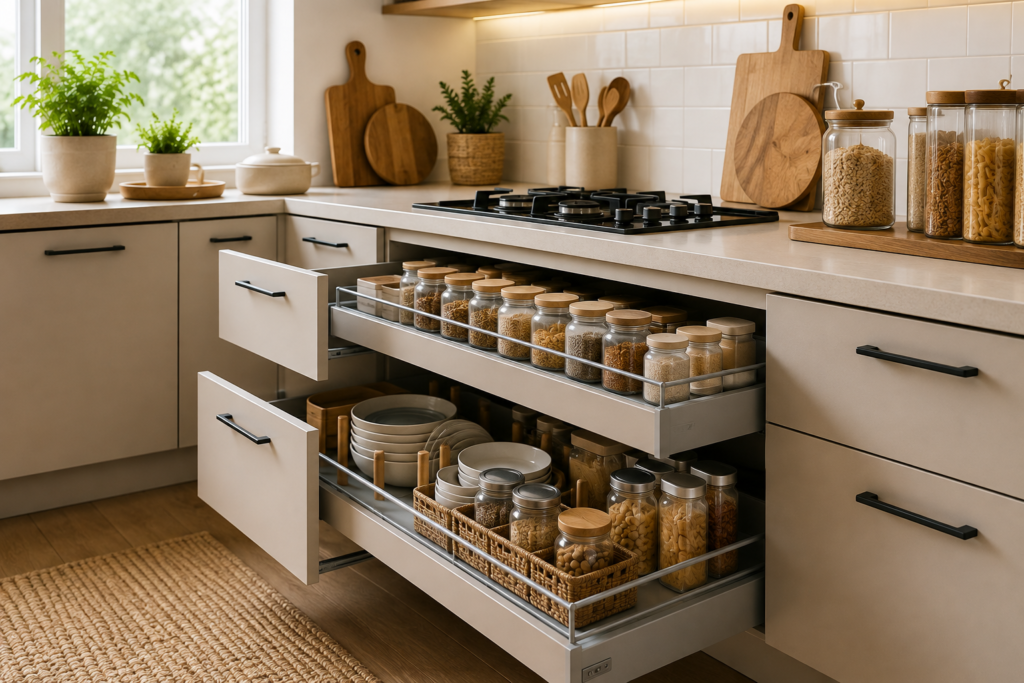
A drawer near the preparation area can become an efficient spice station. Use an angled insert or lay matching jars flat with labels facing upward so you can scan the full collection at once.
3. Install a Pull-Out Spice Rack
A narrow pull-out rack uses the full depth of a cabinet without losing jars at the back. Measure carefully and confirm that the rack clears hinges and nearby shelves before installation.
4. Add a Door-Mounted Rack
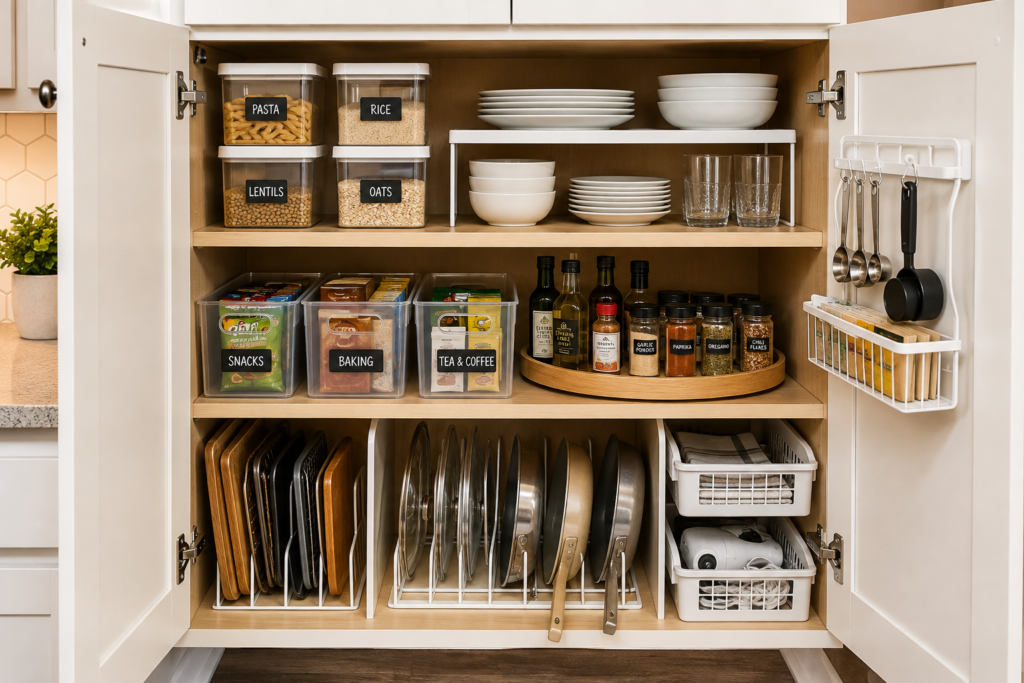
The inside of a pantry or cabinet door offers valuable vertical storage. Choose a slim rack and check that stored jars do not collide with the shelves when the door closes.
5. Try a Lazy Susan
A turntable makes corner cupboards and deep shelves easier to use. A model with a raised rim prevents small jars from tipping as it rotates. Place taller bottles in the centre and shorter jars around the edge. For more ways to organize deep storage, see our pantry organization ideas.
6. Transfer Spices into Matching Jars
Uniform jars create tidy rows and use space more efficiently than mixed packaging. Add the spice name and purchase date to each label. Transfer only what fits and keep any refill packets together in a separate bin.
7. Use Magnetic Spice Tins
Magnetic tins can attach to a dedicated steel panel or the side of a suitable appliance. Keep them away from heat and steam, and make sure lids close securely to protect freshness.
8. Add Shelf Risers
A shelf riser creates a second level inside a tall cabinet. Use the lower area for small jars and the upper level for refill packets or less frequently used seasonings.
9. Store Refill Packets in a Bin
Loose packets quickly become untidy. Place them upright in a narrow container with dividers, then label sections for herbs, spice blends, baking, and chillies.
10. Create an Everyday Spice Caddy
Gather the seasonings used most often in one handled caddy. It can move from cupboard to worktop during cooking and return in a single step, making the daily reset much easier.
11. Label Jar Tops for Deep Drawers
If jars stand upright in a drawer, add clear labels to the lids. This small change lets you identify every spice without lifting multiple containers and keeps the layout compact.
12. Review Expiry and Freshness Dates
Check the collection several times a year. Remove empty containers, combine only identical products with matching freshness, and replace spices that have lost their aroma, colour, or flavour.
Where Should Spices Be Stored?
Choose a cool, dry, dark location away from the hob, oven, dishwasher steam, and direct sunlight. The USDA guidance on shelf-stable foods explains the importance of suitable storage conditions. For a broader cabinet reset, explore our kitchen cabinet organization ideas.
Final Thoughts
The best kitchen spice organization system makes every jar visible and easy to return. Begin by discarding stale items, choose one storage zone, and arrange it around the way you cook. Even a single drawer, tiered shelf, or turntable can save space and prevent duplicate purchases.