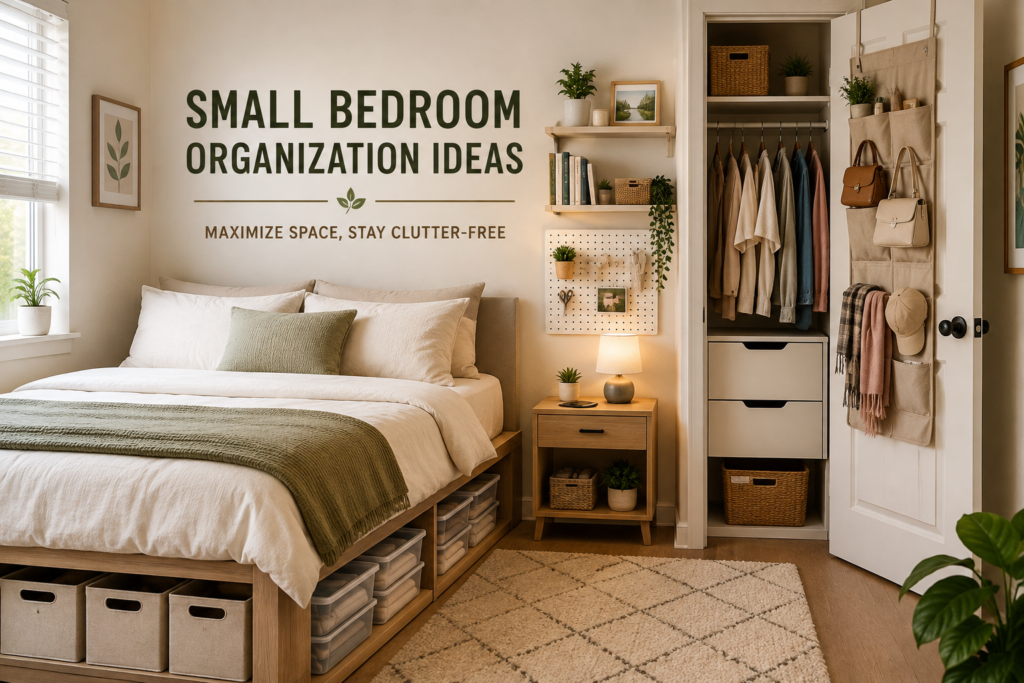
Shoes are easy to collect and surprisingly difficult to store, especially when a bedroom has limited floor space. The right system keeps pairs visible, protects them from dust, and prevents the doorway or wardrobe floor from becoming a clutter zone. These bedroom shoe storage ideas work for small rooms, rented homes, and wardrobes that need a more practical layout.
Table of Contents
- 1. Use a Slim Shoe Cabinet
- 2. Add an Under-Bed Shoe Organizer
- 3. Install an Over-the-Door Organizer
- 4. Create a Bottom Wardrobe Shelf
- 5. Try Clear Stackable Shoe Boxes
- 6. Place a Storage Bench at the Foot of the Bed
- 7. Use a Rotating Corner Shoe Rack
- 8. Add Floating Shelves
- 9. Store Shoes in Labelled Baskets
- 10. Use a Tension-Rod Shoe Rack
- 11. Create a Small Daily-Shoe Zone
- 12. Rotate Shoes by Season
1. Bedroom Shoe Storage Ideas: Use a Slim Shoe Cabinet
A narrow, tilt-out shoe cabinet is one of the most space-efficient choices for a small bedroom. It stores several pairs vertically while taking up much less floor space than a traditional shelving unit. Position it beside the wardrobe or near the bedroom door so everyday shoes are easy to return after use.
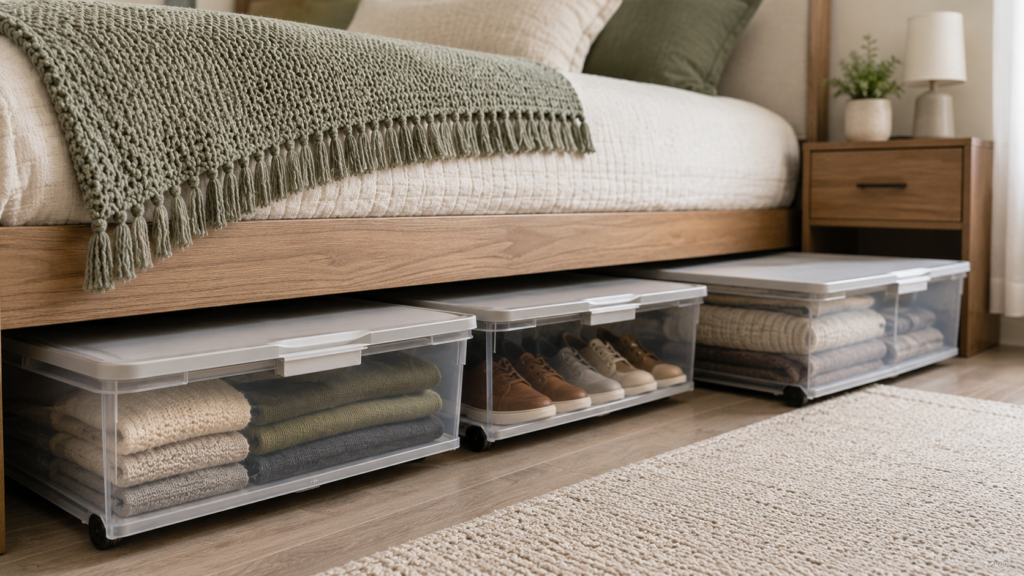
2. Add an Under-Bed Shoe Organizer
The area beneath the bed is valuable hidden storage. Choose a zippered fabric organizer with dividers so pairs stay separated and dust-free. Clear tops help you identify shoes without opening every container. This approach works especially well for seasonal footwear and pairs worn only occasionally. For more ways to use this zone, explore our under-bed storage ideas.
3. Install an Over-the-Door Organizer
An over-the-door pocket organizer uses vertical space without drilling holes. It is best for flats, sandals, slippers, and other lightweight shoes. To keep the room looking calm, choose a neutral fabric design and avoid overfilling each pocket.
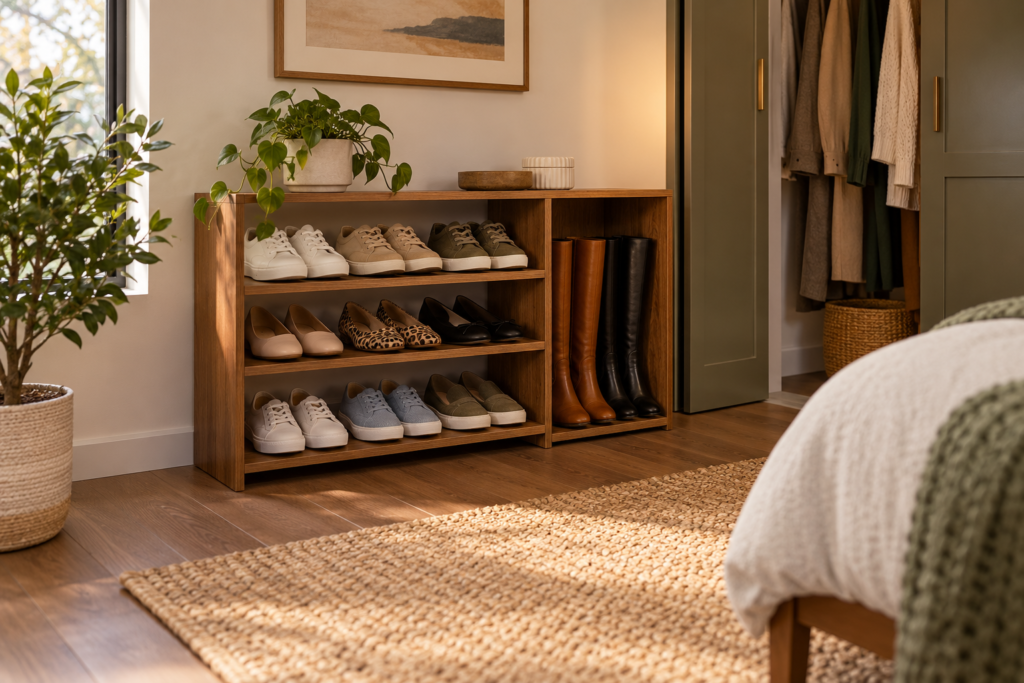
4. Create a Bottom Wardrobe Shelf
If shoes currently form a pile on the wardrobe floor, add one or two low shelves. Stackable shelves make use of the full height beneath hanging clothes and can be adjusted as your collection changes. Keep frequently worn pairs on the top level and special-occasion shoes below. See our bedroom closet organization ideas for a complete wardrobe reset.
5. Try Clear Stackable Shoe Boxes
Clear boxes protect shoes while keeping every pair visible. Stack them in a wardrobe, beside a dresser, or on a high shelf. Front-opening designs are easier to use than boxes with lift-off lids because you can reach a lower pair without dismantling the entire stack.
6. Place a Storage Bench at the Foot of the Bed
A compact storage bench combines seating with concealed shoe storage. Look for a lift-up lid, cubbies, or sliding baskets. Before buying, measure the walking space around the bed and leave a comfortable route to wardrobes and doors.
7. Use a Rotating Corner Shoe Rack
An unused bedroom corner can hold more than expected. A vertical rotating rack stores shoes in a small footprint and makes each pair easy to reach. This option is particularly useful when wall width is limited but the room has open vertical space.
8. Add Floating Shelves
Floating shelves can turn shoes into an organised display while preserving floor space. Install them on a narrow wall section and reserve them for clean, attractive pairs. Keep the arrangement simple so the display feels intentional instead of visually crowded.
9. Store Shoes in Labelled Baskets
Baskets create a softer look than plastic boxes and are useful on open shelving. Assign one basket to trainers, one to flats, and another to seasonal pairs. Labels prevent items from being mixed together and make the system easier to maintain.
10. Use a Tension-Rod Shoe Rack
Two sturdy tension rods fitted across the lower part of a wardrobe can support lightweight shoes. Rest the soles against one rod and the heels against the other. Check the rods regularly and avoid using this method for heavy boots.
11. Create a Small Daily-Shoe Zone
Not every pair needs to be equally accessible. Keep three to five frequently worn pairs on a small tray or low rack near the door, then store the rest elsewhere. Limiting the daily zone prevents shoes from spreading across the room.
12. Rotate Shoes by Season
A seasonal rotation reduces the number of pairs competing for prime storage. Move winter boots or summer sandals into labelled under-bed containers when they are not needed. Clean and dry each pair before long-term storage to prevent odours and material damage.
How to Keep Bedroom Shoe Storage Ideas Organised
Start by removing damaged, uncomfortable, and rarely worn pairs. Group what remains by type and frequency of use, then choose storage that fits the measured space. Avoid placing tall or heavy units where they could become unstable; the U.S. Consumer Product Safety Commission highlights the importance of stable clothing-storage furniture.
Measure Shoes and the Storage Location
Shoe sizes, boot heights, and heel shapes vary, so measure the largest pair rather than relying on a generic capacity claim. Record usable width, depth, shelf height, and the space needed to open a door or pull out a drawer. A rack should not narrow an entry or bedroom walkway.
Scroll sideways to read the full table.
| Method | Best for | Watch for |
|---|---|---|
| Open low rack | Dry everyday shoes | Visual clutter and floor cleaning |
| Ventilated cabinet | A larger mixed collection | Depth, airflow, and door clearance |
| Under-bed boxes | Clean seasonal pairs | Height, dust protection, and retrieval space |
| Boot shapers and shelf | Tall boots | Do not crush shafts or overload upper shelves |
Create a Drying Zone Before the Main Storage
Wet or muddy footwear should dry and be cleaned according to its material before entering a closed cabinet or under-bed box. Use a washable tray in a ventilated location and keep it away from heaters unless the footwear manufacturer permits heat. Storing damp shoes can create odor and damage both footwear and cabinetry.
Organize by Frequency and Season
Keep the current week’s shoes easiest to reach. Store occasion and off-season pairs higher, farther back, or in labeled boxes. Photographing a boxed pair can help identification, but the label should still state the type and owner so the system works without a phone.
Monthly Shoe Edit
- Match pairs and remove empty boxes that serve no purpose.
- Clean racks and let them dry.
- Inspect footwear for repair, donation, or responsible disposal.
- Return everyday pairs first and leave airflow around them.
- Check that the unit remains stable and the walkway is clear.
Common Storage Mistakes
- Buying a rack without measuring large shoes or boots.
- Sealing damp footwear in plastic.
- Stacking boxes above safe reach.
- Hanging heavy organizers on doors not designed for the load.
- Keeping rarely worn pairs in the prime daily zone.
A practical system protects footwear and makes the most-used pair available without moving several others.
Shoe-Storage Questions
How many pairs belong in the daily zone?
Keep the pairs used during the current week within easiest reach. Occasion and off-season footwear can move to secondary storage.
Can shoes be stored immediately after wear?
Allow damp or sweaty footwear to air and follow its care instructions before placing it in a closed container.
Are clear boxes necessary?
No. A readable label or simple photo can work. Ventilation, correct size, and easy retrieval matter more than container appearance.
Final Thoughts
The best bedroom shoe storage ideas use overlooked areas such as the back of a door, the bottom of a wardrobe, and the space beneath the bed. Choose one accessible zone for daily pairs and a protected location for seasonal shoes. A simple system that is easy to reset will keep even a small bedroom calm and clutter-free.