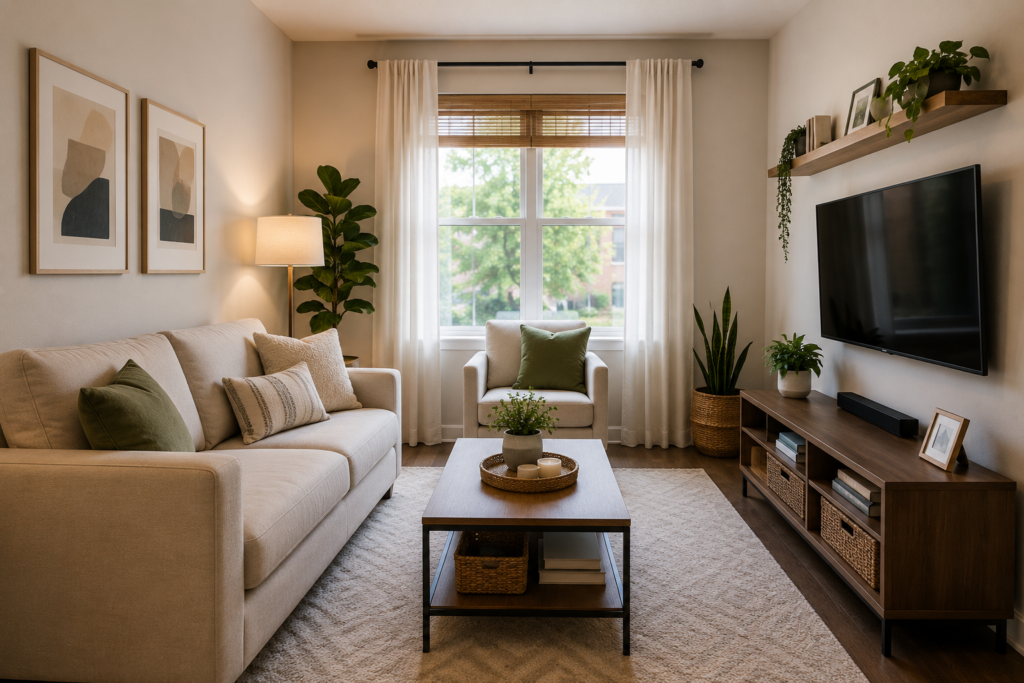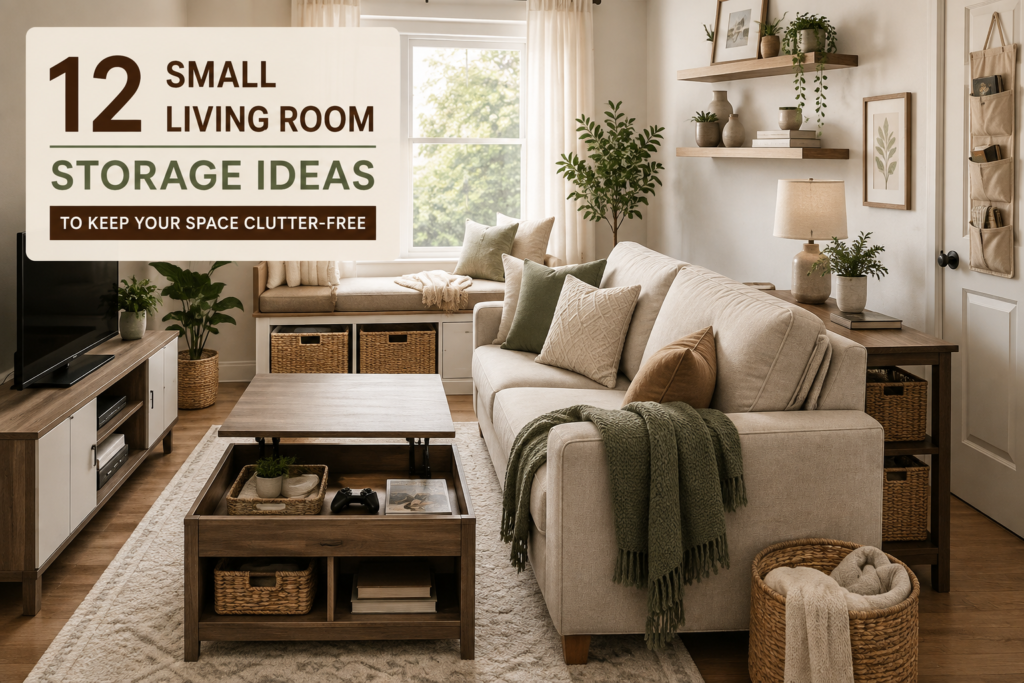
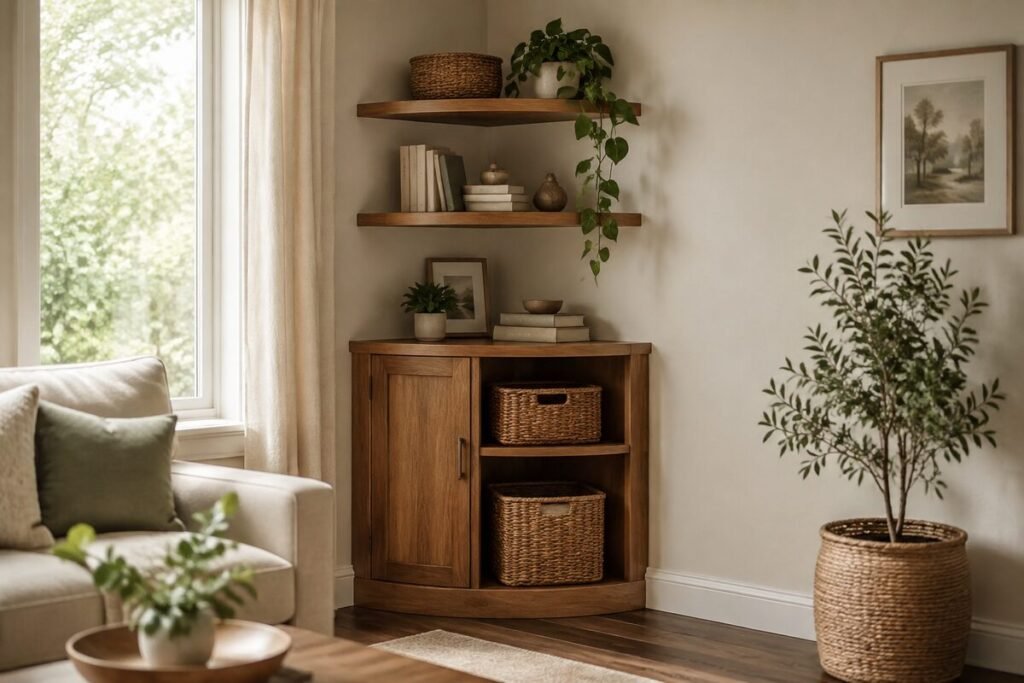
A shared living room can quickly feel cluttered when toys have no clear home. The best living room toy storage ideas blend into the décor, stay accessible to children, and make the daily reset simple. These practical solutions help create a family-friendly room that still feels calm and welcoming.
Table of Contents
- 1. Choose a Storage Ottoman
- 2. Add Low Cube Storage
- 3. Use Baskets Under a Console Table
- 4. Create a Toy Rotation Cupboard
- 5. Install a Window Seat with Drawers
- 6. Try a Rolling Toy Cart
- 7. Add Picture Ledges for Books
- 8. Use a Coffee Table with Storage
- 9. Place Lidded Baskets Beside the Sofa
- 10. Create a Dedicated Play Corner
- 11. Use Wall-Mounted Cabinets
- 12. Label Storage with Words and Pictures
1. Choose a Storage Ottoman
A lidded ottoman hides toys while doubling as a footrest or extra seat. Choose a soft-close design and use lightweight baskets inside to separate building blocks, puzzles, and soft toys.
2. Add Low Cube Storage
Low cube units keep toys within easy reach and give every category a dedicated space. Fabric bins reduce visual clutter, while one or two open cubes can display favourite books or attractive wooden toys.
3. Use Baskets Under a Console Table
The open area beneath a console is ideal for matching baskets. Measure the height and depth before buying, then label each basket so the whole family knows where items belong.
4. Create a Toy Rotation Cupboard
Keep only a manageable selection available and store the rest in a closed cupboard. Rotating toys every few weeks reduces clutter and can make familiar items feel interesting again.
5. Install a Window Seat with Drawers
A built-in or freestanding window bench provides seating and generous concealed storage. Deep drawers are especially useful for larger toys, board games, and craft supplies.
6. Try a Rolling Toy Cart
A compact trolley can move between the living room and a child’s bedroom. Use separate levels for art materials, small toys, and books, and choose locking wheels for stability.
7. Add Picture Ledges for Books
Shallow picture ledges display book covers without taking up floor space. Mount them at a child-friendly height and avoid overloading them. A small reading basket nearby creates an inviting corner.
8. Use a Coffee Table with Storage
A lift-top coffee table or one with drawers can conceal puzzles, colouring supplies, and family games. Storage compartments also keep small pieces away from the main tabletop.
9. Place Lidded Baskets Beside the Sofa
Decorative baskets make quick clean-ups easier and work well for stuffed animals or blankets. Lids keep the room looking orderly, but choose designs that are light enough for children to handle safely. Our living room blanket storage ideas offer more basket-friendly solutions.
10. Create a Dedicated Play Corner
Define one corner with a washable rug, a low shelf, and two or three bins. Keeping play in a clear zone prevents toys from spreading across the entire room and makes tidying more predictable.
11. Use Wall-Mounted Cabinets
Wall cabinets preserve floor space and are useful for items that need adult supervision. Secure them correctly and reserve higher shelves for paints, tiny pieces, or delicate games.
12. Label Storage with Words and Pictures
Simple picture labels help younger children identify the correct bin independently. Use broad categories such as cars, dolls, blocks, and art rather than creating a system that is too detailed to maintain.
How to Make Living Room Toy Storage Ideas Last
Start by removing broken and outgrown toys, then group the remainder by how children actually use them. Keep daily favourites accessible and store occasional items higher up. Anchor appropriate furniture to the wall and follow the U.S. Consumer Product Safety Commission guidance on furniture tip-over prevention. For more ways to use an awkward area, see our living room corner storage ideas.
Final Thoughts
The most successful living room toy storage ideas do not need to hide every sign of family life. A few well-placed baskets, low shelves, and closed compartments can make play easy while keeping the room comfortable for everyone. Choose a system children can understand and adults can reset in minutes.