
A cluttered bedside table can make the last minutes of the evening feel more stressful than they need to be. These nightstand organization ideas create a calm, practical setup for reading, charging devices, taking off jewelry, and reaching essentials without filling every inch of the surface.
The best system depends on your actual bedtime routine. Empty the nightstand first, remove items that belong elsewhere, and measure the usable surface, drawers, and shelf. If the whole room needs attention, start with these bedroom closet organization ideas so clothing and accessories do not migrate back to the bedside.
Table of Contents
- Clear the Surface Completely
- Keep Only Nighttime Essentials
- Use a Small Catchall Tray
- Add Drawer Dividers
- Choose a Nightstand With Storage
- Mount the Reading Light
- Route Charging Cables Neatly
- Store Books Vertically
- Keep Medicine Secure
- Use the Lower Shelf Wisely
- Create an Evening Reset
- Review the Setup Monthly
- Measure Before Buying Organizers
- Mistakes to Avoid
- Frequently Asked Questions
1. Clear the Surface Completely
Remove everything, including the lamp and charging cable, then wipe the top and check behind the furniture. Sort the contents into items used every night, items used occasionally, and things that belong somewhere else. Starting with an empty surface makes it easier to see how much room is genuinely available.
Return only the objects that support bedtime or waking up. Decorative pieces can stay if they leave room for a glass, book, or phone without balancing items on top of one another. Open space is useful space, not a gap that must be filled.
2. Keep Only Nighttime Essentials
Define “essential” by frequency. A lamp, tissues, current book, and one charging point may be enough. Hand cream or glasses can live in the top drawer rather than on display. Move paperwork, loose receipts, spare cosmetics, and unrelated electronics to their proper homes.
If two people share a bedroom, give each side its own small zone instead of letting one table collect everything. Matching systems are optional; both setups simply need to support the person using them.
3. Use a Small Catchall Tray
A shallow tray gives earrings, a watch, lip balm, or hair ties a defined landing place. Choose one that holds the few items you remove at night without becoming a storage bin. A raised edge prevents small objects from rolling behind the bed.
Empty the tray regularly. Jewelry worn infrequently should return to its long-term storage, while coins, keys, and receipts should move to the entryway or desk. The tray works only when it remains a temporary stop.
4. Add Drawer Dividers
Adjustable dividers prevent glasses, chargers, notebooks, and personal-care items from mixing together. Measure the drawer’s internal width, depth, and height before buying an insert. Check that the divider will not catch on the frame when the drawer closes.
Create broad categories rather than a compartment for every object. One section for electronics, one for reading items, and one for personal essentials is easier to maintain when routines change.
5. Choose a Nightstand With Useful Storage
A drawer hides small visual clutter, while an open shelf keeps books and baskets easy to reach. Select the combination that matches what you actually store. A minimalist table with no drawer may look attractive but can be frustrating if you use several small items each night.
Nightstand height matters as much as storage. The top should be comfortable to reach from bed, and drawers should open without hitting bedding, a wall, or nearby furniture. Check the available floor width and walking clearance before replacing the table.
6. Mount the Reading Light
A wall-mounted sconce or headboard light frees the nightstand surface and directs light toward a book. Choose an adjustable design if two sleepers have different schedules. Place the switch where it can be reached safely without stretching or getting out of bed.
For a table lamp, use a stable base that does not consume most of the surface. Route its cord along the back edge and leave ventilation around bulbs and charging equipment. Never hide hot or damaged electrical components inside a crowded drawer.
7. Route Charging Cables Neatly
Attach a removable cable clip near the back or side so the connector does not fall to the floor. Bundle excess length loosely and keep it away from drawer runners. If several devices charge overnight, use one reputable charging station rather than a chain of adapters.
Inspect plugs and cables for heat, fraying, or bent connectors. Keep drinks on the opposite side of the nightstand, and avoid covering charging devices with books, fabric, or tissues.
8. Store Books Vertically
Keep the current book on the surface and place the next few titles vertically on a lower shelf. A small bookend prevents them from leaning into other items. Return finished books to the main shelf instead of building a permanent bedside stack.
If magazines or notebooks slide around, use a slim file holder. Store heavy books on the lowest shelf to keep the furniture stable and avoid overloading a shallow drawer.
9. Keep Medicine Secure
A bedside drawer is not automatically a safe place for medicine, especially where children, visitors, or pets can reach it. Follow the label’s storage instructions and keep medicines in their original containers. Items needing special temperature control should never be stored based on convenience alone.
The U.S. Food and Drug Administration advises keeping medicines up and away and out of sight of children. Use appropriate locked or elevated storage when needed, and remove expired or unused products through recommended disposal options.
10. Use the Lower Shelf Wisely
A lower shelf is best for larger, contained items: a short row of books, a lidded basket, or a folded throw. Avoid many tiny objects because they collect dust and are difficult to reach. Leave enough space to see the floor behind and around the table during cleaning.
Choose a basket that can slide out without scraping the shelf and that does not protrude into the walkway. Labeling is useful when the contents are not obvious, but one clearly defined category is usually enough.
11. Create a Simple Evening Reset
Spend one minute returning the surface to its baseline before sleep. Put jewelry in the tray, connect the phone, place the current book neatly, discard tissues, and move any cup to the kitchen. A tiny repeatable routine prevents clutter from accumulating.
Keep the reset realistic. If an item appears every evening, give it a permanent home within reach instead of repeatedly moving it across the room. Organization should reduce effort, not add another complicated chore.
12. Review the Setup Monthly
Once a month, empty crumbs and dust, wipe the lamp and cords, and return misplaced items. Check whether every drawer category still reflects your routine. Seasonal products and finished books can move elsewhere to restore breathing room.
Notice repeated problems. If cables still fall, change the clip position. If the drawer jams, remove excess containers. Small adjustments are more effective than buying a new organizer whenever the system feels untidy.
Nightstand Organization Ideas: Measure Before Buying
Measure the tabletop, drawer interior, shelf opening, and clearance beside the bed. Record the lamp footprint and the longest item that must fit in a drawer. These dimensions help you choose trays and baskets that use space without blocking movement.
- Leave room for the drawer to open fully.
- Keep the walkway clear of baskets and cables.
- Choose shallow trays for small everyday items.
- Test reach from your normal sleeping position.
- Confirm that furniture is stable on the floor.
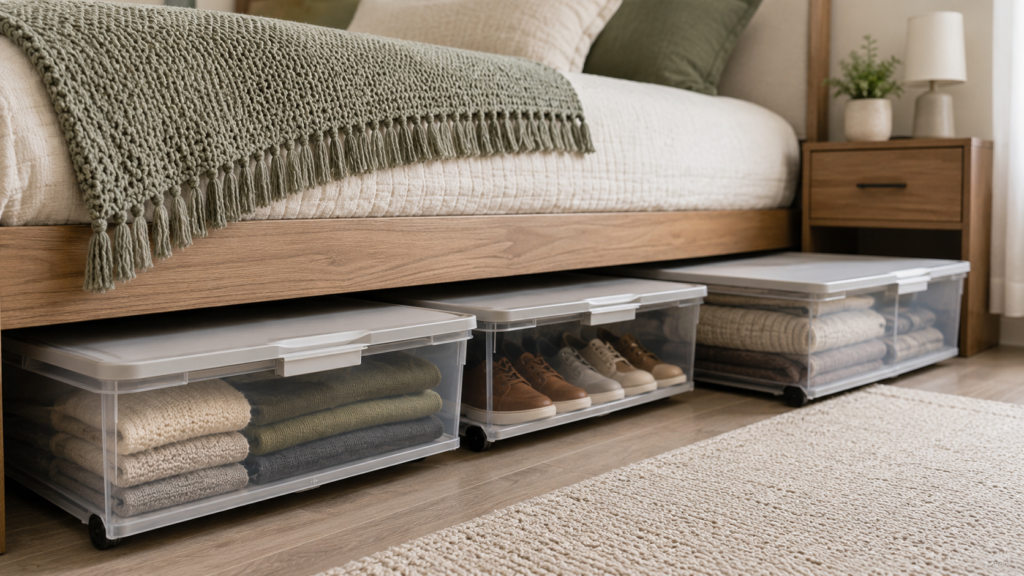
For items that do not belong beside the bed, these under-bed storage ideas offer alternatives without crowding the nightstand.
Common Nightstand Organization Mistakes
Common mistakes include using an oversized organizer, keeping every book within reach, allowing cables to cross the walkway, and treating an open tray as permanent storage. Another problem is choosing a nightstand based only on appearance while ignoring height, drawer clearance, and the user’s dominant side.
Avoid transferring products into unlabelled containers, particularly medicine or supplements. Do not overcrowd electrical outlets or place liquids next to charging devices. A safe, easy-to-reset surface is more valuable than a highly styled arrangement that cannot support daily use.
Frequently Asked Questions
What should I keep on top of a nightstand?
Keep only frequently used items such as a lamp, current book, glasses, tissues, or a small tray. Store less attractive or occasional objects inside a drawer or elsewhere.
How do I organize a nightstand without drawers?
Use one shallow tray on top and a single basket or vertical book holder on the lower shelf. Wall-mounting the light also preserves surface space.
How can I stop charging cables from falling?
Secure each cable with a removable clip at the back or side of the table, leaving enough slack to reach the device comfortably.
How often should I clean out a nightstand?
A one-minute evening reset handles daily clutter. A deeper monthly review is usually enough to remove dust, finished books, and items that have migrated from other rooms.
Final Thoughts
Useful nightstand organization ideas begin with routine, reach, and safety. Keep the surface open, divide the drawer into a few clear categories, control cables, and move unrelated items elsewhere. The result should feel calm at bedtime and take only a minute to restore each day.