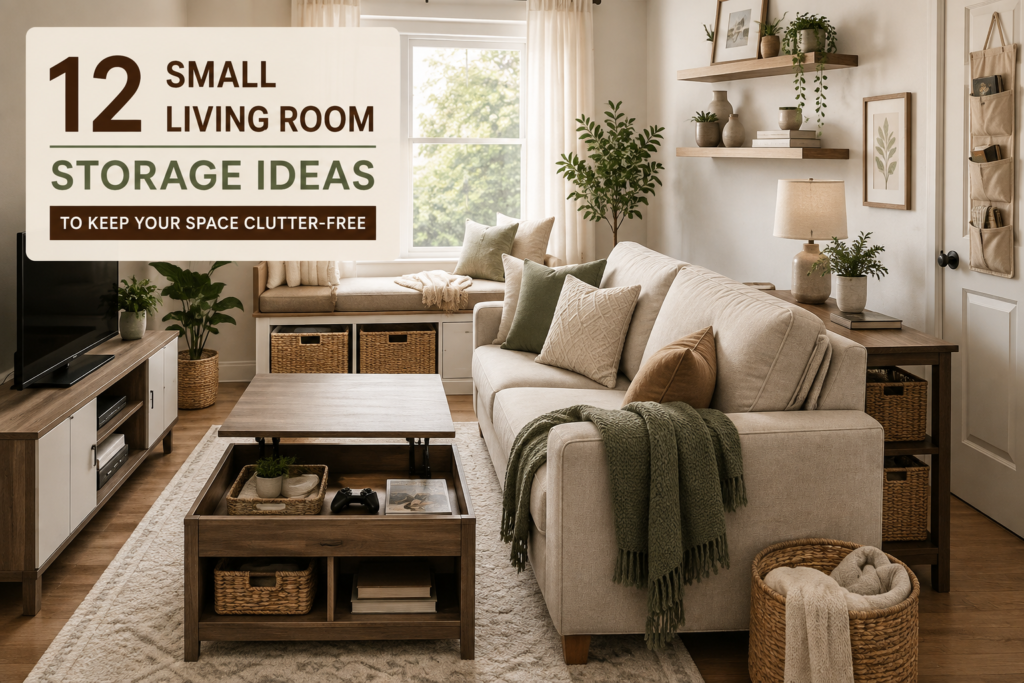
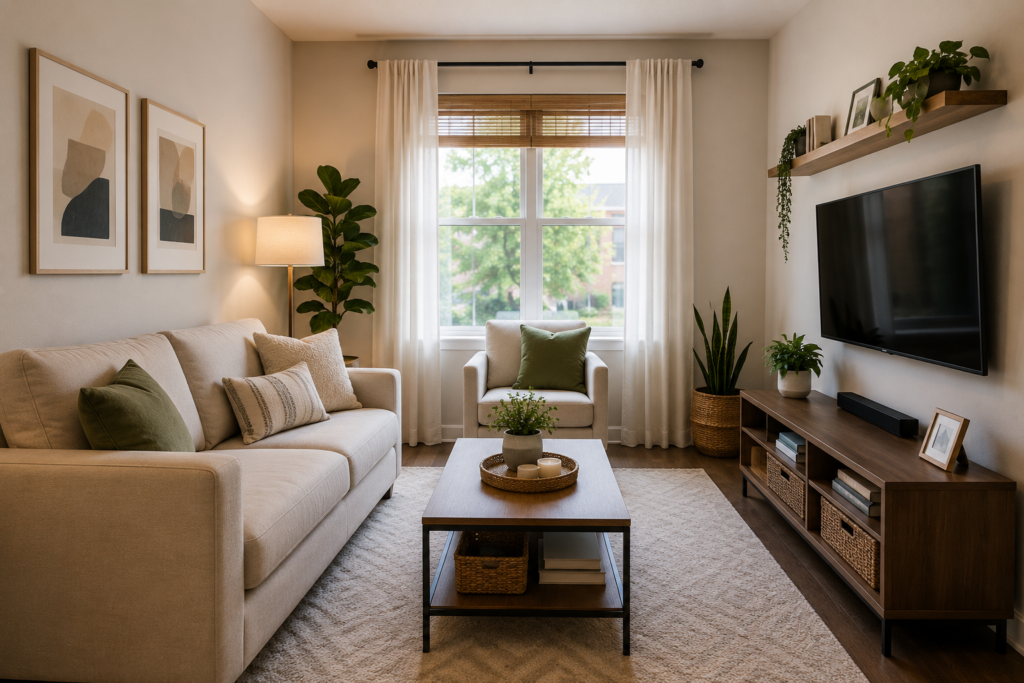
A well-planned living room feels calmer, works better, and makes daily routines easier. These small living room decor ideas focus on practical changes that suit both compact homes and larger spaces. You do not need a complete renovation; careful placement, useful storage, and a few measured upgrades can create a noticeable improvement.
Start with the area that causes the most frustration, then apply the ideas that match your space, budget, and habits. The goal is not to copy every trend, but to create a room that stays comfortable and easy to maintain. For more related guidance, explore our small living room ideas before planning your next update.
Table of Contents
Choose a Light and Cohesive Palette
Use a light base on the largest surfaces, then repeat two or three accent colors in smaller pieces. Similar values help walls, curtains, and large furniture read as one continuous composition instead of several visual blocks.
A small room does not have to be all white. Warm beige, pale green, soft gray, and muted blue can feel open when contrast is controlled and natural light is considered.
Use One Clear Focal Point
Choose the feature that should attract attention first: a window, fireplace, artwork, or media wall. Arrange the largest furniture to support that feature and keep competing displays quieter.
One focal point gives the eye a place to rest. Several bold walls, oversized artworks, and brightly styled shelves can make a compact room feel busy.
Hang Curtains Higher
Mounting curtains above the window can emphasize ceiling height and allow more glass to remain visible when panels are open. Measure from the proposed rod position to the floor before ordering.
Choose panels with enough fullness to hang naturally, but avoid heavy fabric that blocks valuable daylight. Keep radiators and vents clear.
Select Furniture With Visible Legs
Sofas, chairs, and cabinets raised on legs reveal more floor, which can make the layout feel lighter. This also helps with routine cleaning.
Visible legs are not a reason to choose undersized or uncomfortable furniture. Prioritize seat depth, support, and walkway clearance, then compare visual weight.
Add a Large Area Rug
A rug large enough to sit beneath the front legs of the main seats connects the conversation area. A tiny rug floating under the coffee table can visually shrink the grouping.
Mark the rug dimensions with painter’s tape, check door clearance, and use a suitable pad to reduce sliding and curled edges.
Use Mirrors to Reflect Light
Place a mirror where it reflects a window, lamp, artwork, or open part of the room rather than a cluttered corner. A single well-proportioned mirror often works better than many small reflective pieces.
Check the reflection from seated and standing positions. Secure heavy mirrors using hardware appropriate for the wall and product instructions.
Layer Lighting Carefully
Combine general light with a reading lamp and one soft accent source. Lighting different heights reduces dark corners without relying on one harsh ceiling fixture.
Keep floor-lamp bases outside walking routes and route cords safely. Bulb color temperatures should be reasonably consistent so finishes do not shift from yellow to blue across the room.
Keep Wall Art Proportional
Relate artwork to the furniture below it. A grouped arrangement or one substantial piece usually feels calmer than many unrelated small frames scattered across the wall.
Create a paper template before making holes and view it from the main entrance. Leave open wall space around the display so it has room to breathe.
Add Texture Without Clutter
Use a limited mix of texture through cushions, a throw, rug, wood, or woven detail. Texture adds depth even when the color palette is restrained.
Repeat materials rather than introducing a new finish with every accessory. Choose washable or easy-care textiles for high-use homes and store seasonal layers when not needed.
Use Plants Strategically
One healthy plant can soften a corner and add height without requiring more decorative objects. Match the plant to actual light, temperature, and care conditions.
Use a stable pot with a protective saucer and keep leaves out of doorways. Artificial greenery is a practical alternative where natural light is insufficient.
Style Shelves With Breathing Room
Group books and objects into a few intentional clusters, varying height while leaving part of each shelf open. Closed boxes can hide cables, remotes, and small practical items.
Keep heavy objects low and secure tall or unstable shelving. Remove accessories that do not add meaning, function, or balance.
Repeat Colors Across the Room
Repeat an accent color in two or three separated locations, such as a cushion, artwork detail, and small vase. This guides the eye around the room and makes mixed furniture feel related.
Repetition should be subtle. Matching every object exactly can feel staged, while too many unrelated colors break the room into smaller visual fragments.
Frequently Asked Questions
What colors make a small living room feel bigger?
Light, related colors reduce visual breaks, but the room can still include darker accents in controlled amounts.
Should small rooms use small furniture?
Not always. A few correctly scaled, comfortable pieces often feel calmer than many tiny items. Measure circulation and furniture depth first.
For furniture stability guidance, review the U.S. Consumer Product Safety Commission’s Anchor It! information.
Small Living Room Decor Ideas: Final Checklist
The most effective small living room decor ideas are the ones that solve a real problem without making the room harder to use. Start with one improvement, observe how it affects your routine, and build from there. A measured approach helps you avoid unnecessary purchases and produces a space that looks intentional rather than crowded.
Small changes can add up quickly when every item has a clear purpose and location. Keep surfaces manageable, review the setup seasonally, and adapt it as your needs change. With thoughtful planning, your living room can remain practical, inviting, and easier to enjoy every day.