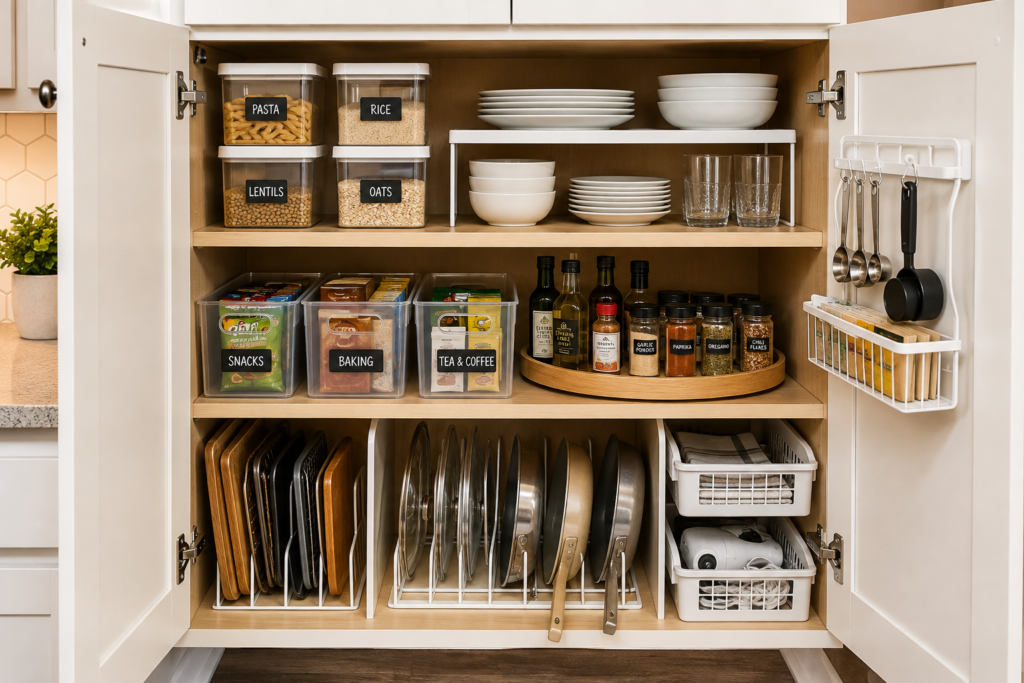
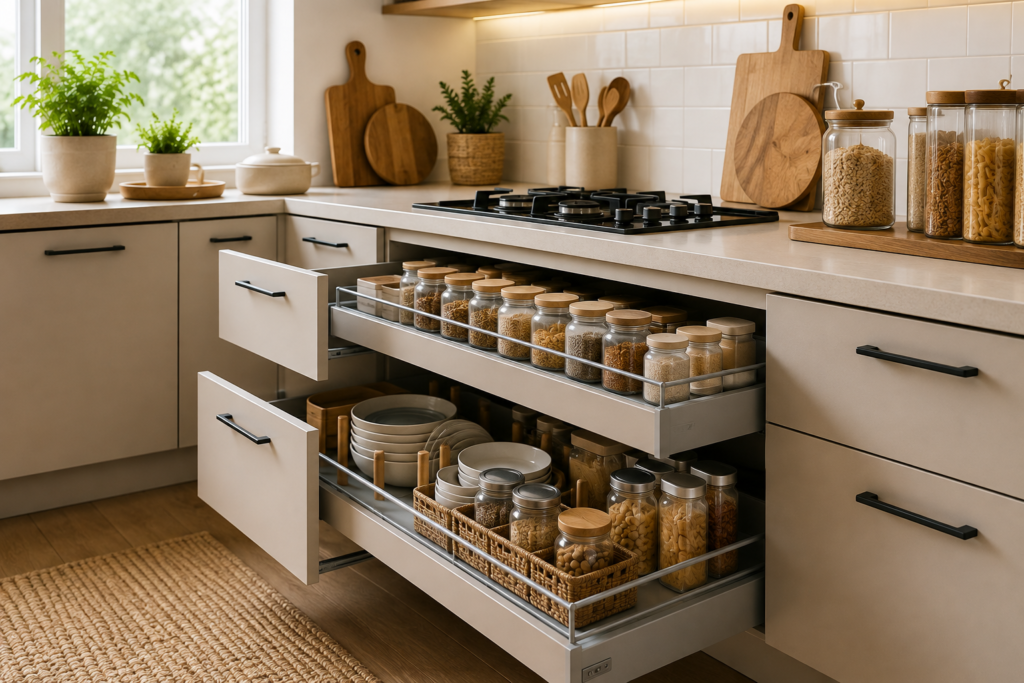
A crowded kitchen counter can make even a well-designed room feel smaller and harder to use. The right kitchen counter organization ideas create clear work zones, keep daily essentials within reach, and give you more room for cooking without requiring a full remodel.
Start by deciding which items genuinely deserve counter space. Then use trays, vertical storage, drawer solutions, and simple routines to give every remaining item a practical home. These twelve ideas work for compact apartments, busy family kitchens, and anyone who wants a calmer, easier-to-clean prep area.
Table of Contents
Clear Everything and Reset the Surface
Remove every item from the counter and clean the full surface before putting anything back. This quick reset reveals how much usable space you actually have and makes it easier to spot duplicates, expired products, and tools that are rarely used. Return only the items that support everyday cooking or cleaning. Store occasional appliances and serving pieces in a cabinet, pantry, or nearby shelf so the counter has room to function.
Create Dedicated Counter Zones
Divide the counter into small zones based on the tasks you perform most often, such as food preparation, coffee making, baking, and dishwashing. Keep only the tools needed for each activity in that area. A cutting board and knife block can stay near the main prep surface, while coffee supplies belong beside the machine. Clear zones reduce unnecessary movement and prevent unrelated items from spreading across the entire kitchen.
Use a Tray to Group Daily Essentials
A tray turns several small items into one neat visual group and makes cleaning faster because everything can be moved at once. Use a shallow washable tray for cooking oils, salt, pepper, and frequently used seasonings near the stove. Choose a size that holds the essentials without becoming a collection point for clutter. A tray also protects the counter from drips and gives everyday items a clear boundary.
Move Appliances You Do Not Use Daily
Toasters, blenders, mixers, air fryers, and other appliances can quickly consume valuable preparation space. Keep only the machines you use nearly every day on display. Store the rest in an easy-to-reach lower cabinet, appliance garage, pantry shelf, or rolling cart. Before moving a heavy appliance, confirm that its new shelf can support the weight. Rotating occasional-use items off the counter creates an immediate sense of openness. See more ideas in our small kitchen storage guide.
Add a Slim Vertical Organizer
When horizontal space is limited, use height instead. A compact vertical rack can hold cutting boards, baking sheets, pot lids, or serving trays without creating a wide pile. Place it near the cabinet where those items are normally used and choose a stable design with non-slip feet. Vertical storage keeps pieces separated, improves visibility, and prevents the frustrating process of lifting an entire stack to reach one board.
Hang Frequently Used Tools
Wall rails, adhesive hooks, and under-cabinet racks can move utensils, measuring cups, towels, and lightweight tools off the counter. Install hooks only where hanging items will not interfere with cabinet doors, cooking heat, or walkways. Group similar tools together and leave enough spacing to remove them easily. Hanging storage works best when limited to frequently used pieces; too many exposed items can make a small kitchen feel visually busy.
Store Paper Towels Under a Cabinet
A wall-mounted or under-cabinet paper towel holder frees the counter while keeping towels accessible. Position it near the sink or main cleanup zone, but away from direct heat and splashing oil. Select a holder that allows one-handed tearing and fits the cabinet depth. If drilling is not suitable for a rental, look for a removable adhesive model rated for the expected weight and follow the manufacturer’s installation instructions carefully.
Use a Tiered Stand in a Corner
Kitchen corners are easy to overlook because items placed at the back can become difficult to see. A compact two-tier stand uses that vertical space for fruit, tea, spices, or small daily essentials. Choose a stable stand that does not block electrical outlets or extend into your main prep zone. Keeping lighter items on the upper tier and heavier pieces below improves balance while making the corner feel intentional rather than forgotten.
Keep Cleaning Supplies Beneath the Sink
Dish soap, brushes, dishwasher tablets, and extra sponges often spread around the sink. Store backup supplies in handled bins under the sink and leave only the products used every day on the counter. A small waterproof caddy can hold the remaining soap and brush while catching drips. Keep household cleaners secured away from children and pets, and follow product labels for safe storage and use. For safer product choices, review the EPA Safer Choice program.
Add an Easy-to-Clean Sink Caddy
Choose a compact sink caddy with drainage for the sponge, brush, and dishcloth. Good airflow helps these wet items dry between uses and keeps them from resting directly on the counter. Empty trapped water regularly and wash the caddy according to its care instructions. Avoid oversized organizers with compartments you do not need. The best caddy solves a specific problem while leaving the surrounding sink edge clear.
Create a Drop Zone Away from Prep Space
Mail, keys, chargers, and bags often land on the kitchen counter because they lack another destination. Create a small drop zone near the entrance using a wall pocket, key hooks, or a narrow console outside the main cooking area. Give each family member a labeled section if needed. Redirecting non-kitchen items protects the preparation surface from paper clutter and makes important belongings easier to find when leaving home.
Finish with a Five-Minute Evening Reset
Organization lasts longer when the kitchen receives a brief reset each evening. Return ingredients to the pantry, move dishes to the sink or dishwasher, wipe the counters, and place stray items in their assigned homes. Keep the routine short enough to repeat consistently. A five-minute reset prevents small piles from becoming weekend projects and ensures that the kitchen counter is ready for breakfast or meal preparation the next day.
Final Thoughts
The most effective kitchen counter organization ideas focus on daily habits, not decoration alone. Clear the surface, group essentials by task, use vertical space carefully, and move non-kitchen items to a better location. Even one or two changes can create more room for safe, comfortable meal preparation.
Review the counter every few weeks and remove anything that has stopped earning its place. When each item supports a specific routine, the kitchen stays easier to clean and feels more spacious. For additional cabinet solutions, explore our kitchen cabinet organization ideas.