A small kitchen can quickly feel crowded when countertops, cabinets, and drawers are not used efficiently. The good news is that you do not need a major renovation to create more room. With the right small kitchen storage ideas, you can organize everyday essentials, reduce visual clutter, and make cooking much easier.
From using vertical wall space to adding smart organizers inside cabinets, simple changes can transform how your kitchen works. The following practical ideas will help you maximize every available inch while keeping the space clean, functional, and welcoming.
Allocate Small-Kitchen Space Before Adding Organizers
This guide covers the whole room: deciding which job belongs at the counter, in a drawer, in a cabinet, or outside the everyday kitchen. For the contents and retrieval layout of one existing cabinet, use our kitchen cabinet organization guide. Adding another bin inside a cabinet will not solve a missing food-preparation surface.
Walk through one meal with the tools you actually use
Set out ingredients, a cutting board, a pan and the serving dishes for a normal meal. Note where you wash, prepare, cook, serve and clear away. Mark the counter area that must stay empty for preparation. Keep appliance operation and manufacturer-required clearance separate from storage capacity. A shelf that holds the appliance does not prove you can operate it there safely.
Scroll sideways to read the full table.
| What fails during the meal? | First change to test | What to check afterward |
|---|---|---|
| No space for the cutting board | Relocate an occasional appliance to appropriate idle storage | The board and food fit without blocking the sink or appliance operation |
| Several things must move to reach the pan | Reorder that cabinet’s daily cooking kit | The pan can be retrieved and returned without dismantling a stack |
| Refills occupy daily shelves | Separate working stock from unopened reserves | Labels, dates and required storage conditions remain visible |
| A proposed cart blocks the route | Use existing wall/cabinet space or reduce the stored kit | Doors, drawers and the route still operate normally |
Illustrative counter-space calculation
Suppose one uninterrupted counter run is 100 cm wide. An idle appliance occupies 32 cm and a utensil holder occupies 12 cm, leaving 100 − 32 − 12 = 56 cm along that run. A 60 cm-wide board cannot fit in that remaining strip. Moving the idle appliance elsewhere would leave 88 cm before accounting for other obstructions. This is an invented example to demonstrate the calculation, not a recommendation for a required worktop width. Measure the board’s depth too, and do not count space occupied by a sink, hob or required operating clearance as usable preparation area.
Keep a four-line room plan
- Preparation: list the tools that must be directly accessible beside your usable work surface.
- Cooking: allocate a reachable place for the actual daily pans and utensils without exposing stored items to heat.
- Serving and cleanup: place daily dishes according to where they are used and returned.
- Reserve: move seasonal or duplicate items only to storage suited to their weight and care requirements.
Repeat the meal sequence after rearranging. If the same object still has to be moved repeatedly, change its zone before buying another organizer. Then use the twelve options below selectively. They are alternatives, not a shopping list or a requirement to fill every empty wall.
Table of Contents
Use Vertical Wall Space
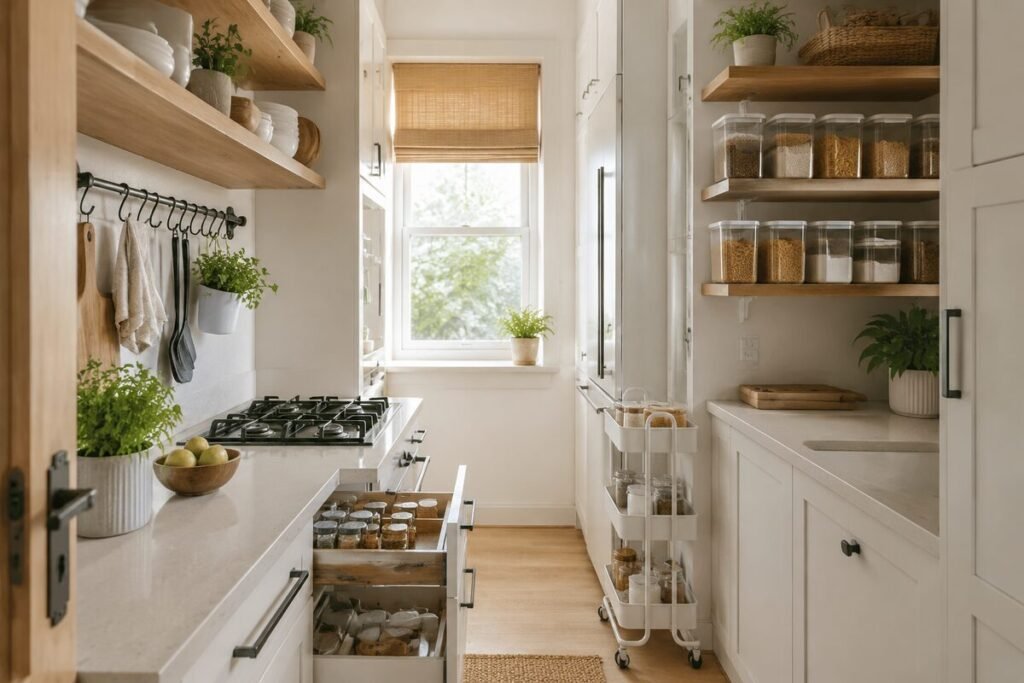
When floor and cabinet space is limited, empty walls can provide valuable storage. Install floating shelves, wall-mounted baskets, or a simple pegboard to hold frequently used items such as spices, utensils, mugs, and cutting boards. Keep heavier items on lower shelves and lighter accessories higher up. Using vertical space keeps essentials within reach while freeing countertops and cabinets for larger kitchen items.
Add Shelf Risers Inside Cabinets
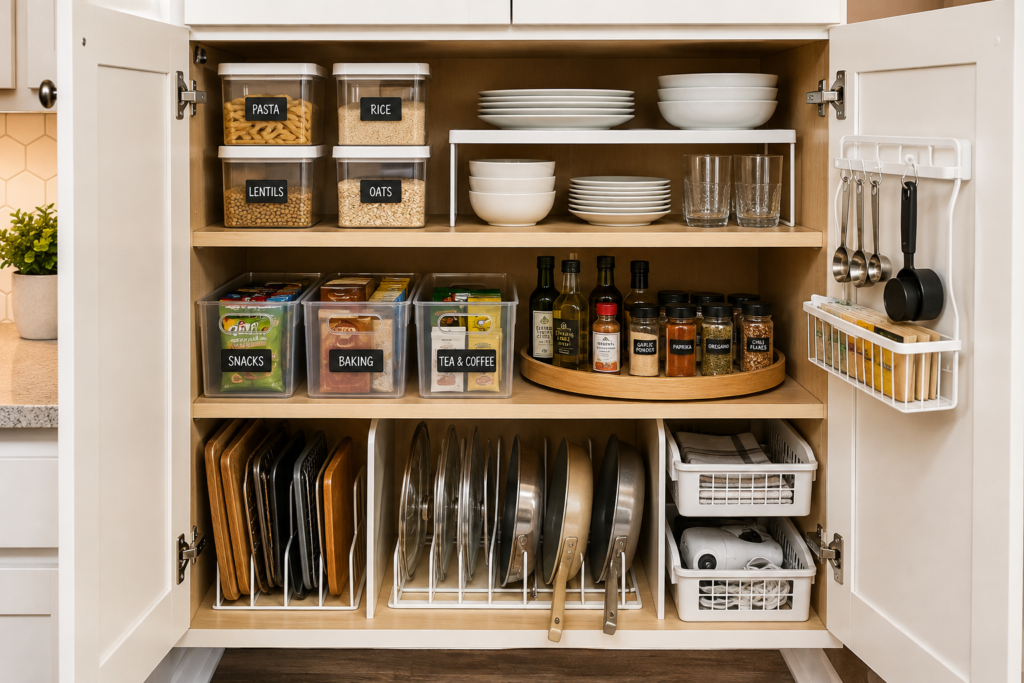
Deep cabinets often waste space above plates, bowls, and pantry items. Shelf risers create an extra level, allowing you to stack dishes or food containers without building unstable piles. Choose adjustable risers that fit your cabinet width and group similar items together. This simple upgrade makes everything easier to see and prevents frequently used items from becoming buried at the back. This is one of the easiest small kitchen storage ideas for adding a usable level when the contents, shelf dimensions and load limits allow it.
Install Pull-Out Cabinet Organizers
Pull-out organizers make deep lower cabinets much easier to use. Instead of reaching past several items, you can slide the entire shelf forward and access pots, pans, cleaning supplies, or pantry goods at once. Measure the cabinet carefully before buying an organizer and select a sturdy design that can support the intended weight. Pull-out storage also helps prevent forgotten items from collecting in dark corners.
Use the Inside of Cabinet Doors
The inside of a cabinet door is useful storage space that is often overlooked. Add slim racks, adhesive hooks, or small organizers for measuring spoons, pot lids, cleaning cloths, and lightweight kitchen tools. Avoid storing anything too heavy that could damage the hinges. This approach keeps small essentials organized without taking up valuable shelf or countertop space.
Organize Drawers With Adjustable Dividers
Without dividers, kitchen drawers can quickly become cluttered and difficult to search. Adjustable dividers create separate sections for cutlery, cooking utensils, food-storage accessories, and small gadgets. Measure the drawer before choosing an organizer and arrange frequently used items near the front. Well-organized drawers save time during cooking and make it easier to return everything to its proper place.
Choose Stackable Food Storage Containers
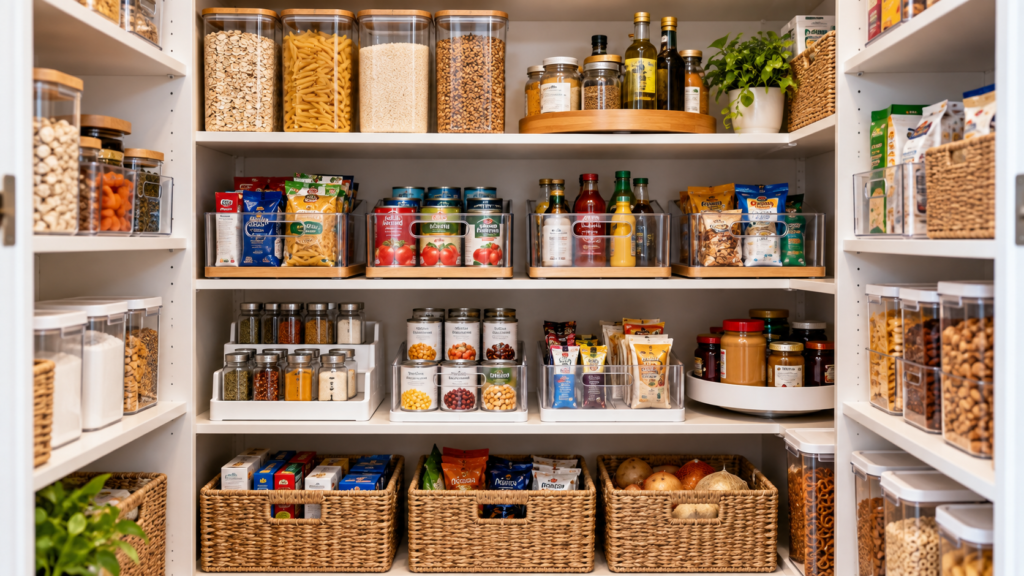
Stackable containers help use the full height of pantry shelves while keeping dry goods easy to identify. Transfer items such as pasta, rice, cereal, flour, and snacks into clear containers with secure lids. Select containers with similar shapes so they fit together neatly, and retain the product name, allergen details, date information and storage instructions so appearance does not replace identification. Among the most practical small kitchen storage ideas, matching containers can reduce bulky packaging and create a cleaner pantry. For guidance on storing different foods safely and maintaining their quality, consult the FoodKeeper app.
Create an Efficient Under-Sink Storage Area
The cabinet beneath the sink can become messy because pipes and cleaning products make the space difficult to organize. Use a removable shelf, sliding basket, or handled bins to separate sprays, sponges, trash bags, and dishwasher supplies. Keep frequently used products near the front and store potentially harmful cleaners safely away from children and pets. A removable, suitable tray or liner can help contain minor spills, but does not repair plumbing or guarantee leak protection. Inspect underneath it and keep valves accessible.
Add a Slim Rolling Kitchen Cart
A narrow rolling cart can provide extra storage when built-in cabinets are limited. Use it for produce, bottled drinks, baking supplies, or frequently used cooking ingredients. Because the cart is mobile, it can be moved beside the preparation area when needed and stored in a narrow gap afterward. Choose a cart with locking wheels so it remains stable while in use. For renters, rolling carts are practical small kitchen storage ideas because they add flexible storage without permanent installation.
Hang Frequently Used Utensils
A wall rail or a set of sturdy hooks can keep everyday utensils accessible without filling a drawer. Hang items such as spatulas, ladles, oven mitts, and lightweight pans close to the cooking area. Keep the arrangement simple and avoid displaying too many items, as an overcrowded wall can make a small kitchen feel busier. This method works best for tools that are used regularly.
Make Better Use of Corner Space
Kitchen corners are often difficult to reach and may become wasted storage areas. A rotating turntable can make oils, spices, sauces, and small jars easier to access inside corner cabinets. For countertops, a compact tiered organizer can hold frequently used ingredients without spreading them across the entire surface. Using corners efficiently is one of the simplest small kitchen storage ideas for creating more usable space.
Create Dedicated Storage Zones
Organize the kitchen according to everyday activities such as cooking, baking, food preparation, and making drinks. Store pots and cooking utensils near the stove, keep knives and cutting boards close to the preparation area, and place mugs near the coffee station. Dedicated zones reduce unnecessary movement and make it easier to maintain order because every item has a logical home.
Keep Small Appliances Off the Counter
Toasters, blenders, mixers, and other appliances can occupy a large portion of a small countertop. Keep only the appliances you use daily on display and store occasional-use items inside a cabinet or on a sturdy shelf. If cabinet space is limited, consider an appliance cart or a dedicated lower shelf. Clear countertops provide more room for food preparation and make the entire kitchen appear larger.
Final Thoughts
The best small kitchen storage ideas focus on using overlooked areas, creating clear zones, and keeping everyday items easy to access. You do not need to apply every idea at once. Start with the area that causes the most frustration, such as a crowded drawer, an untidy cabinet, or a cluttered countertop. These small kitchen storage ideas work best when you choose solutions that match your daily cooking habits and available space.
Small improvements such as shelf risers, drawer dividers, hooks, and stackable containers can make a noticeable difference. By giving each item a practical storage location, you can create a kitchen that feels more spacious, organized, and enjoyable to use.