Kitchen reusable bag storage ideas can stop cloth totes, produce bags, and insulated carriers from taking over drawers and pantry shelves. A clear system keeps bags clean, visible, and ready before every shopping trip.
Begin by emptying the entire collection. Wash bags according to their care labels, let them dry completely, and remove damaged or unnecessary pieces. Then choose a storage method that matches your available space.
Quick Answer: How Should Reusable Bags Be Stored?
Fold clean, dry bags and store them vertically in one basket near the kitchen exit. Keep only a small working set, separate insulated bags, and place a backup set in the car if useful.
Table of Contents
- 1. File-Fold Bags in a Basket
- 2. Hang Everyday Totes on Hooks
- 3. Use a Magazine Holder
- 4. Add a Door-Mounted Organizer
- 5. Store Bags in One Larger Tote
- 6. Use a Pull-Out Cabinet Bin
- 7. Repurpose a Drawer
- 8. Create a Car-and-Kitchen Split
- 9. Add Shelf Dividers
- 10. Use a Slim Rolling Cart
- 11. Store Insulated Bags Separately
- 12. Set a Practical Bag Limit
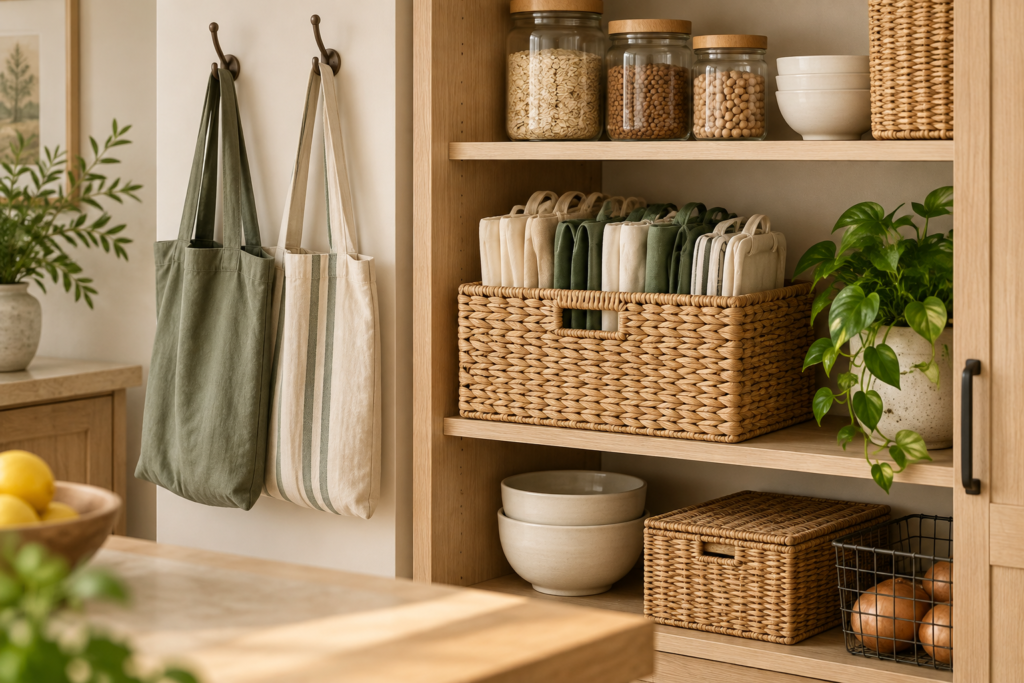
1. File-Fold Bags in a Basket
Fold reusable bags into compact rectangles and stand them vertically in a handled basket. File folding lets you see every bag and remove one without disturbing the rest.
2. Hang Everyday Totes on Hooks
Install sturdy hooks inside a pantry, mudroom, or cabinet side panel. Reserve these hooks for two or three frequently used bags and keep the remaining collection folded.
3. Use a Magazine Holder
A wide magazine holder keeps folded bags upright on a shelf. Choose a washable material and avoid overfilling it so bags remain easy to remove.
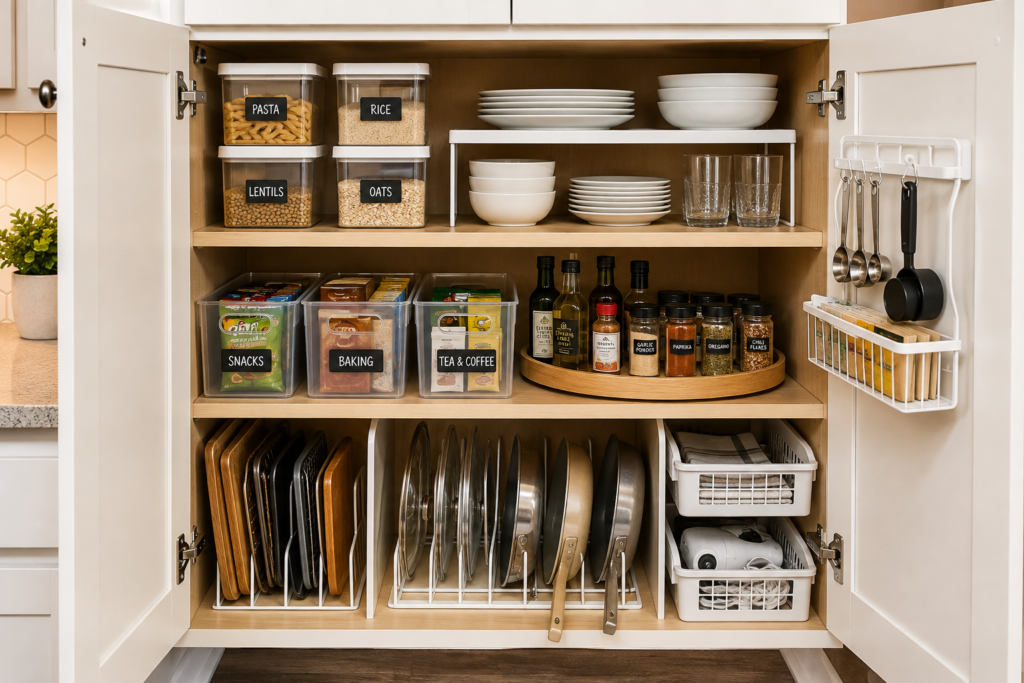
4. Add a Door-Mounted Organizer
A shallow organizer on the inside of a pantry door uses overlooked space. Check door clearance, hinge strength, and shelf placement before installation.
5. Store Bags in One Larger Tote
Choose one structured reusable tote as the outer container and place neatly folded bags inside it. This portable system can move from pantry to car when needed.
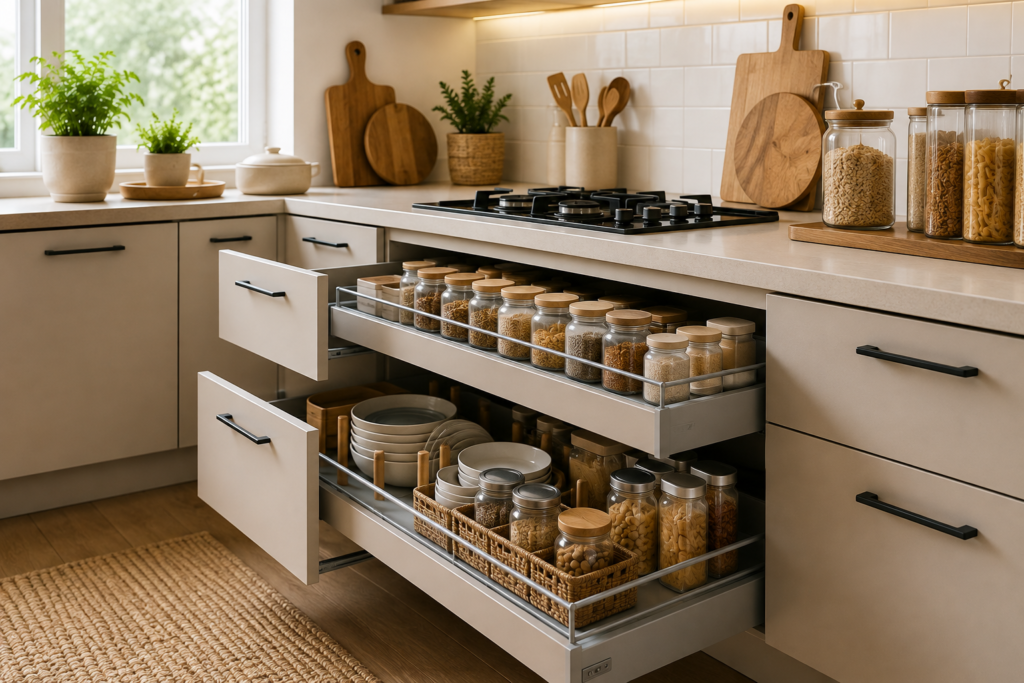
6. Use a Pull-Out Cabinet Bin
A narrow pull-out bin makes deep lower cabinets easier to use. Add dividers for grocery totes, produce bags, and insulated bags.
7. Repurpose a Drawer
A shallow drawer near the kitchen entrance can hold compact folded bags. Use adjustable dividers and keep the drawer below capacity so it closes smoothly.
8. Create a Car-and-Kitchen Split
Keep part of the collection near the kitchen and a small backup set in the car. This prevents every bag from occupying valuable cabinet space.
9. Add Shelf Dividers
Clear shelf dividers stop stacks of folded bags from leaning into food or cookware. Group bags by size and place the most-used group at eye level.
10. Use a Slim Rolling Cart
A narrow cart can hold reusable bags along with recycling supplies. Use labeled baskets and lock the wheels if the cart sits near a busy walkway.
11. Store Insulated Bags Separately
Insulated bags are bulky and need to be completely dry before storage. Nest smaller coolers inside the largest one and place them on a higher shelf.
12. Set a Practical Bag Limit
Keep only the number your household genuinely uses. Donate clean extras where accepted and discard damaged bags according to local guidance.
Cleaning and Food-Safety Tips
- Follow each bag’s washing instructions.
- Let bags dry fully before folding.
- Use separate bags for raw foods and ready-to-eat items.
- Clean storage baskets and shelves regularly.
- Discard bags with damaged linings, persistent odors, or difficult-to-clean spills.
For additional reusable grocery bag safety advice, review the FoodSafety.gov guidance. Find more practical organization ideas on the Nestivoza home page.
How to Build a Simple Bag Routine
After unloading groceries, place used bags in a designated cleaning area instead of returning them immediately to storage. Once clean and dry, fold them the same way and return them to the front of the basket. Keep a reminder near your keys if bags are often forgotten.
Review the collection every few months. Remove damaged bags, return borrowed totes, and move seasonal insulated carriers to a less prominent shelf. A consistent limit prevents gradual buildup.
Choosing Kitchen Reusable Bag Storage Ideas
The most convenient location is usually between the unpacking area and the exit used for shopping trips. In a small kitchen, use the inside of a pantry door or one narrow basket. In a larger kitchen, dedicate a pull-out cabinet bin. Avoid damp utility areas and locations beside heat-producing appliances.
Frequently Asked Questions
Should reusable bags be stored in the car?
A small backup set can stay in the car, but extreme heat and moisture may affect some materials. Keep the main clean collection indoors.
How many reusable bags should a household keep?
Keep enough for a typical large shopping trip plus a few specialty bags. The ideal number depends on household size and shopping habits.
Can reusable bags be stored under the sink?
Only if the cabinet is clean, dry, and separated from chemicals. A pantry or entry cabinet is usually a better choice.
How do you stop folded bags from unfolding?
File them vertically in a snug basket, use simple bands, or fold each bag into its own attached pocket when the design allows.
When comparing kitchen reusable bag storage ideas, focus on convenience, cleanliness, and realistic capacity. The best kitchen reusable bag storage ideas fit naturally between unpacking groceries and leaving for the next shopping trip.
Final Thoughts
The best kitchen reusable bag storage ideas are simple enough to maintain after every trip. Clean and dry each bag, fold it consistently, store the collection in one defined zone, and keep only what your household uses.