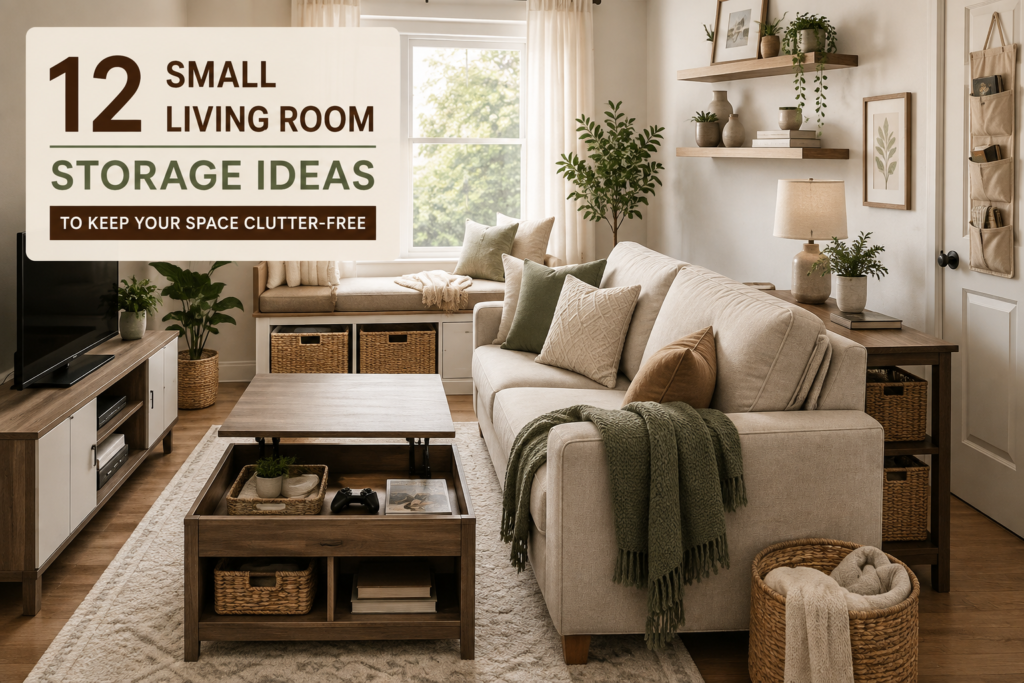
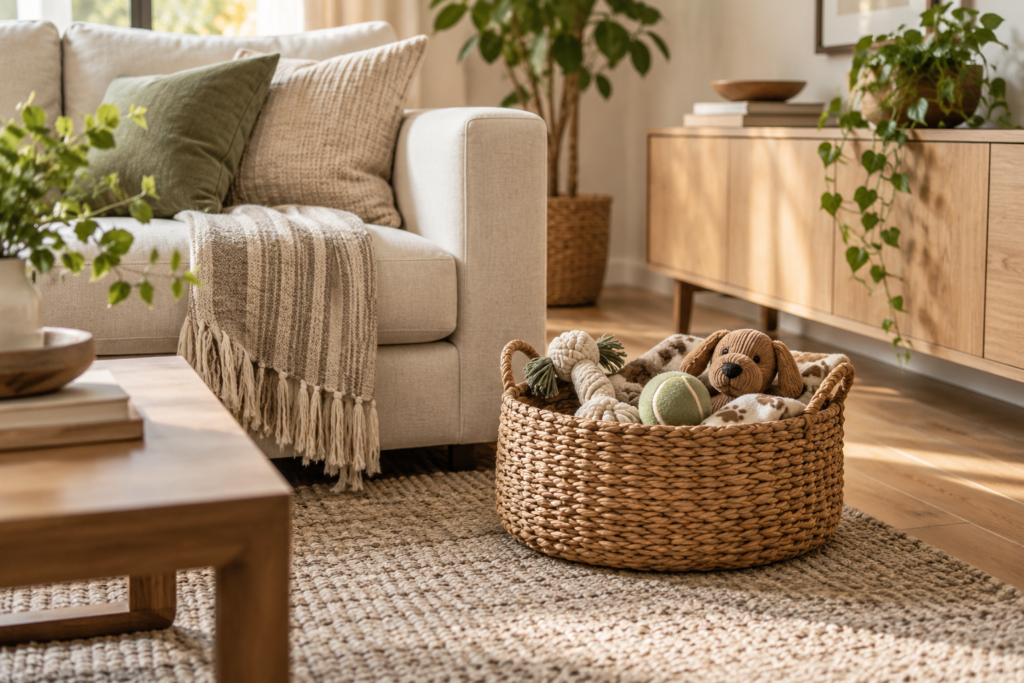
Living room pet toy storage ideas should make daily cleanup easy while keeping favorite toys accessible. A thoughtful system contains balls, ropes, puzzle toys, and chews without making the room feel cluttered.
Start by discarding damaged toys, washing suitable items, and separating everyday favorites from backups. Then choose the solutions that suit your space, décor, and pet’s play habits.
Quick Answer: How Should You Organize Pet Toys?
Use one open basket for daily toys, a closed cabinet for backups, and a small washable tray for chews. Place storage away from walkways and rotate toys weekly to reduce clutter.
Table of Contents
- 1. Choose a Woven Floor Basket
- 2. Add a Bin Inside a Low Cabinet
- 3. Use a Storage Ottoman
- 4. Slide Baskets Under a Console
- 5. Try a Rolling Under-Sofa Drawer
- 6. Install Low Wall Cubbies
- 7. Use a Window Bench with Storage
- 8. Sort Toys in Labeled Bins
- 9. Create a Weekly Toy Rotation Box
- 10. Designate a Small Chew Tray
- 11. Keep a Grab-and-Go Travel Basket
- 12. Follow a One-In, One-Out Rule
1. Choose a Woven Floor Basket
A soft-sided woven basket blends with living room décor and gives pets easy access. Select a stable design with a washable lining and no loose fibers that could be pulled or swallowed. A low, wide shape is less likely to tip during enthusiastic play.
2. Add a Bin Inside a Low Cabinet
Reserve one cabinet compartment for pet supplies. A handled bin lets you lift everything out at once, while the door hides visual clutter when guests arrive. Use a child-safe latch if the cabinet also contains items your pet should not reach.
3. Use a Storage Ottoman
An ottoman stores bulky plush toys and doubles as seating or a footrest. Choose a ventilated, easy-clean interior and avoid storing damp or strongly scented items inside. Check that the lid has safe hinges and cannot close suddenly.
4. Slide Baskets Under a Console
Matching baskets under a console create a balanced look. Assign one basket to toys and another to grooming supplies. Measure the opening first so baskets slide smoothly without scraping the floor or blocking nearby outlets.
5. Try a Rolling Under-Sofa Drawer
A shallow wheeled drawer uses hidden floor space. Measure clearance carefully and choose enclosed wheels that will not catch fur, rugs, or paws. Add simple dividers to keep balls from rolling into the back.
6. Install Low Wall Cubbies
Wall cubbies preserve floor space and display attractive baskets. Secure the unit to wall framing and keep heavy objects away from shelves a pet could bump. Rounded baskets are safer in narrow walkways.
7. Use a Window Bench with Storage
A built-in or freestanding bench can hold backup toys in removable bins. Confirm the lid has soft-close hinges. Keep damp toys out until they are fully cleaned and dry.
8. Sort Toys in Labeled Bins
Separate balls, ropes, plush toys, and puzzles. Simple labels help every family member return items to the correct place and make cleaning routines faster. Picture labels also work well for children.
9. Create a Weekly Toy Rotation Box
Keep a small selection available and store the rest in a dry closed box. Rotate toys each week to renew interest without constantly buying more. Inspect each item during the swap.
10. Designate a Small Chew Tray
A washable tray keeps current chews off upholstery and rugs. Clean it frequently and follow veterinary guidance about safe chew sizes and materials for your pet.
11. Keep a Grab-and-Go Travel Basket
Store a leash, waste bags, portable bowl, and one travel toy together near the exit. This prevents everyday living room storage from becoming mixed with outdoor gear.
12. Follow a One-In, One-Out Rule
When a new toy arrives, remove a damaged or unused one. This simple limit keeps the collection manageable and ensures storage never becomes overfilled.
Pet Toy Safety and Cleaning Tips
- Inspect toys for tears, cracks, and loose parts.
- Wash containers and washable toys regularly.
- Keep baskets away from stairs and walkways.
- Store medications and cleaning products securely.
- Avoid containers with sharp edges or unstable lids.
The ASPCA pet-care resources offer additional general guidance. For more organization inspiration, visit the Nestivoza home page.
How to Choose Living Room Pet Toy Storage Ideas
Consider your pet’s size, chewing behavior, and how frequently each toy is used. Open baskets suit supervised daily play, while closed storage keeps backups clean. Select materials that can be wiped or washed and coordinate them with the room’s existing textures.
Frequently Asked Questions
Should pets reach their own toy basket?
Yes, if the basket is stable and contains only appropriate toys. Keep restricted supplies out of reach.
How often should pet toys be rotated?
A weekly rotation works well for many homes, but adjust it according to your pet’s interest and play habits.
Can pet toys be stored in a closed ottoman?
Yes, provided toys are clean and dry and the lid operates safely.
Where should a pet toy basket be placed?
Choose a quiet spot near the main play area but outside walking routes, door swings, and heat sources.
When comparing living room pet toy storage ideas, choose a system that fits both your cleaning routine and your pet’s behavior. The most effective living room pet toy storage ideas remain easy to reach, easy to wash, and simple for the whole family to maintain.
Create Pet-Toy Zones by Size and Supervision
Separate everyday durable toys, interactive toys, small pieces, and items requiring supervision. Choose a container the pet cannot tip, chew, or become trapped in. Keep small or damaged toys away from pets that may swallow pieces.
Scroll sideways to read the full table.
| Storage option | Best use | Safety check |
|---|---|---|
| Low open basket | Durable daily toys | Washable and free of loose fibers |
| Closed cabinet | Supervised or high-value toys | Secure door and ventilation as appropriate |
| Lidded washable bin | Rotation stock | Pet cannot access or become trapped |
| Small shelf basket | Leashes and human-handled accessories | Out of chewing reach |
Use Rotation and Inspection Together
Keep a small set available and rotate it to maintain interest. Inspect every toy before returning it: remove items with exposed stuffing, sharp edges, broken squeakers, loose strings, or pieces that have become small enough to swallow. Follow the toy manufacturer’s supervision and care guidance.
Weekly Toy Reset
- Collect toys from walkways and furniture.
- Wash or clean them as directed.
- Discard damaged items safely.
- Return a limited daily set.
- Store supervised toys separately.
Pet-Toy Storage Questions
Should pets access every toy?
No. Some toys are designed for supervised play or may not suit a particular pet’s size and behavior.
How many toys should stay out?
Use the smallest rotation that supports play without creating a floor hazard.
Can fabric baskets be used?
Only when the material is durable, washable, and not likely to be chewed or ingested.
Pet-Toy Storage Mistakes
- Keeping damaged toys in the rotation.
- Using baskets with loose fibers a pet chews.
- Mixing small toys with those for a larger pet.
- Leaving supervised toys available all day.
- Placing the toy bin in a walking route.
Store treats separately from toys in their labelled food packaging so the pet does not learn to raid the play basket for food.
Observe how the pet interacts with both toys and containers. A storage method that is safe for one animal may be chewed, tipped, climbed into, or guarded by another, so adjust the setup to actual behaviour.
Final Thoughts
Good living room pet toy storage ideas combine convenient access with a calm, coordinated appearance. Start with one daily basket, store backups separately, and maintain a simple cleaning and rotation routine.