A growing mug collection can quickly crowd kitchen cabinets and make a simple coffee routine frustrating. These kitchen mug storage ideas use cabinet height, wall space, drawers, and coffee-station zones efficiently while keeping everyday favorites easy to reach.
Before buying organizers, count your mugs and measure the shelves. Keep daily cups near the coffee maker and move occasional sets higher. For related guidance, explore our coffee station ideas for small kitchens and kitchen cabinet organization ideas.
Table of Contents
- Add Shelf Risers
- Install Under-Shelf Hooks
- Create a Coffee Zone
- Use a Deep Drawer
- Mount a Peg Rail
- Dedicate an Open Shelf
- Choose Stackable Mugs
- Use a Cabinet Turntable
- Protect Special Mugs
- Store Extras in a Basket
- Try a Cabinet Door Rack
- Edit the Collection Regularly
1. Add Shelf Risers
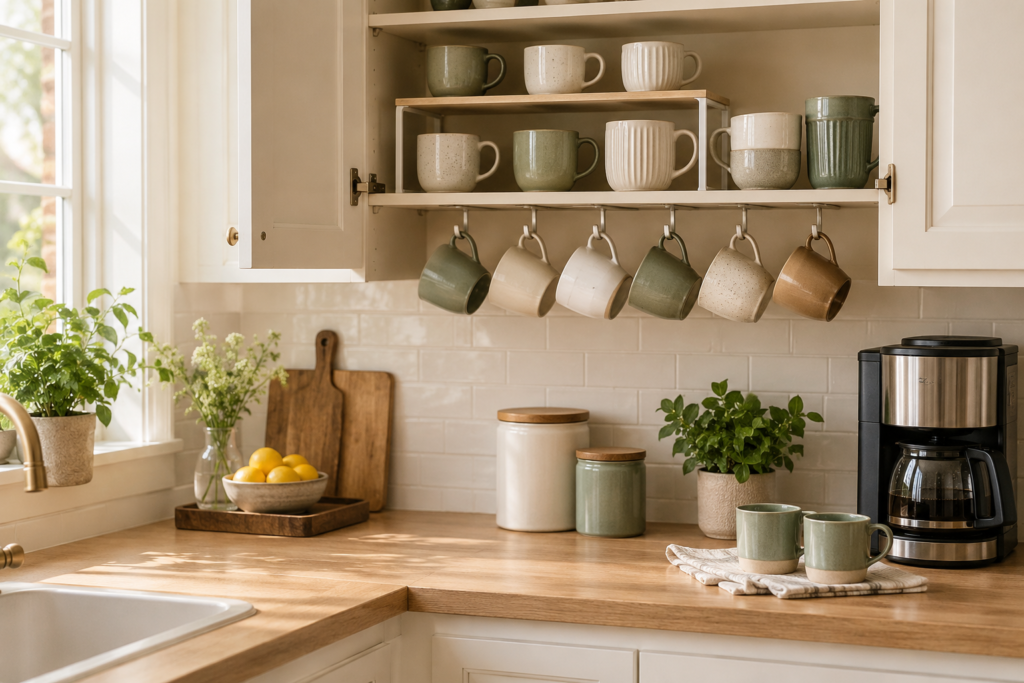
A freestanding shelf riser turns one tall cabinet shelf into two useful levels. Place shorter mugs below and wider cups above so every cup stays visible without an unstable tower. Measure the cabinet first and leave clearance for handles. Bamboo or coated-metal risers are easy to clean and require no drilling.
2. Install Under-Shelf Hooks
Slide-on or screw-mounted hooks use the empty space below a shelf. Hang lightweight everyday mugs while keeping plates or coffee supplies underneath. Space hooks far enough apart so cups do not knock together. Check handle thickness and shelf strength, and keep heavy stoneware on a solid surface.
3. Create a Coffee Zone
Group mugs with coffee, tea, filters, and sweeteners in one cabinet or on a compact tray beside the machine. Keep the most-used cups at the front and backup supplies behind them. A defined coffee zone prevents mugs from spreading through several cabinets and makes the morning routine faster.
4. Use a Deep Drawer
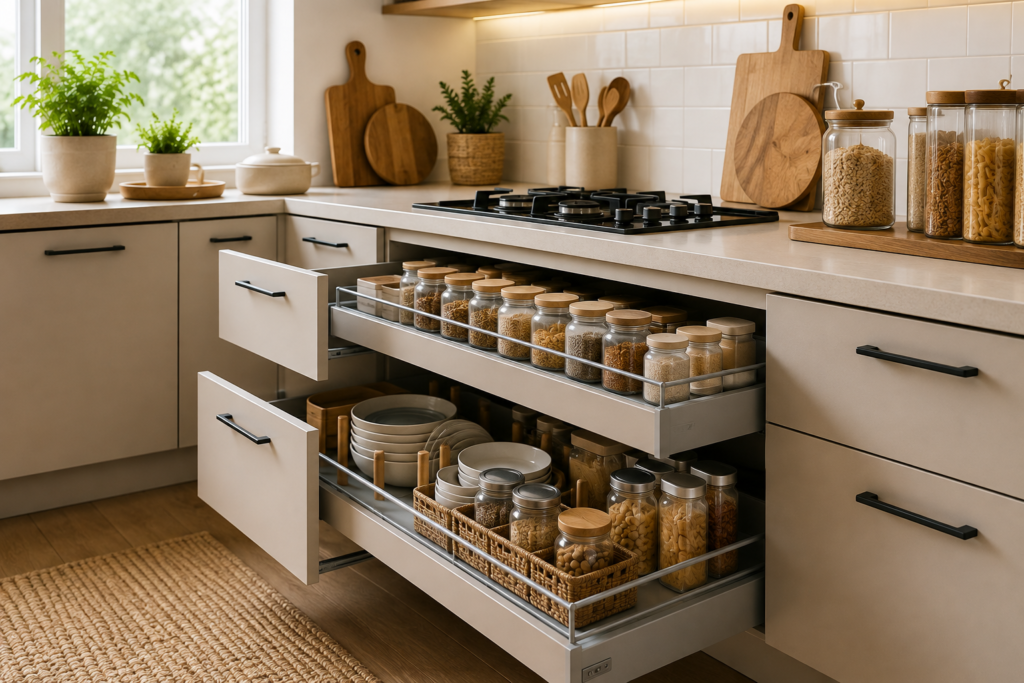
A deep drawer near the coffee maker gives you a clear top-down view. Add a nonslip liner and arrange mugs in one layer with handles facing the same direction. Adjustable dividers stop delicate cups from sliding. This setup is also easier for children or anyone who finds upper cabinets uncomfortable.
5. Mount a Peg Rail
A wooden peg rail creates practical wall storage without using counter space. Install it below an upper cabinet or beside the pantry with suitable anchors. Leave enough distance between pegs for mugs to hang freely. Display a small coordinated group so the arrangement stays intentional and easy to clean.
6. Dedicate an Open Shelf
Open shelving works well for mugs used every day because regular rotation limits dust. Arrange cups in small groups by color, size, or material and leave breathing room around them. Keep the shelf away from cooking grease, and place occasional mugs in closed storage.
7. Choose Stackable Mugs
Purpose-made stackable mugs can reduce the footprint of a large set. Choose cups with flat bases and rims designed to support weight. Limit each stack to a stable height and place the heaviest cup at the bottom. Avoid stacking handmade or irregular mugs that could chip.
8. Use a Cabinet Turntable
A low-sided turntable makes the back of a deep cabinet easier to reach. Select a nonslip model with a raised edge and position handles toward the outside. Rotate it gently instead of moving the front row. Medium-sized mugs work better than tall travel cups on this solution.
9. Protect Special Mugs
Handmade, sentimental, and collectible mugs deserve a separate area. Store them in a glass-front cabinet, padded drawer, or higher shelf where daily cups cannot bump them. Soft felt separators provide extra protection and let you enjoy special pieces without complicating everyday storage.
10. Store Extras in a Basket
Place guest mugs in a handled basket on a pantry shelf. Keep matching saucers together and wrap fragile pieces lightly. A basket contains the group and lets you bring everything to the kitchen at once. Do not overfill it; each cup should lift out without scraping another.
11. Try a Cabinet Door Rack
A shallow rack inside a cabinet door can hold espresso cups or small mugs. Measure carefully so it will not hit the shelves when the door closes. Use hardware suited to the door thickness or a removable system rated for the weight, then test the door slowly before fully loading it.
12. Edit the Collection Regularly
Every few months, remove chipped mugs, duplicates, promotional cups you never choose, and pieces that are uncomfortable to hold. Keep a realistic number for your household and entertaining habits. A smaller, intentional collection is easier to organize and gives every favorite mug a dependable home.
Final Thoughts
The best kitchen mug storage ideas match your space and routine. Start with a shelf riser or coffee zone, then add hooks, drawers, or wall storage only where they improve access. Keeping everyday mugs close and reviewing the collection regularly will free cabinet space and make each morning easier.
Kitchen Mug Storage Ideas: Capacity Checklist
Measure mug height, handle width, and shelf depth before adding racks or risers. Keep daily mugs between waist and eye level, with heavier pieces on stable lower shelves.
Limit each shelf to mugs used regularly and leave enough space to lift one without striking neighbouring cups. Match hooks and racks to the cabinet material and stated load rating.
Mug Storage Mistakes to Avoid
Avoid balancing mugs in unstable stacks, hanging heavy stoneware from light adhesive hooks, or crowding handles against the door. Chips and cracks should be inspected before continued use.
Coordinate cups with our coffee station ideas. For general kitchen safety, consult the CPSC home safety guides.
Frequently Asked Questions
Is it safe to stack mugs?
Stack only mugs designed to nest securely, and keep stacks short on a stable shelf. Do not stack delicate, uneven, or chipped pieces.
How can deep shelves hold mugs more efficiently?
Use a stable shelf riser to create two visible levels, provided the upper tier stays within its load rating and mugs can be removed without reaching awkwardly.