
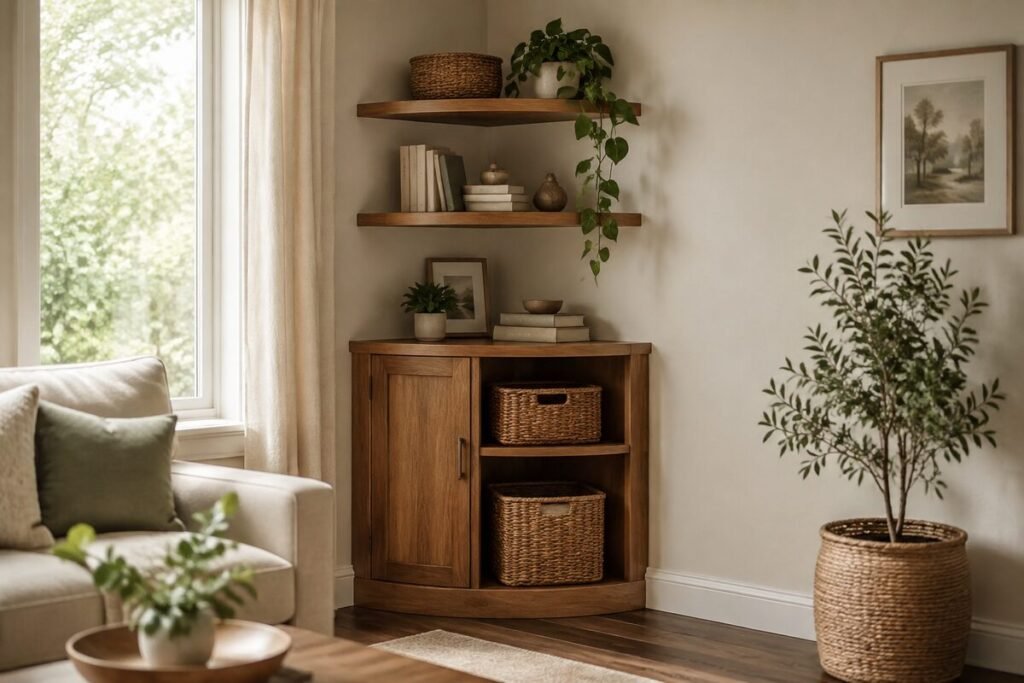
A bookshelf can add warmth and personality to a living room, but it quickly looks crowded when books, décor, cables, and everyday items compete for space. These living room bookshelf organization ideas create a balanced display that stays practical, easy to maintain, and visually calm.
Table of Contents
- Start With a Complete Reset
- Group Books by Purpose
- Mix Vertical and Horizontal Stacks
- Leave Breathing Room
- Use Matching Baskets
- Create a Simple Color Story
- Limit Small Décor
- Hide Cords and Electronics
- Give Each Shelf a Job
- Use Bookends
- Secure Tall Bookshelves
- Schedule a Monthly Reset
Start With a Complete Reset
Remove everything from the shelves before reorganizing. Dust each surface, sort books and objects into categories, and set aside anything that belongs elsewhere. An empty starting point makes it easier to see the available space and build a cleaner arrangement.
Group Books by Purpose
Keep frequently read books at eye level and place reference books, albums, or occasional reads on higher or lower shelves. Small categories are easier to maintain than one long row. This system also helps everyone return each book to the right place.
Mix Vertical and Horizontal Stacks
Alternate upright rows with short horizontal stacks to break up rigid lines. Use a horizontal stack as a base for one small decorative object. Keep stacks low enough that titles remain visible and books are easy to remove.
Leave Breathing Room
A stylish bookshelf does not need to be filled edge to edge. Aim to leave part of every shelf open so the eye has a place to rest. Negative space makes favorite books and meaningful objects feel more intentional.
Use Matching Baskets
Matching baskets conceal chargers, remote controls, small toys, and paperwork without adding visual noise. Measure shelf height and depth before buying containers. Label the inside or underside so the front stays clean while items remain easy to find.
Create a Simple Color Story
Repeat two or three colors already present in the living room through book spines, pottery, frames, or baskets. You do not need to arrange every book by color; a few repeated tones are enough to make the display feel connected to the room.
Limit Small Décor
Choose one or two objects per shelf instead of scattering many small pieces. Vary height and shape, then group related items as a single visual unit. Rotate seasonal décor rather than displaying everything at once.
Hide Cords and Electronics
Route lamp and speaker cables along the back edge with removable clips. Place a charging station inside a ventilated basket or closed box designed for electronics. For more solutions, use these living room cable management ideas.
Give Each Shelf a Job
Assign clear roles such as books, family games, media, keepsakes, or daily essentials. A shelf with one purpose is faster to tidy and less likely to become a drop zone. Store the most-used category within comfortable reach.
Use Bookends
Sturdy bookends keep partial rows upright and make open space look deliberate. Select simple shapes that echo the shelf finish or nearby furniture. Heavy books should sit on lower shelves, where they are easier and safer to handle.
Secure Tall Bookshelves
Anchor tall or top-heavy units to the wall, especially in homes with children or pets. Follow the manufacturer’s hardware instructions and keep heavy objects low. The CPSC Anchor It campaign provides additional furniture-safety guidance.
Schedule a Monthly Reset
Spend ten minutes each month returning books, clearing loose papers, and removing items that migrated from other rooms. A quick routine prevents a full reorganization later. Use nearby living room wall storage when the shelf is carrying too many categories.
Final Thoughts
The best living room bookshelf organization ideas combine useful storage with a restrained display. Clear categories, a few matching containers, open space, and a simple reset routine will keep the shelves attractive without making them difficult to use.
Living Room Bookshelf Organization Ideas: Load Checklist
Group books by use or subject, then place heavy volumes on lower shelves. Leave open space for safe removal and a small number of personal objects.
Check shelf load ratings, wall clearance, and access to outlets or vents. Anchor tall furniture according to manufacturer instructions.
Bookshelf Organization Mistakes to Avoid
Do not overload shelves, place heavy objects overhead, or let décor hide damaged supports. Keep breakables away from active seating and play areas.
Use our living room wall storage ideas and CPSC Anchor It guidance.
Frequently Asked Questions
Should books be arranged by colour?
Colour can look cohesive, but arranging by subject or frequency is usually easier to maintain.
How much empty space should a shelf have?
Leave enough room to remove books comfortably and prevent objects from pressing against shelf edges.