A well-organized freezer saves time, reduces forgotten food and makes meal planning easier. The goal is not simply to fit more inside, but to keep every package visible, dated and easy to remove without disturbing the rest. These freezer organization ideas work for upright freezers, refrigerator compartments and compact apartment models.
- Empty and Audit the Freezer
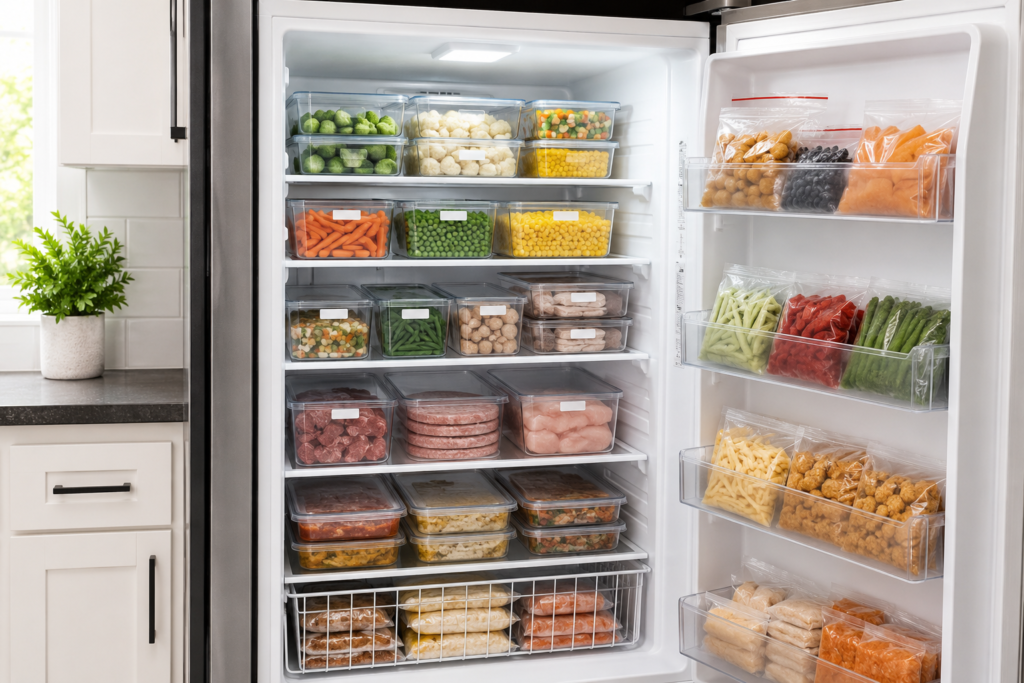
- Create Clear Food Zones
- Use Open-Top Bins
- File Flat Packages Vertically
- Label and Date Everything
- Keep a Freezer Inventory
- Freeze Food in Useful Portions
- Reserve Door Space for Stable Items
- Use a First-In, First-Out System
- Choose Space-Saving Containers
- Protect Airflow and Visibility
- Do a Monthly Freezer Reset
1. Empty and Audit the Freezer
Begin by moving food into a cooler while you work. Discard leaking packages and anything you cannot identify confidently. Group the remaining items by type and wipe shelves, drawers and bins according to the appliance instructions. Measure the usable shelf depth before buying containers. A complete audit reveals duplicates and gives you a realistic picture of what the freezer needs to hold.
2. Create Clear Food Zones
Assign separate areas to meat, vegetables, fruit, prepared meals, bread and treats. In a small freezer, each zone may be a single bin rather than a full shelf. Keep everyday breakfast and lunch items near the front, with longer-term ingredients behind them. Consistent zones prevent random stacking and make it easier to spot what is running low.
3. Use Open-Top Bins
Clear or light-coloured open bins keep small bags from sliding behind larger boxes. Choose straight-sided containers that fit the shelf without blocking vents. Label the front with broad categories such as Vegetables, Breakfast or Ready Meals. Avoid overfilling; each bin should slide out easily so you can see its contents without unloading the entire shelf.
4. File Flat Packages Vertically
Freeze soups, sauces and cooked grains flat in leak-resistant freezer bags, then store them upright like files once solid. This method uses vertical space efficiently and makes individual portions easy to select. Place bags on a tray while freezing to create an even shape. Write the contents, portion size and date where the label remains visible after filing.
5. Label and Date Everything
Use freezer-safe labels or a permanent marker on every homemade package. Include the food name, freezing date and reheating note when useful. Printed packaging should face forward so expiry and cooking information can be read. A simple label prevents mystery containers and helps the household use older food before opening or preparing something new.
6. Keep a Freezer Inventory
Attach a reusable inventory sheet to the side of the refrigerator or keep a shared phone note. Record staple items and cross them off when used. The list does not need to include every ice cube or single serving; focus on meals, proteins and ingredients that affect shopping decisions. Review the inventory before writing the weekly grocery list.
7. Freeze Food in Useful Portions
Divide large batches into the quantities you normally cook or serve. Small households may benefit from single or two-person portions, while families can freeze complete meal-sized packs. Remove excess air where appropriate and leave expansion space in containers holding liquids. Practical portions thaw more evenly and stop one oversized package from occupying the freezer for months.
8. Reserve Door Space for Stable Items
Freezer-door temperatures can fluctuate more than the centre of the compartment. Use door shelves for items that suit the manufacturer’s guidance, such as bread products, nuts or frequently used frozen ingredients, rather than automatically placing every item there. Keep packages upright in narrow bins so they do not fall when the door opens.
9. Use a First-In, First-Out System
Place newly frozen food behind older packages and create a small “Use First” basket for items approaching their best-quality window. Check this basket before planning dinner or buying more groceries. This rotation reduces waste without requiring a complicated tracking system. It also prevents fresh purchases from hiding food that has already been stored for weeks.
10. Choose Space-Saving Containers
Square and rectangular containers generally use shelf space more efficiently than round ones. Stack only containers designed for stable stacking and leave labels visible. Remove bulky outer cartons only when the inner package retains necessary cooking, allergen and date information. For the fresh-food side of the appliance, our fridge organization ideas provide a matching system.
11. Protect Airflow and Visibility
Do not pack food tightly against vents or sensors, and avoid creating unstable towers that can fall when a drawer opens. Follow the appliance manual for safe loading and defrosting. The U.S. Department of Agriculture offers detailed guidance on freezing and food safety, including storage and thawing considerations.
12. Do a Monthly Freezer Reset
Once a month, remove empty packaging, update the inventory and return misplaced food to its zone. Wipe small spills before they become difficult to remove and check that labels remain readable. Plan one or two meals around older ingredients. A short recurring reset is easier than allowing the freezer to become an unmanageable stack again.
Final Thoughts
The most effective freezer system combines broad zones, visible labels and regular rotation. Begin with the bins or containers you already own, then add organizers only where they solve a specific problem. When every item has a category and date, the freezer becomes easier to shop from, easier to clean and far less likely to hide forgotten food.