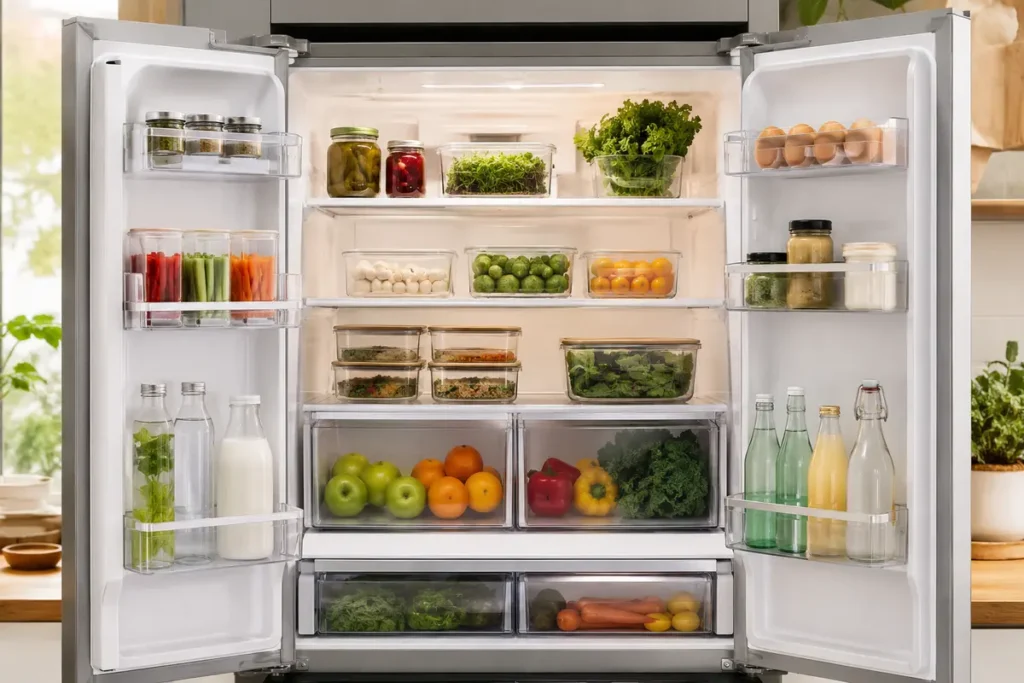
A disorganized refrigerator makes meal planning harder, hides ingredients, and increases food waste. These practical fridge organization ideas create clear zones for produce, dairy, drinks, leftovers, and everyday essentials so everything stays visible and easy to reach.
Table of Contents
1. Start With a Clean Fridge
Remove everything and discard expired food before reorganizing. Wipe shelves, drawers, door bins, and seals with warm soapy water, then dry each surface completely. Starting with an empty refrigerator makes it easier to see how much usable space you actually have.
2. Create Food Zones
Assign a purpose to every shelf and drawer. Keep dairy together, group beverages in one area, reserve a shelf for prepared foods, and separate raw ingredients from ready-to-eat items. Consistent zones help every family member return food to the correct place.
3. Use Clear Storage Bins
Clear bins keep small packages contained without hiding them. Use separate bins for snacks, breakfast items, sauces, or lunch ingredients. Choose handled bins that slide out easily and leave enough space around them for cold air to circulate.
4. Keep Everyday Foods at Eye Level
Place frequently used foods where they can be seen immediately. Yogurt, eggs, lunch ingredients, and healthy snacks work well at eye level. Store occasional items higher or lower so prime shelf space supports your daily routine.
5. Organize Produce Properly
Use the crisper drawers for fruits and vegetables, keeping ethylene-producing fruits separate from sensitive vegetables when possible. Wash delicate produce only when you are ready to use it, and line drawers with a washable mat to simplify cleanup.
6. Use the Door Wisely
The refrigerator door is the warmest area, so reserve it for condiments, sauces, pickles, and drinks that tolerate temperature changes. Avoid storing highly perishable foods there. The USDA provides useful refrigeration and food-safety guidance.
7. Create a Leftover Zone
Designate one visible shelf or bin for leftovers and foods that should be eaten soon. Use shallow, stackable containers so nothing disappears at the back. Add a small “eat first” label to reduce waste and simplify lunch planning.
8. Add a Lazy Susan
A turntable is useful for jars, sauces, and small containers. It brings items from the back forward without forcing you to move everything in front. Choose a raised-edge model so bottles remain stable as it rotates.
9. Label Shelves and Containers
Simple labels make the system easier to maintain. Label broad categories rather than individual products so the layout remains flexible. Removable waterproof labels are practical because they can be changed as your household needs evolve.
10. Use Vertical Space
Stackable containers and shelf risers can double usable space, especially for cans, yogurt cups, and meal-prep containers. Measure shelf height before buying organizers and avoid overfilling because cold air still needs room to circulate.
11. Keep a Simple Inventory
Attach a small dry-erase list to the fridge or keep a note on your phone for foods that need replacing. A quick inventory prevents duplicate purchases and makes weekly meal planning faster. Pair this habit with these kitchen pantry shelving ideas for a more coordinated food-storage system.
12. Do a Weekly Reset
Before grocery shopping, spend five minutes checking dates, wiping spills, grouping similar items, and moving older food forward. This short reset keeps the refrigerator organized and prevents a small mess from becoming a major cleanout.
Final Thoughts
The best fridge organization ideas are simple enough to maintain every day. Clear zones, visible leftovers, practical bins, and a quick weekly reset make food easier to find and help reduce waste. For more efficient kitchen storage, explore these small kitchen appliance storage ideas.