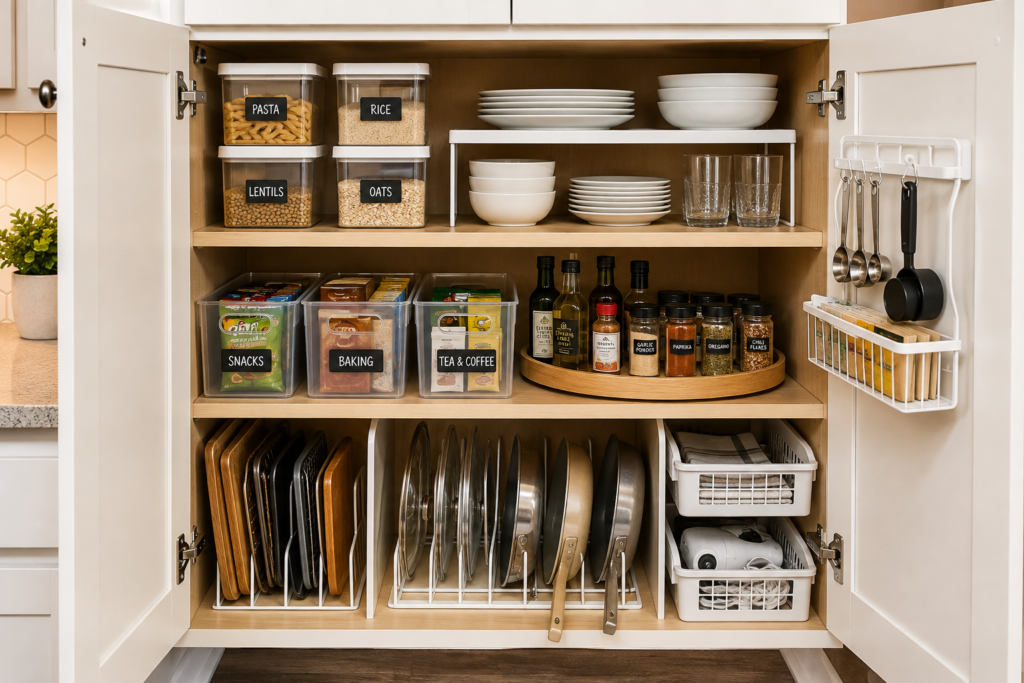
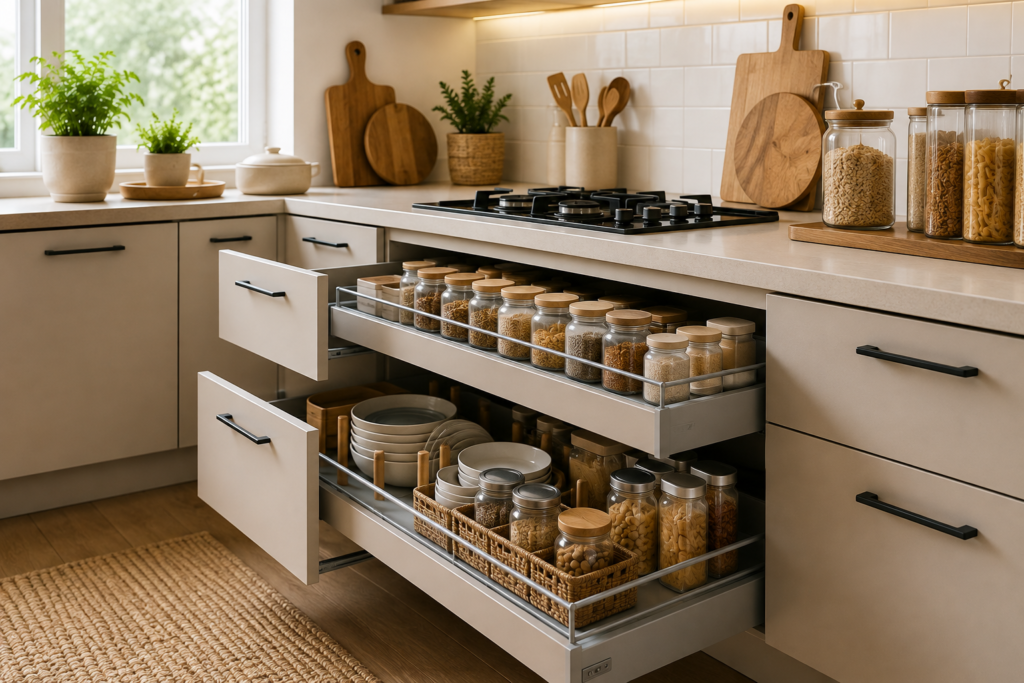
Pots, pans, lids, and baking dishes can quickly overwhelm kitchen cabinets. The right pots and pans organization ideas make cookware easier to see, safer to reach, and faster to put away. Whether you have deep cabinets, drawers, open shelves, or a compact kitchen, the goal is to give every piece a practical home.
Start by removing cookware you rarely use, matching every lid with its pan, and measuring the available space. Keep everyday pieces closest to the cooking zone and move occasional cookware to higher or less accessible storage.
Table of Contents
- 1. Use a Deep Drawer
- 2. Store Pans Vertically
- 3. Add a Lid Rack
- 4. Install a Pull-Out Organizer
- 5. Organize a Corner Cabinet
- 6. Hang Cookware on a Rail
- 7. Use a Ceiling Pot Rack
- 8. Add Shelf Risers
- 9. Stack With Protectors
- 10. Store Lids on a Cabinet Door
- 11. Separate Bakeware
- 12. Create Cooking Zones
1. Use a Deep Drawer
A deep drawer near the range is one of the most convenient places for cookware. Arrange pots by size and keep handles facing the same direction. Adjustable dividers prevent stacks from shifting when the drawer opens.
If the drawer is shared with lids, place lids upright along one side. Avoid making stacks so tall that removing the bottom pan becomes frustrating.
2. Store Pans Vertically
Vertical dividers allow frying pans, skillets, and cutting boards to stand on edge like files. Each item can be removed without lifting a heavy stack. Use a sturdy rack or adjustable cabinet dividers and space sections according to handle width.
3. Add a Lid Rack
Lids are easier to manage when stored separately. A freestanding rack can sit inside a cabinet or drawer, while a wall-mounted version can use an otherwise empty side panel. Sort lids by diameter so the correct size is easy to identify.
4. Install a Pull-Out Organizer
A pull-out shelf brings cookware at the back of a cabinet into view. Choose a model designed for the cabinet’s dimensions and weight capacity. Two-tier pull-outs can separate pots from pans, reducing the need for unstable stacking.
For more cabinet strategies, see our kitchen cabinet organization ideas.
5. Organize a Corner Cabinet
Corner cabinets can hold bulky cookware when fitted with a lazy Susan, swing-out shelf, or accessible zones. Keep frequently used pans toward the front and reserve the deepest area for large stockpots or seasonal equipment.
Our guide to kitchen corner cabinet organization offers additional ways to use awkward corners.
6. Hang Cookware on a Rail
A strong wall rail with hooks can keep selected pans within reach while freeing cabinet space. This works best for cookware used often and attractive enough to display. Leave enough clearance so handles do not interfere with counters or walkways.
7. Use a Ceiling Pot Rack
In kitchens with suitable ceiling height and structure, a pot rack can turn overhead space into storage. Keep the arrangement limited to commonly used pieces and confirm that the support is installed into appropriate framing. Cookware should be reachable without unsafe stretching.
8. Add Shelf Risers
Shelf risers divide a tall cabinet into usable layers. Put heavy pots on the lower level and lighter pans above. This simple addition reduces tall stacks and makes better use of vertical clearance.
9. Stack With Protectors
When stacking is unavoidable, place felt or silicone protectors between cookware to reduce scratching. Nest only compatible shapes and keep the heaviest item at the bottom. Limit each stack so every pan remains reasonably easy to retrieve.
10. Store Lids on a Cabinet Door
A shallow door-mounted organizer can hold lightweight lids without occupying shelf space. Check that lids will clear the cabinet shelves when the door closes and that the added weight is appropriate for the hinges.
11. Separate Bakeware
Baking sheets, muffin tins, and casserole dishes often work better in their own vertical section. Separating bakeware from stovetop cookware prevents awkward shapes from destabilizing stacks. A narrow lower cabinet is often enough for this category.
12. Create Cooking Zones
Store cookware according to how it is used. Keep frying pans near the range, baking dishes near the oven, and large pots near the prep area. Zone-based organization reduces unnecessary movement and makes returning items more intuitive.
For safe everyday cooking, review the U.S. Fire Administration’s cooking fire safety guidance, including recommendations about unattended cooking and keeping combustible items away from heat.
Final Thoughts
Effective pots and pans organization ideas reduce lifting, prevent unstable stacks, and make the kitchen easier to use. Select one system that matches your cabinet or drawer, place daily cookware within easy reach, and maintain the arrangement by returning each item to its assigned zone.