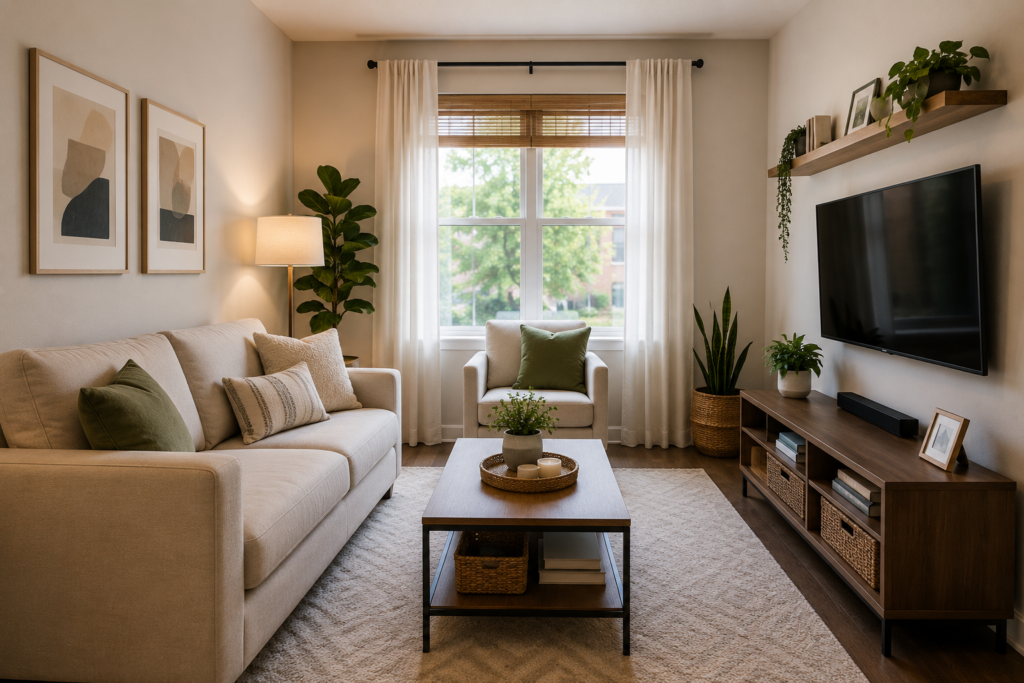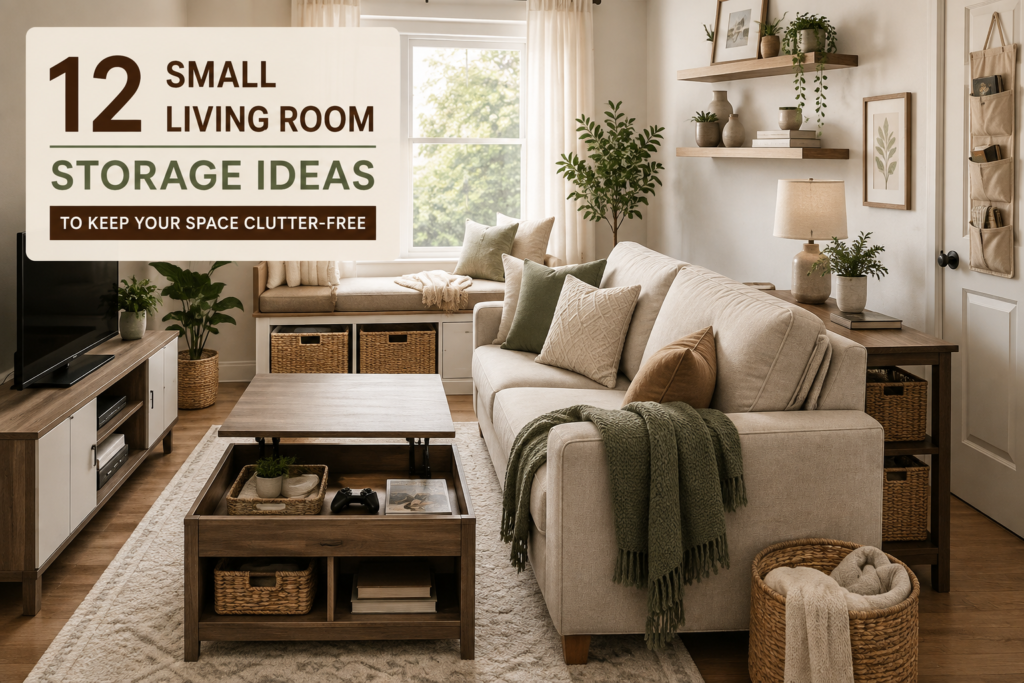
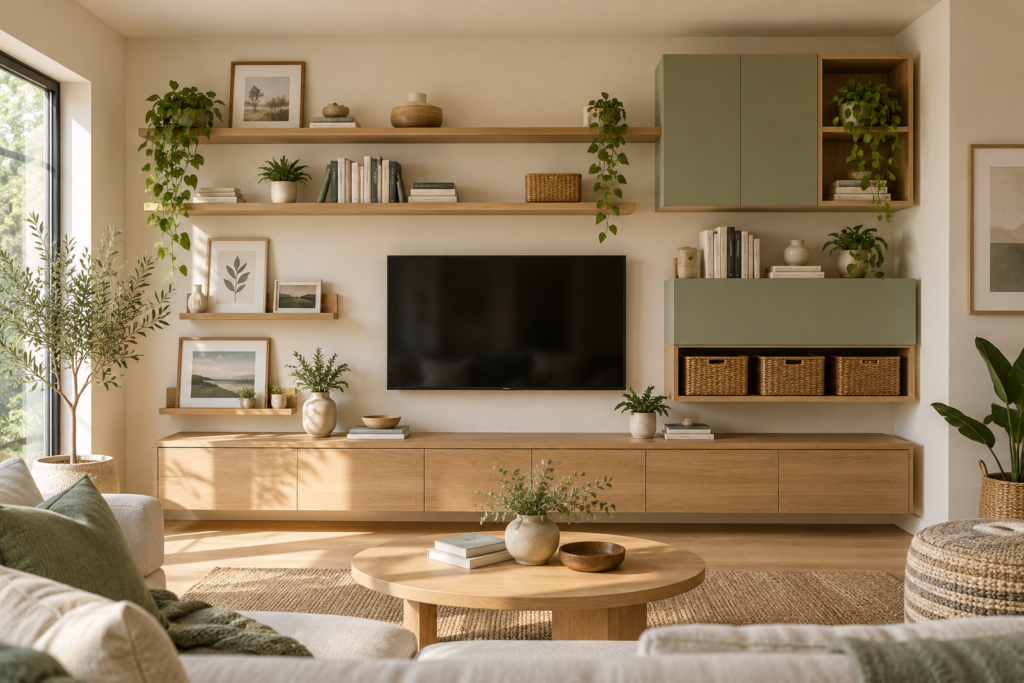
Living room wall storage ideas can recover unused vertical space while keeping walkways and surfaces clearer. The strongest plans combine closed storage for visual clutter with a smaller amount of open display.
Map furniture, outlets, vents, windows, and wall construction before choosing a system. Compare living room wall storage ideas against the items you genuinely need to store. Capacity matters, but secure installation, realistic load limits, and comfortable reach matter more.
Table of Contents
- Install Floating Shelves
- Build Storage Around the Television
- Use a Tall Bookcase
- Add Picture Ledges
- Mount Closed Cabinets
- Create a Pegboard Display
- Use Corner Wall Shelves
- Add a Slim Console With a Hutch
- Hang Baskets for Lightweight Items
- Use Hooks Near the Entry
- Style Open Shelves Selectively
- Anchor Heavy Storage Safely
- Living Room Wall Storage Ideas: Final Checklist
- Frequently Asked Questions
Install Floating Shelves
Floating shelves can display books and small objects without the visual weight of a full cabinet. Plan a limited arrangement around the wall’s width and nearby seating.
Use the correct fixings for the wall construction and stay within the shelf load rating. Place heavier items toward supported areas.
Build Storage Around the Television
A balanced television wall can combine closed cabinets for clutter with open space for ventilation and a few display pieces. Measure the screen, speakers, outlets, and device depth.
Keep manufacturer clearances and service access. Do not block vents or hide power equipment in an unventilated compartment.
Use a Tall Bookcase
A tall bookcase uses vertical space efficiently and can hold books, baskets, and media in one footprint. Choose a depth that does not narrow the main path.
Place heavy items low and anchor furniture as directed. Leave space at outlets, vents, and window treatments.
Add Picture Ledges
Shallow picture ledges let framed art overlap without many wall holes. They also suit slim books or lightweight decorative objects.
Use a raised front edge and avoid glass frames above seating or active play areas. Respect the manufacturer’s load limit.
Mount Closed Cabinets
Wall cabinets hide games, cables, and paperwork while keeping the floor clear. Align their depth with the room so they do not feel intrusive.
Secure cabinets into suitable structure and keep heavy contents in lower units. Confirm doors open without hitting lights or windows.
Create a Pegboard Display
A pegboard creates adjustable storage for headphones, craft tools, or lightweight accessories. Arrange frequently used pieces at comfortable reach.
Use compatible hooks and maintain the rated load. A small number of organized zones looks calmer than covering the entire board.
Use Corner Wall Shelves
Corner shelves can hold a plant, books, or a lamp where a standard cabinet would be too wide. Curved fronts reduce sharp projections.
Measure both walls and the nearby walking path. Avoid loading high corner shelves with heavy or fragile items.
Add a Slim Console With a Hutch
A narrow console and upper hutch combines a landing surface with vertical storage. It can serve an entry edge or the wall behind a sofa.
Anchor tall furniture and leave room to pull out drawers. Keep the surface mostly open for items used during the day.
Hang Baskets for Lightweight Items
Wall baskets can collect throws, magazines, or toys when designed and mounted for the load. Choose smooth edges and washable materials.
Do not use improvised hooks for heavy baskets. Place children’s items within safe reach and inspect fasteners periodically.
Use Hooks Near the Entry
A short row of hooks can prevent bags and lightweight accessories from landing on furniture. Give each hook a clear purpose.
Mount at a practical height and keep the doorway path open. Heavy bags are better stored on stable lower supports.
Style Open Shelves Selectively
Group objects with varied height and leave visible space between them. Combine useful storage with a few personal pieces rather than filling every inch.
Use closed baskets for small visual clutter. Rotate displays instead of adding more objects over time.
Anchor Heavy Storage Safely
Tall cabinets and bookcases can tip when drawers are opened or children climb. Follow manufacturer anchoring instructions and use suitable wall hardware.
The CPSC Anchor It guidance explains furniture tip-over prevention. For complementary furniture planning, see our living room furniture arrangement ideas.
Living Room Wall Storage Ideas: Final Checklist
Confirm wall type, fixings, load ratings, furniture anchors, and access to electrical equipment. Keep heavy or breakable objects low and away from seating.
Assign each cabinet, basket, or shelf a purpose. Leave open space and review stored items seasonally so the wall does not become a new source of clutter.
Frequently Asked Questions
How much wall storage is too much?
If units narrow circulation, block light or vents, overwhelm seating, or hold items without a clear purpose, reduce the plan. Start with one problem zone.
Can floating shelves hold books?
Only within the shelf and fixing load ratings and when installed into suitable support. Books become heavy quickly, so verify the complete system.
Should living room storage be open or closed?
Use closed storage for small mixed items and open shelves for a limited selection of books or personal objects. A combination is usually easiest to maintain.