A cluttered kitchen cabinet can make even simple cooking tasks feel frustrating. The good news is that you don’t need a complete kitchen remodel to create more usable storage. These kitchen cabinet organization ideas will help you arrange cookware, dishes, pantry essentials, and everyday items so everything is easier to find and your kitchen stays neat and functional.
Table of Contents
Kitchen Cabinet Organization Ideas: Group Similar Items Together
Start by grouping similar kitchen items so everything has a clear place. Keep plates with plates, glasses with glasses, baking supplies together, and frequently used cooking ingredients in their own section. Creating simple categories makes cabinets easier to navigate and helps prevent unrelated items from becoming mixed together.
Add Shelf Risers to Create Extra Levels
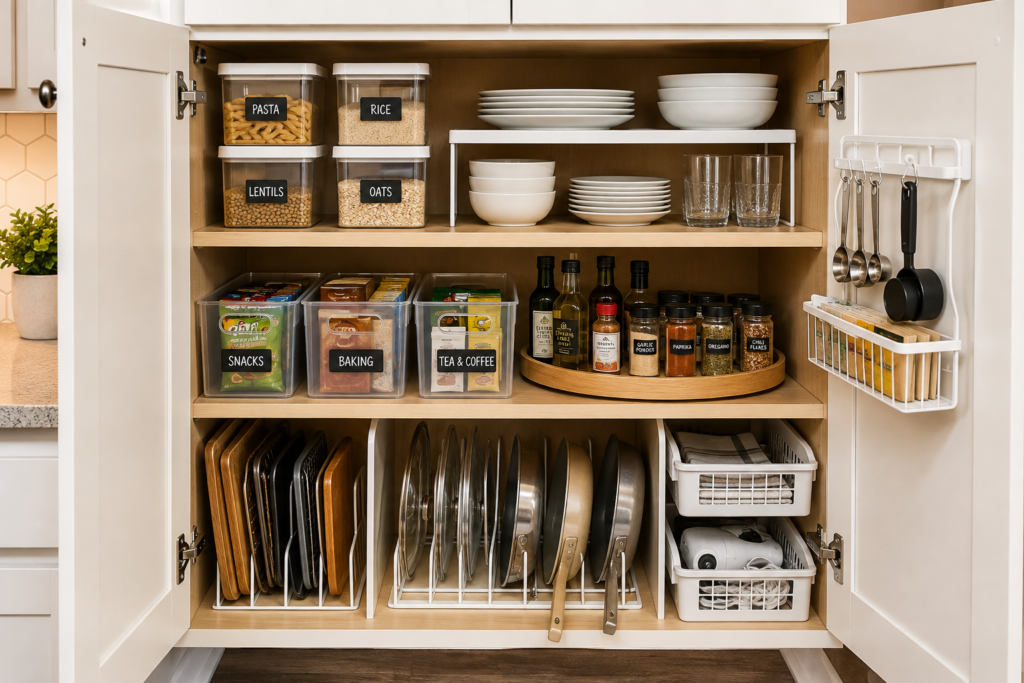
Tall cabinet shelves often leave unused vertical space above shorter items. Shelf risers create an additional level for plates, bowls, mugs, canned goods, or pantry containers without requiring permanent changes to the cabinet. Choose risers that fit comfortably inside the available space and keep heavier items on stable lower surfaces.
Use Clear Bins for Small Items
Small packets, snacks, baking supplies, and other loose items can quickly make a cabinet look disorganized. Clear storage bins keep similar products contained while allowing you to see what is inside at a glance. Use separate bins for different categories and add simple labels when needed to make the system easier to maintain.
Install a Lazy Susan for Hard-to-Reach Items
A rotating turntable can make deep cabinet corners much easier to use. Place condiments, oils, spices, jars, or other frequently used items on a Lazy Susan so you can access products at the back without moving everything in front. Make sure the turntable can rotate freely without hitting the cabinet door or surrounding items.
Organize Pots and Pans Vertically
Stacking pots, pans, lids, and baking sheets can make it difficult to remove one item without disturbing everything else. A vertical rack or adjustable divider lets you store cookware upright so each piece is easier to access. This approach works especially well for pan lids, cutting boards, baking trays, and skillets.
Use Cabinet Doors for Extra Storage
The inside of a cabinet door can provide useful storage without taking up shelf space. Add slim racks, adhesive organizers, or suitable hooks for lightweight items such as measuring spoons, cleaning accessories, pot lids, or small kitchen tools. Make sure anything attached to the door does not interfere with shelves when the cabinet closes.
Store Frequently Used Items Within Easy Reach
Keep the dishes, glasses, ingredients, and cookware you use most often on shelves that are comfortable to reach. Reserve higher or less accessible areas for seasonal dishes, specialty appliances, and other items you rarely need. Organizing cabinets around your daily routine can make cooking and cleanup faster while reducing unnecessary searching.
Use Pull-Out Organizers in Deep Cabinets
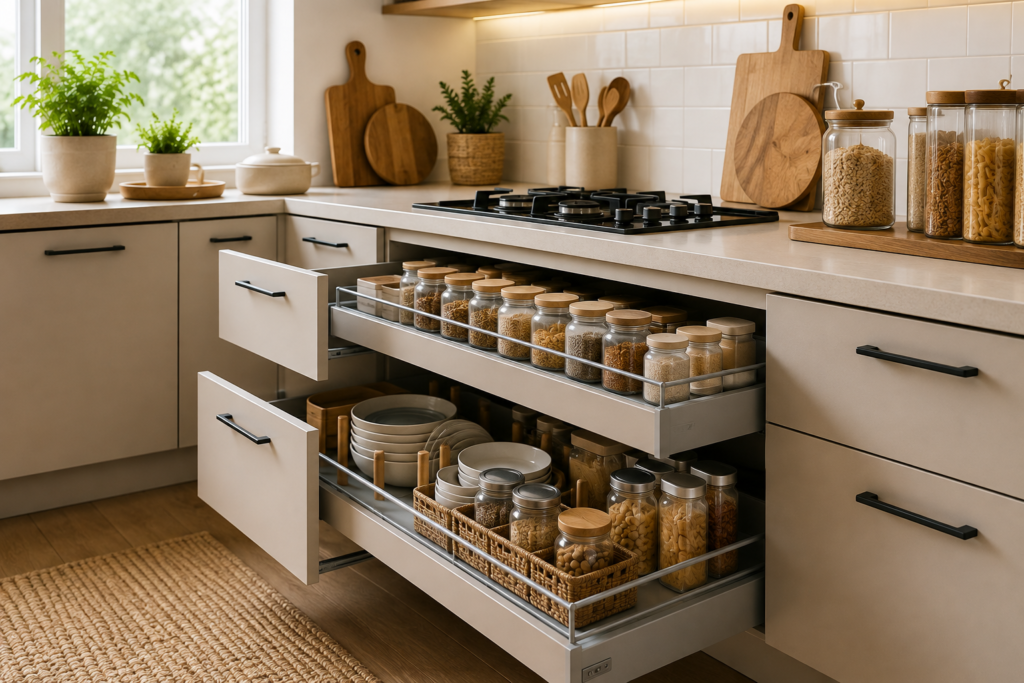
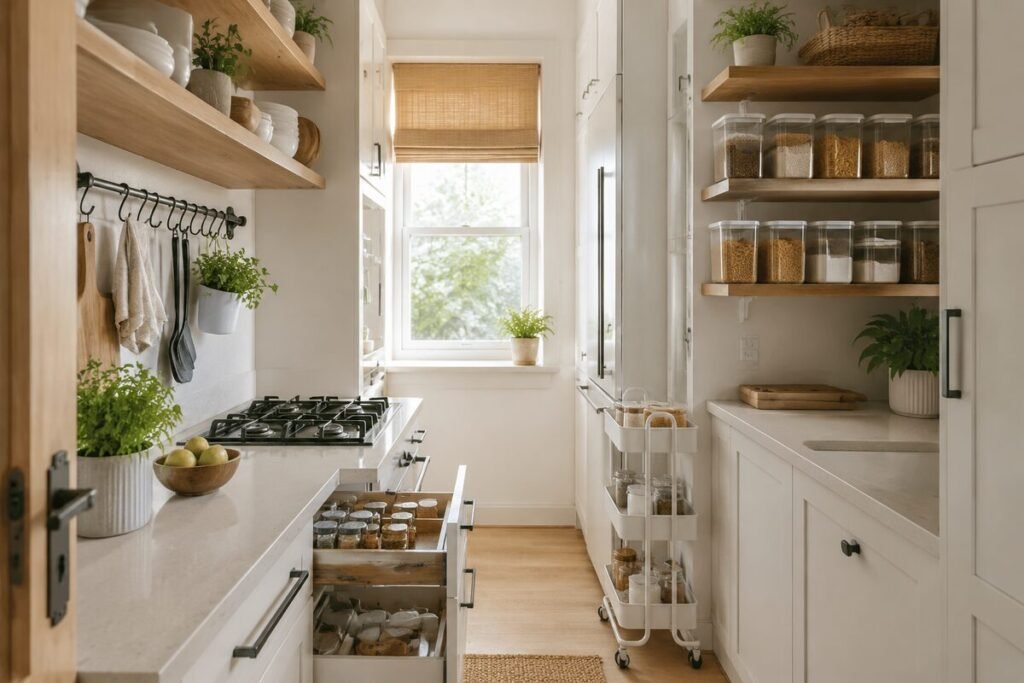
Deep cabinets can waste valuable storage when items at the back become difficult to reach. Pull-out baskets, sliding shelves, or compact drawer-style organizers allow you to bring stored items forward instead of reaching behind other products. They can be especially useful for pots, cleaning supplies, pantry staples, and small appliances.
Transfer Dry Goods Into Stackable Containers
Stackable containers can make better use of cabinet height while keeping dry ingredients neat and easy to identify. Use appropriately sized containers for foods such as rice, pasta, flour, cereal, or baking ingredients, and label them clearly. Avoid transferring products unless the containers are suitable for food storage and easy to clean.
Declutter Cabinets Regularly
Even well-organized cabinets can become crowded when unused items accumulate. Periodically check for duplicate tools, expired food, damaged containers, and kitchen items you no longer use. Removing unnecessary products creates more room for everyday essentials and makes your organization system easier to maintain.
Use Labels to Maintain Your System
Labels can make it easier for everyone in the household to return items to the correct place. Add simple labels to bins, containers, baskets, or designated cabinet sections when the contents are not immediately obvious. Keep labels clear and consistent so the organization system remains practical rather than visually cluttered.
Create Zones Based on Kitchen Tasks
Organize cabinet contents according to where and how you use them. Keep baking supplies near your preparation area, everyday dishes close to the dishwasher, and cooking oils or spices near the stove when practical and safe. Creating task-based zones can reduce unnecessary movement and make everyday kitchen routines more efficient.
Final Thoughts on Kitchen Cabinet Organization Ideas
Kitchen cabinet organization ideas work best when they make frequently used items easier to access while giving everything a designated place. Simple solutions such as shelf risers, clear bins, vertical dividers, pull-out organizers, and task-based zones can help you use cabinet space more efficiently without requiring a major renovation. These kitchen cabinet organization ideas can make everyday cooking and cleanup easier while helping you maintain a tidy, functional kitchen.
Start with the cabinet that causes the most frustration and organize one area at a time. Remove unnecessary items, group similar products together, and choose storage solutions that suit your available space. A simple system that matches your daily routine will be much easier to maintain over time.
For more practical home organization inspiration, explore our home and kitchen guides.
For guidance on safely storing food and reducing the risk of foodborne illness at home, explore the USDA’s food safety resources.