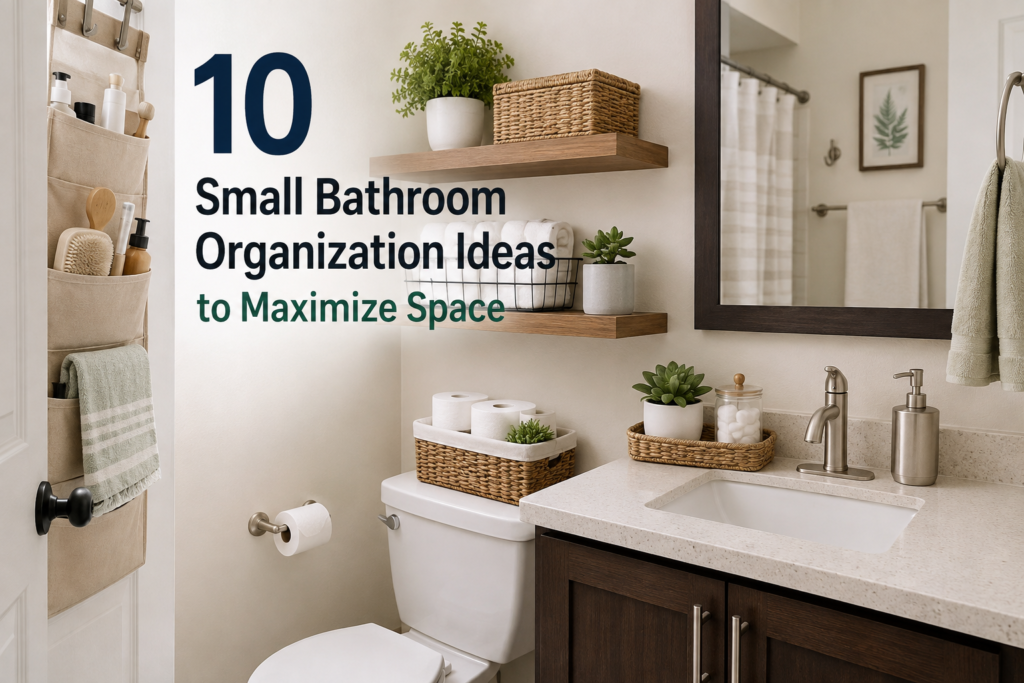
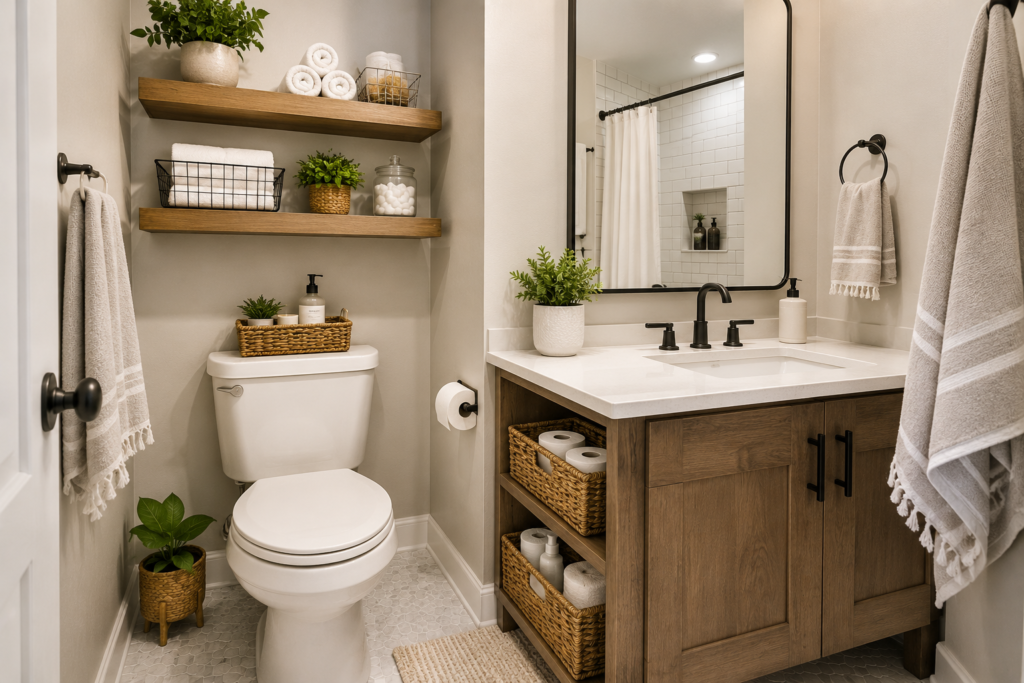
Bathroom shelf ideas for small spaces work when they add useful storage without narrowing movement or trapping moisture. Start with empty wall areas, then match shelf depth and height to what will actually be stored.
Measure doors, mirrors, toilets, showers, and comfortable reach before drilling. Compare bathroom shelf ideas for small spaces using the exact items and wall area available. Choose moisture-resistant materials, secure every load correctly, and leave enough open space for cleaning and ventilation.
Table of Contents
- Install Shelves Above the Toilet
- Use a Slim Ladder Shelf
- Add a Shelf Below the Mirror
- Choose Floating Corner Shelves
- Use Recessed Shower Niches
- Mount Shelves Over the Door
- Add a Narrow Shelf Beside the Vanity
- Use Glass Shelves for a Lighter Look
- Keep Everyday Items on Lower Shelves
- Store Backups in Labeled Baskets
- Leave Space Between Displays
- Choose Moisture-Resistant Materials
- Bathroom Shelf Ideas for Small Spaces: Final Checklist
- Frequently Asked Questions
Install Shelves Above the Toilet
The wall above a toilet can hold light towels or sealed backup supplies when a shelf does not interfere with comfortable use. Measure the tank lid and sitting clearance first.
Anchor the shelf correctly and keep heavy, glass, or frequently handled objects elsewhere. Leave access for plumbing maintenance.
Use a Slim Ladder Shelf
A freestanding ladder shelf adds tiers without drilling, but its feet and top must sit securely in a damp room. Choose a depth that preserves the walkway.
Follow anti-tip guidance and keep heavier items low. Confirm that towels can dry rather than remaining tightly packed.
Add a Shelf Below the Mirror
A narrow ledge below or beside the mirror can hold small daily items and reduce vanity clutter. Keep it shallow enough that users do not bump it while leaning toward the sink.
Use raised edges for small containers and wipe water promptly. Do not crowd faucet operation or electrical outlets.
Choose Floating Corner Shelves
Corner shelves can use an otherwise empty wall while keeping the center of the room open. Rounded fronts are helpful near narrow paths.
Measure both walls because corners are not always square. Use corrosion-resistant hardware and suitable wall anchors.
Use Recessed Shower Niches
A recessed niche keeps bottles off the shower floor and avoids a projecting shelf. Its position and waterproofing must be planned before tile work.
Have wet-area construction completed correctly so the niche drains and does not compromise the wall system.
Mount Shelves Over the Door
The space above a door can store lightweight backup towels or paper goods. It is best for items that do not need daily reach.
Check ceiling clearance and door trim. Use a stable step stool when accessing the shelf and avoid heavy containers overhead.
Add a Narrow Shelf Beside the Vanity
A slim side shelf can organize skincare or grooming items without covering the countertop. Match its depth to the available shoulder and door clearance.
Keep water-sensitive products away from splashes and place breakables below eye level.
Use Glass Shelves for a Lighter Look
Clear glass can reduce visual weight and is easy to wipe, but it must be safety glass intended for shelving.
Respect the stated load rating, use secure brackets, and inspect chips or loosened fittings. Frosted or ribbed glass hides water spots better.
Keep Everyday Items on Lower Shelves
Place frequently used, lightweight items between waist and eye level. This reduces stretching and makes the daily routine quicker.
Reserve upper shelves for sealed backups, not medicines or chemicals that require secure storage.
Store Backups in Labeled Baskets
Group extra toiletries by type and label the front so stock is visible. Limit each category to the amount the shelf can hold neatly.
Choose washable, moisture-tolerant baskets and rotate older products forward. Remove leaking or expired items promptly.
Leave Space Between Displays
Open space makes shelving easier to clean and lets towels dry. A few useful items usually look calmer than multiple decorative layers.
Keep ventilation paths clear and avoid pushing containers against damp walls.
Choose Moisture-Resistant Materials
Use finishes, fasteners, and shelf materials rated for humid bathrooms. Seal cut edges as the manufacturer recommends.
The EPA moisture and mold guide explains why moisture control matters. See also our small bathroom organization ideas.
Bathroom Shelf Ideas for Small Spaces: Final Checklist
Check mounting, stated load limits, damp-area suitability, and clearance around fixtures. Keep heavy or fragile objects away from overhead positions.
Give every shelf one purpose and remove excess backups. A simpler arrangement is easier to clean and makes moisture problems more visible. Review these bathroom shelf ideas after a week and remove anything that is difficult to reach or wipe.
Frequently Asked Questions
What is the safest place for heavy bathroom items?
Store them low in a stable cabinet or properly supported lower shelf, away from edges. Follow shelf and anchor load ratings.
Can ordinary wood shelves be used in a bathroom?
Only when the material and finish tolerate humidity and cut edges are protected. Manufacturer guidance and ventilation conditions should inform the choice.
How deep should a shelf above a toilet be?
There is no universal depth. Measure the tank, seated clearance, walkway, and items, then choose the shallowest shelf that works safely.
Choose Bathroom Shelves for Moisture and Maintenance
Measure the wall, fixture clearances, and comfortable reach before buying. Shelves above a toilet, bath, or vanity must not block mirrors, lighting, ventilation, or plumbing access. Select materials and finishes intended for humid conditions and follow the manufacturer’s cleaning and installation guidance.
Scroll sideways to read the full table.
| Shelf type | Best use | Important tradeoff |
|---|---|---|
| Floating shelf | Towels and light daily items | Fixings and hidden brackets must support the load |
| Freestanding ladder shelf | Rental-friendly open storage | Needs floor space and anti-tip consideration |
| Recessed niche | Permanent shower or wall storage | Requires correct waterproof construction |
| Over-toilet unit | Vertical storage without drilling every shelf | Check stability and tank access |
Give Each Shelf a Clear Job
Keep daily products on the easiest shelf, folded towels on a dry open shelf, and backups in a labeled bin. Avoid placing medicines or products with special storage requirements in bathroom humidity unless their labels allow it. Keep razors, chemicals, and fragile containers away from children and edges.
Leave Space for Air and Cleaning
Do not press baskets tightly against a damp wall. Use shallow, washable containers and leave enough room to lift them without knocking other items down. Persistent condensation or mold requires addressing moisture and ventilation, not simply adding another shelf.
Monthly Shelf Check
- Remove every item and clean the shelf with a suitable method.
- Dry the surface completely before restocking.
- Check brackets, anchors, joints, and wall condition.
- Discard empty products and relocate excessive backups.
- Keep heavy items low and distribute weight evenly.
Installation Mistakes to Avoid
- Drilling into tile or waterproofing without suitable knowledge.
- Ignoring the loaded weight of bottles and towels.
- Using untreated materials that swell or stain.
- Mounting at a height that requires unsafe stretching.
- Blocking access to valves, outlets, or the toilet tank.
The most useful bathroom shelf remains easy to wipe, safe to reach, and only deep enough for the items it actually holds.
Bathroom-Shelf Questions
What shelf depth works best?
Choose the shallowest depth that safely holds the intended items without blocking movement, mirrors, fixtures, or cleaning access.
Can wood shelves work in a bathroom?
Only when the material and finish are suitable for humidity and maintained as directed. Persistent dampness can damage unsuitable wood products.
What should not go on an open shelf?
Keep medicines with unsuitable storage requirements, hazardous cleaners, fragile containers, and private items in more appropriate secure storage.